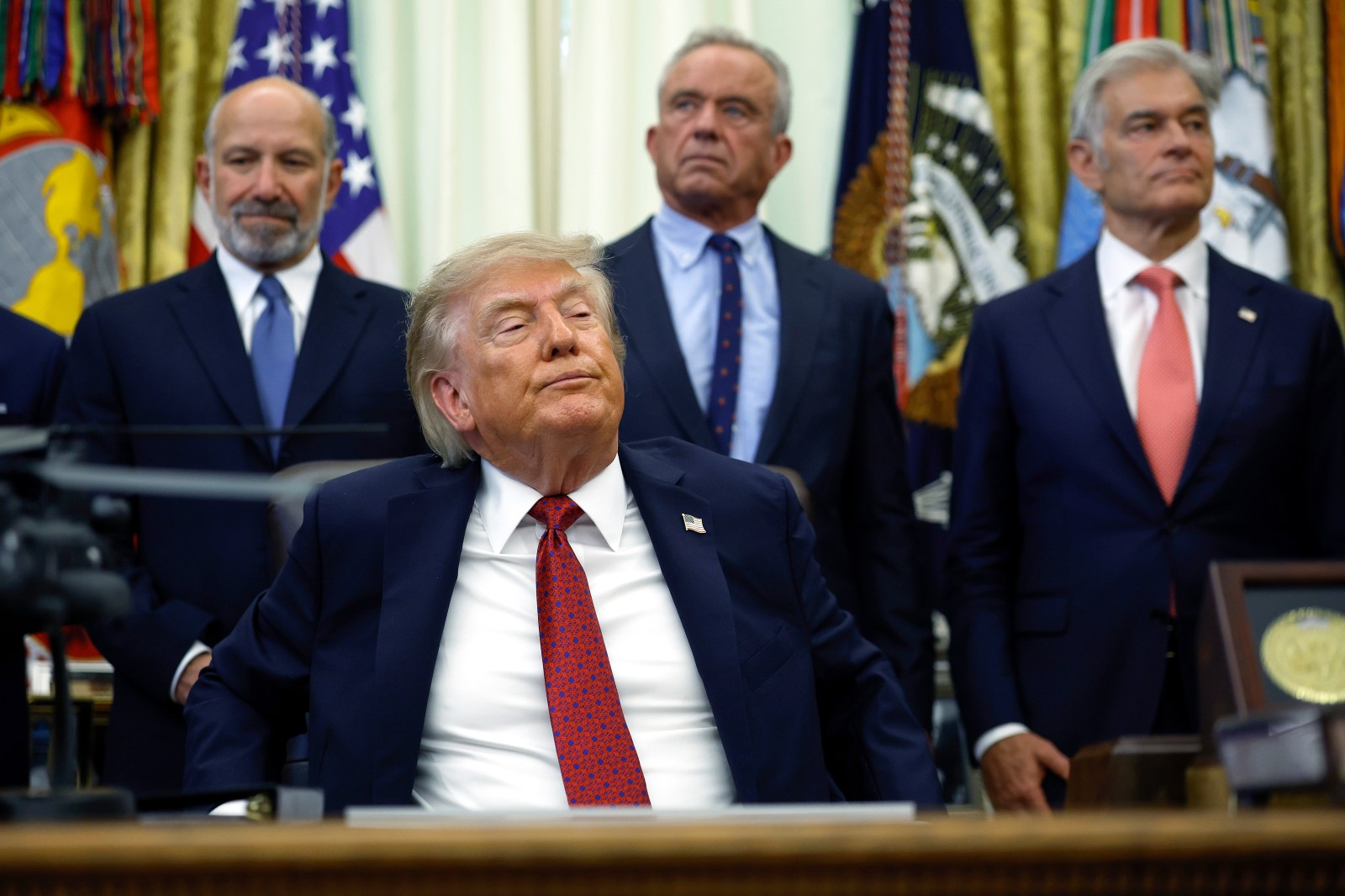
President Donald Trump has reinforced his assurance to issue $5,000 checks to Americans if the Republican Party maintains congressional control. The funding of these payments hinges on a plan involving affluent foreign nationals contributing $5 million each to the government. Commerce Secretary Howard Lutnick suggests these payments would not burden taxpayers or increase the deficit, based partly on the anticipated Trump Platinum Card program.
Lutnick revealed to NBC News that over 100,000 people are already waiting for the program. He stated, “We have a waitlist of more than 100,000 people who want to come. That’s $500 billion.”
On Truth Social, Trump reiterated his commitment, calling the initiative the “Trump Dividend.” He criticized Democrats who argue the pledge is merely a bribe for votes in the upcoming November election.
The doomers and naysayers have consistently doubted President Trump: when he pledged to create the historic Trump Accounts, lowered prescription prices with Most Favored Nations, secured the border with no crossings, cleaned up our streets, ended taxes on tips, grew real wages, renegotiated broken trade deals, and reshored key manufacturing back to the United States.
Davis Ingle, a White House spokesperson, told Newsweek that Trump remains resolute against Democrat strategies that contribute to inflation, unchecked immigration, rising crime, and weakness internationally. With continued American support, Trump aims to deliver tangible results.
$5,000 Checks for Americans?
Trump proposes $5,000 for every American adult if Republicans hold the House and Senate. The Associated Press estimates the initiative at $1.23 trillion based on eligible adult citizens. Vice President JD Vance has suggested excluding wealthy Americans, but no official income restrictions have been announced.
The Platinum Card
The Trump Card website outlines the Platinum Card as forthcoming, with foreign nationals able to join a waitlist. Applicants could pay a $15,000 processing fee and contribute $5 million to spend up to 270 days annually in the U.S. without tax obligations on non-U.S. income.
Lutnick’s calculations show that 100,000 applicants contributing $5 million would generate $500 billion, just 41% of the $1.23 trillion needed. Full funding requires approximately 246,000 contributors.
The government indicates contributions will be collected upon program launch, with a waitlist position not signifying instant federal revenue.
In late 2025, a similar Gold Card offered wealthy foreign nationals a fast track to U.S. residency for a $1 million contribution and $15,000 fee.
Gold Cards were initially valued at $1.3 billion, but Lutnick later clarified only one approval, with “hundreds” still pending, predicting a potential $1 trillion program to help balance the budget.
Alternate Funding Proposals
Other methods for financing the checks have emerged. The vice president proposed using tariff revenue, with Trump indicating large sums from trade policies. Nevertheless, current tariff collections fall significantly short of the promised payouts.
The Congressional Budget Office recorded roughly $167 billion in tariff revenue during the fiscal year at the proposal’s announcement. FactCheck.org noted over six years of tariff revenue at present levels would equal one round of payments.
Lutnick also mentioned Intel investments boosting revenue, citing Commerce Department shares contingent on partnership terms.
Kevin Hassett, National Economic Council Director, suggests advancing payments through budget reconciliation. Congressional approval remains vital.
Marc Goldwein, a senior policy director at the Committee for a Responsible Federal Budget, highlighted an existing $2 trillion annual deficit opposing a surplus needed for a dividend.
Previous Trump ideas, such as the 2025 DOGE dividend and a $2,000 tariff dividend, never enacted payments.
Democratic Opposition
Trump’s Truth Social post met with Democratic resistance. Senate Minority Leader Chuck Schumer decried the proposal as “trying to bribe the American people for their votes.” Representative Robert Garcia labeled it an empty promise, referencing prior failed initiatives. California Governor Gavin Newsom accused Trump of “buying votes,” while Representative Dan Goldman described the pledge as “corrupt and blatantly illegal,” reiterating Congress’s role in authorizing such spending.
Contact Newsweek editor on this story: Edward Pearcey.
Leave a Reply