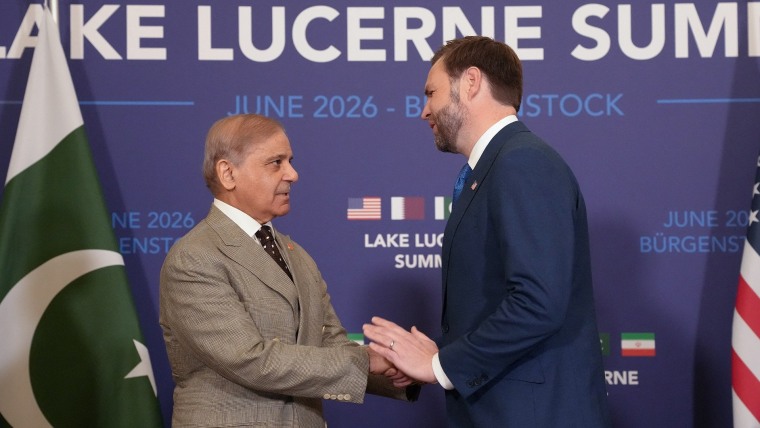
High-level discussions between Iran and the United States concluded with notable advancements, Vice President JD Vance announced after departing Switzerland on Monday. A roadmap was established aimed at finalizing a deal to end the ongoing conflict within 60 days.
Vance expressed optimism at a press briefing before returning to the U.S., emphasizing that a solid foundation for a successful final agreement had been laid. This foundation paves the way for a favorable outcome for Americans.
The discussions in the Bürgenstock resort continued on a technical level following a challenging opening round between senior officials. These initial talks faced obstacles, including their cancellation and upheavals due to President Donald Trump’s renewed threats.
Despite the tensions, Vance explained that Iran had initially threatened to exit the talks due to Trump’s comments, yet he supported the President’s response. Vance likened it to ‘trash talk,’ asserting that the U.S. President would naturally address such remarks.
Ultimately, the talks culminated in a joint statement by mediators from Qatar and Pakistan, indicating a positive atmosphere. Both Washington and Tehran agreed to establish new communication channels to ensure the Strait of Hormuz remained open and fighting in Lebanon was halted, according to mediators.
Vance confirmed Iran’s willingness to allow International Atomic Energy Agency (IAEA) inspectors back into the country.
Iran’s Mehr news agency reported that its negotiating team, led by Parliament Speaker Mohammad Bagher Ghalibaf, departed Switzerland after rigorous discussions lasting approximately 18 hours. However, the agency noted that Iran’s deputy foreign minister, Kazem Gharibabadi, was directing technical negotiations.
The ongoing dialogue aims to tackle unresolved key issues, particularly Iran’s nuclear program. A significant achievement from Sunday’s discussions was the formation of a ‘High-Level Committee,’ designated to supervise political mediation and outline a roadmap towards a final 60-day agreement. This roadmap provides a firm basis for commencing immediate technical negotiations regarding nuclear weapons, sanctions, and dispute resolution.
In addition, a deconfliction line between the parties and Lebanon was established to address continued confrontations between Iranian-backed Hezbollah and Israel.
A communication line has also been instituted to avert ‘incidents and miscommunication,’ ensuring safe navigation for commercial vessels through the Strait of Hormuz. This vital global oil supply route has faced blockades for several months.
Leave a Reply