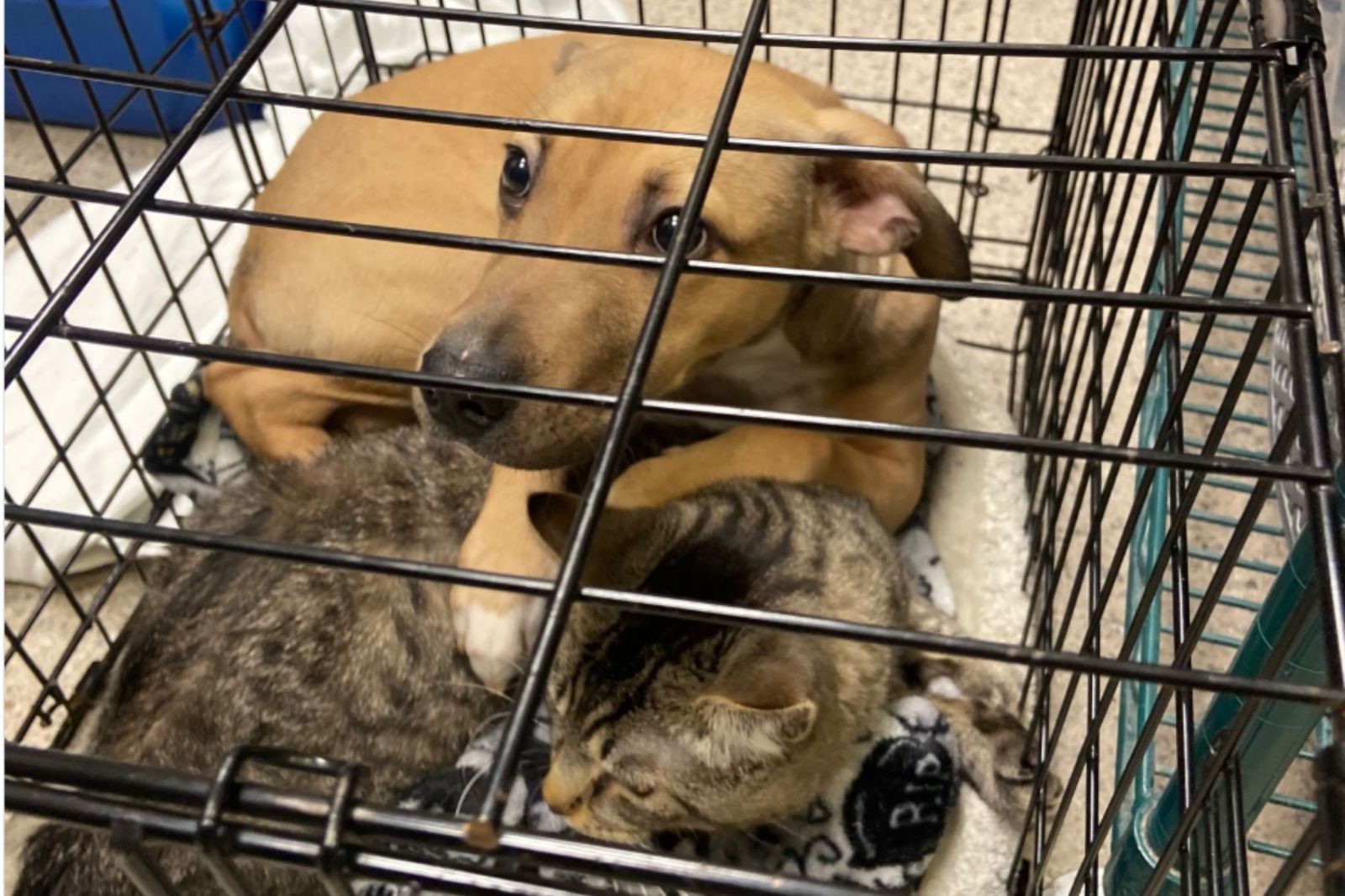
A young puppy named Boris and a cat named Jenkins were found abandoned at the Humane Society for Hamilton County in Indiana. Staff members discovered them outside the shelter one morning, and it was clear Boris, just six months old, was trying to protect Jenkins, the two-year-old cat. Boris comfortingly placed his paw over Jenkins, showing his loyalty and care even in distress. This moment was captured and shared in an Instagram post by @hamiltonhumane on June 3.
The image touched hearts online, prompting shelter staff to emphasize the dangers of leaving pets outside during summer. Temperatures had soared into the upper 80s when Boris and Jenkins were left with no shade, water, or a safe place. It was fortunate they were found before enduring the harsh conditions for too long and brought inside to recover.
Boris quickly adapted to his new surroundings and found a forever home soon after. Jenkins took a bit longer to find a permanent home, but the shelter happily updated their followers that both Boris and Jenkins were adopted successfully.
Summer Heat Danger for Pets
Although Boris and Jenkins were saved just in time, veterinarians caution against the rapid onset of heat-related illnesses in pets. Dogs and cats can suffer from heat stroke in hot temperatures, particularly without shade or water. Unlike humans, pets have fewer ways to cool down, making it difficult to regulate their body temperature.
According to the American Animal Hospital Association (AAHA), early signs of heat stroke include excessive panting, drooling, lethargy, vomiting, and difficulty walking. Untreated heat stroke can escalate to seizures, organ failure, or death.
Pets’ body temperature should range between 100 and 102.5 degrees Fahrenheit. Heat stroke may occur if it rises above 104 degrees. Some breeds are at higher risk, particularly flat-faced breeds like bulldogs, pugs, and Persian cats, which find it harder to cool down. Overweight pets also face increased risk as excess fat traps heat, complicating breathing.
The AAHA notes that puppies and kittens, like Boris, are particularly susceptible to heat stroke since they haven’t fully developed their ability to manage body temperature. Fortunately, Boris and Jenkins were discovered before experiencing prolonged exposure to rising temperatures.
Leave a Reply