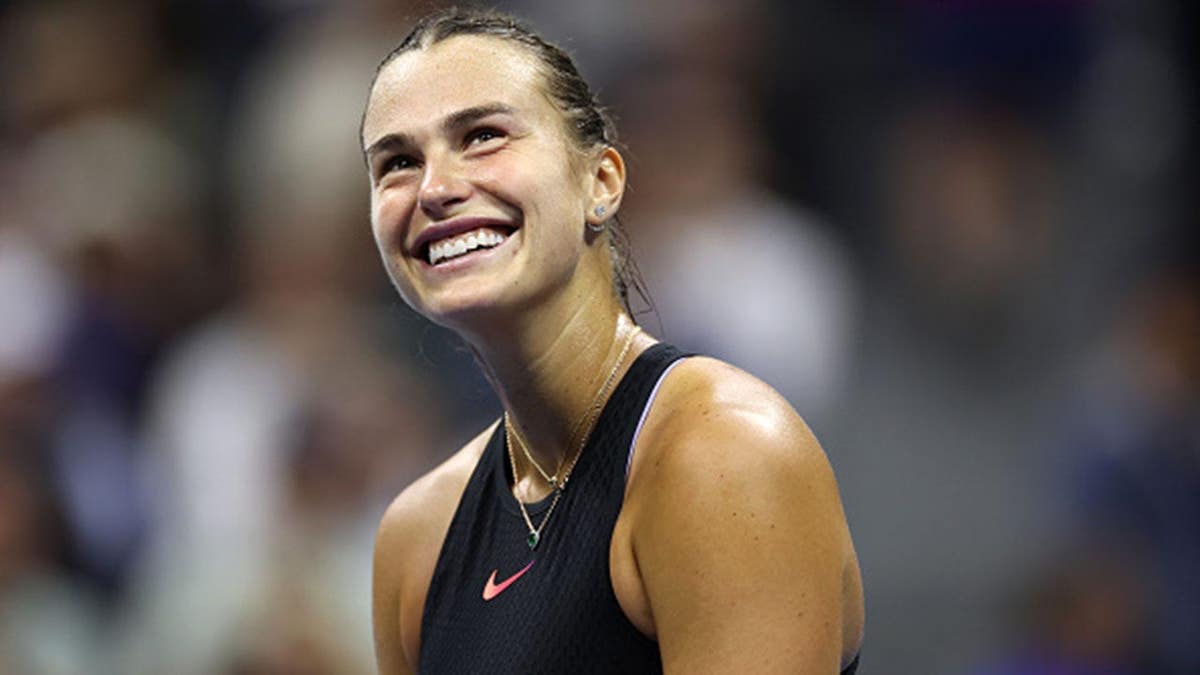
Paula Scanlan, an advocate for women’s sports, praised Aryna Sabalenka for her stand on a new ruling from the World Tennis Association (WTA). This rule addresses the participation of biological males in women’s sports. Scanlan, once a teammate of transgender swimmer Lia Thomas, also discussed Martina Navratilova’s remarks on Caitlin Clark’s neutral stance regarding this sensitive issue.
The WTA announced a requirement for players to undergo sex testing to compete in its tournaments. This development is linked to eligibility requirements for the 2028 Los Angeles Olympics. Some viewed this as invasive, suggesting it positioned female athletes as cultural pawns. Yet, top tennis athletes began to voice their opinions.
Aryna Sabalenka’s Support
Aryna Sabalenka, the current top-ranked singles player, backed the policy. Her support was no surprise due to her clear stance on the issue. She argues the importance of fairness in competitions, noting the biological strength differences between men and women. Sabalenka’s views reflect the need to maintain competitive integrity in women’s sports.
Coco Gauff’s Stance
Coco Gauff, world No. 4, did not outright oppose the policy. Despite her left-wing views on racial issues, she acknowledged biological differences in sports. Her position presented a challenge for activists who expected opposition from athletes with her profile.
Jessica Pegula’s Perspective
The top-ranked American woman, Jessica Pegula, also did not oppose the policy. She remarked on the lack of complaints within the locker room concerning the new rule. Being usually non-political, Pegula’s acceptance of the policy suggests practicality over political rhetoric. Her comments indicate no significant unrest among players over the testing.
The WTA’s policy includes a one-time screening for the SRY gene, associated with male sex development. Testing can be administered through a cheek swab, blood test, or saliva sample. Privacy and process integrity are essential concerns, but these do not undermine the eligibility definition for women’s tennis.
Despite fears of rights violations and invasiveness, reactions from prominent players have leaned toward understanding and acceptance. This remains a contentious issue, yet the outrage appears more pronounced outside the tennis community.
Leave a Reply