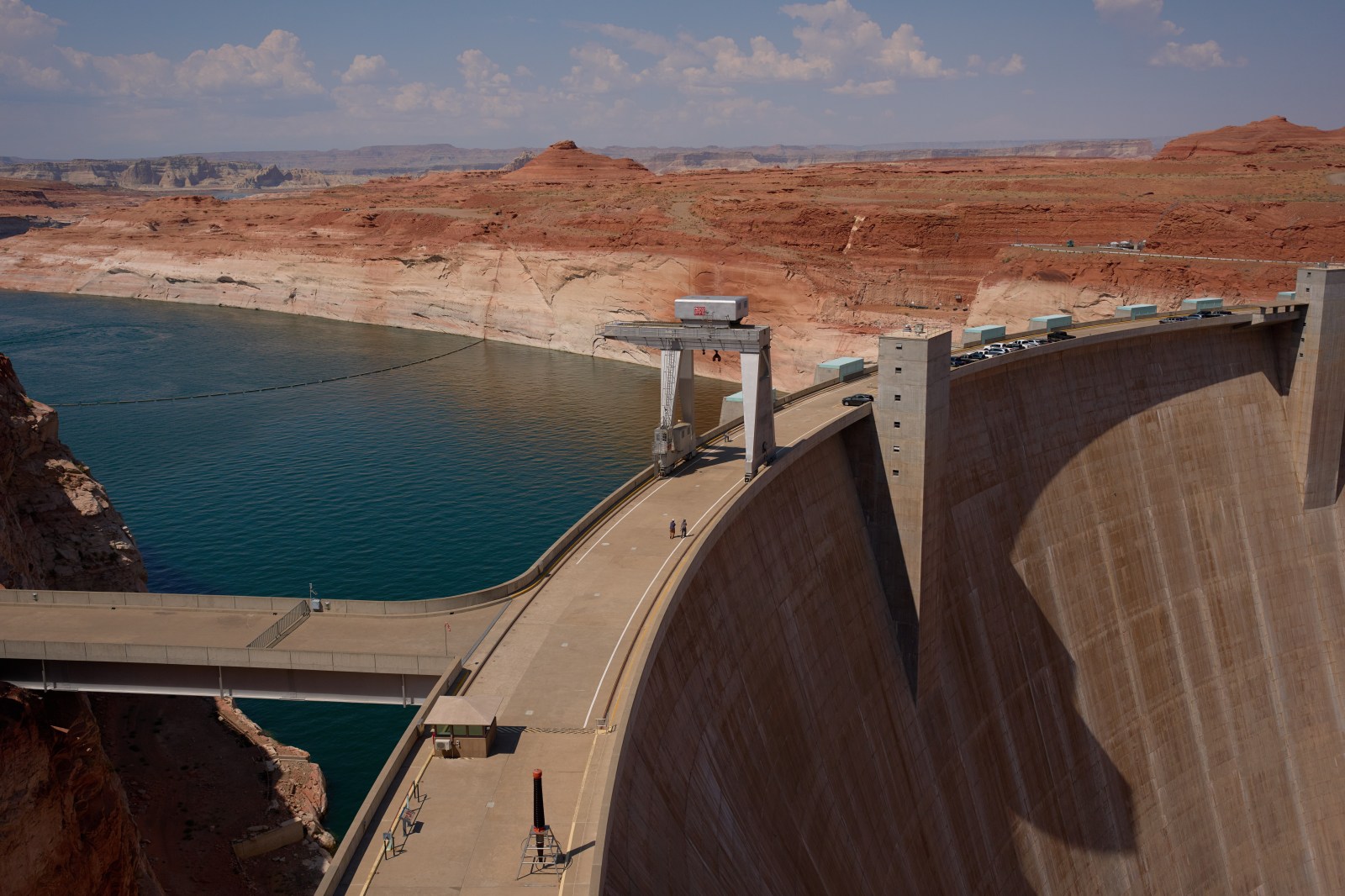
Water levels in key reservoirs Lake Powell and Lake Mead have reached record lows, leading to a significant decrease in hydropower generation this summer, according to the U.S. Energy Information Administration (EIA). This decline follows prolonged drought conditions affecting the Colorado River Basin.
Impact on Energy Production
The water levels at Lake Powell and Lake Mead, created by Glen Canyon Dam and Hoover Dam respectively, are nearing the minimum required to generate electricity. The Southwest’s hydroelectric power production was down 19 percent from April to August compared to last year, and 28 percent below the 10-year average.
Why This Matters
The Colorado River Basin is crucial for around 40 million people across the Western United States. It supports agriculture, municipal water supplies, and electricity generation. As prolonged drought continues, declining reservoir elevations are becoming a major concern for both federal and state officials.
Seven states rely on the Colorado River for hydropower and other water needs. These states include Arizona, California, Colorado, Nevada, New Mexico, Utah, and Wyoming. Hydropower relies on sufficient water pressure, but current levels are only slightly above the threshold for power generation.
Efforts to Prevent Further Decline
Officials have worked for years to keep these reservoirs above critical levels. At the end of September, Lake Powell’s elevation was 3,518 feet, only 28 feet above the level necessary for power generation. Lake Mead was at 1,038 feet, 88 feet above its minimum requirement.
Economic Impact
Hydropower is one of the least expensive electricity sources in the West. When shortages occur, utilities must turn to other energy sources like natural gas, solar, and imports, which are often more costly.
The EIA predicts that by 2026, hydropower will make up about 4 percent of the region’s electricity mix, down from 8 percent in 2011. This year’s total hydropower generation is anticipated to be 6.13 billion kilowatt-hours, about 9 percent lower than 2025 projections.
Mitigation Steps
Federal measures to stabilize water levels include releasing water from Flaming Gorge Reservoir to support Lake Powell and reducing releases from Lake Powell itself. Additionally, California, Arizona, and Nevada have been required to cut water consumption by 1.25 million acre-feet annually for two years.
Looking Ahead
As of September, conditions slightly improved for both reservoirs. Lake Powell stayed above its critical power pool level, and Lake Mead remained well above its operational threshold. The EIA reported that this year’s El Niño could lead to increased precipitation, improving reservoir inflows and hydropower output.
Despite this, predictions suggest hydropower generation will remain steady next year at about 6.1 billion kilowatt-hours. Increased snowpack and runoff may offer some drought relief, but experts warn that one wet year will not compensate for long-term water shortages in the Colorado River Basin.
Ongoing drought pressure could further strain water supplies and reduce access to low-cost hydropower, eventually raising costs for both utilities and consumers.
Leave a Reply