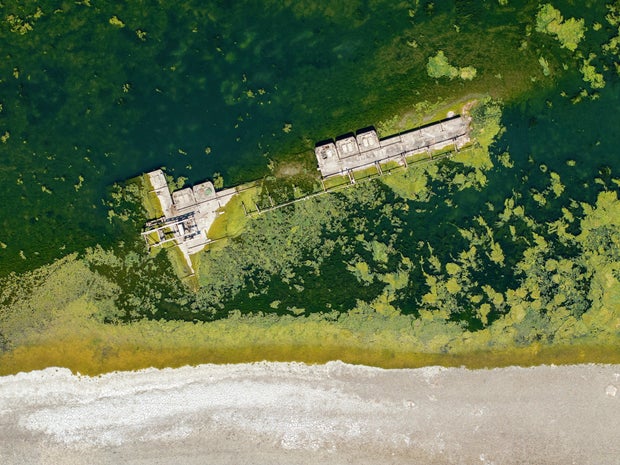
The Danube River, Europe’s second longest, has reached record-low water levels due to a severe drought. This has exposed remnants of World War II, including numerous German battleships, and the remains of a woolly mammoth. These discoveries, though fascinating, underscore the dire summer heat conditions affecting the region.
Impact on Infrastructure and Environment
The low water levels in the Danube are impacting power plants, which face the risk of shutdown. As a result, Central and Eastern European governments are implementing measures to conserve electricity. One area particularly affected is near Prahovo, Serbia, where the river separates Serbia and Romania. Here, a rusty ship hull is visible, a relic of Nazi Germany’s Black Sea fleet, which was deliberately sunk to slow down Soviet advancement in World War II.
Historically, up to 200 German ships were scuttled in the area during late 1944 to impede Soviet progress through the Balkans. Despite Nazi Germany’s surrender in May 1945, the wrecks remain as reminders of this strategy. Efforts, some funded by the European Union, have aimed to remove these ships. Challenges persist due to the explosives some still contain.
Shipping Challenges and Climate Considerations
Low water levels significantly hinder ship traffic on the Danube, which traverses ten countries. Resident Krsta Brandic noted the stoppage of large vessels due to these shallow conditions. Past summers have seen similar occurrences, with scorching droughts revealing troves of sunken ships.
Experts are attributing the extreme heat contributing to the water level decrease to global warming. This environmental change has brought both old, dangerous ships and historical artifacts to light.
Discovery of Mammoth Remains
The drought has also led to an archaeological find in Bulgaria. Near Ruse, on the Danube’s parched riverbed, bones believed to belong to a woolly mammoth have surfaced. Nikolay Nenov, museum director, confirmed the identified jawbone, tusk fragments, shoulder blade, and femur. These remnants, thought to belong to a young mammoth from the Ice Age, provide insight into the past, showcasing how these animals coexisted with early humans.
The well-preserved bones were all located in one place, indicating they likely belong to the same individual mammoth. Scientists have long been piecing together the existence of these ancient creatures, whose tusks and bones were once used by humans for tools.
Leave a Reply