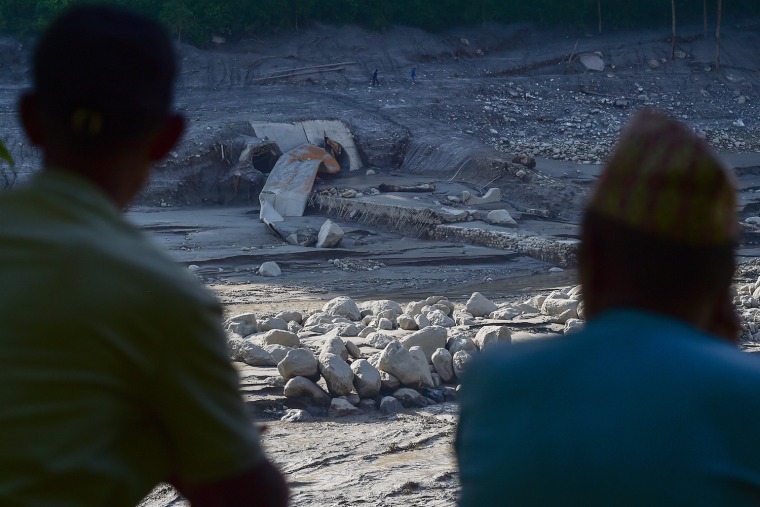
On Wednesday, the likelihood of finding more survivors in Nepal diminished, yet officials remained hopeful for the workers trapped in hydropower tunnel projects. This comes a week after a glacier collapse in the Himalayas caused catastrophic flash floods, claiming at least 1,114 lives and leaving nearly 4,000 people unaccounted for.
Focus on Hydropower Tunnel Rescue
Authorities concentrated rescue efforts on power plants where workers might have survived inside tunnels. These facilities contain spaces and rooms with provisions. Rescuers aimed to reach these areas and search for survivors, with reports of 639 individuals still missing, some potentially trapped. An official from the Nepal Electricity Authority expressed confidence in their survival due to available food and water.
“We are very confident that they must be alive after one week because they have food and water over there in the building,” said Amhsu Kiran Shahi, a board member of the Nepal Electricity Authority.
Despite dwindling hope of finding survivors elsewhere, rescue teams are persistently scouring the mountainous regions along the China border, where the floods wreaked havoc.
Survivor Hopes in Tunnels
Major rescue operations are focused on tunnels across four projects. Two projects, with almost 100 missing individuals, hold the highest potential for survival, according to officials. At Trishuli-3A, it is believed there is a dry area within the tunnel, and rescuers are using pipes to pump oxygen inside. The Trishuli Hydropower Plant faced significant tunnel damage, but hope remains.
Specialized teams from India, China, and the United States are participating in efforts to rescue those trapped in the tunnels.
Tibet Becomes Accessible
Across the border in Tibet, China’s death toll has stayed at 16, with 546 individuals missing. Updates are expected as China reopened the road leading to the Gyirong border crossing, allowing for efficient disaster response with heavy machinery now reaching the core disaster zones.
Chinese state broadcaster CCTV showed that heavy machines and search equipment had reached the former Chinese border inspection site. Crews equipped with life-detection devices and search dogs are dispatched, facing challenges of persistent rain and difficult terrain.
Community and International Response
China’s official reports mention 104 Indians, 49 Nepali citizens, and 33 Latvians missing, believed to be tourists. Beijing plans to send more DNA identification experts and emergency supplies to support the rescue missions.
Nepal’s affected communities are trying to salvage what remains of their villages. Shanta Sunar, 45, a shopkeeper, shared her experience escaping safely with her husband, though losing everything they owned. Children in areas like Nuwakot and Rasuwa are experiencing psychological distress, as reported by Save the Children. Many children are fearful, having witnessed the flood through firsthand horrors.
Rebuilding and Recovery Efforts
Nepali Prime Minister Balendra Shah reported government efforts, with international assistance, to restore crucial infrastructure like telecommunication, power supply, and transport. By Tuesday, 95% of telecom services in affected regions were restored. The flood disrupted 431 megawatts of electricity generation capacity.
The Prime Minister remarked on the enormity of the disaster impacting human civilization and noted that security personnel, dispatched to warn residents, were also reported missing during the calamity.
Leave a Reply