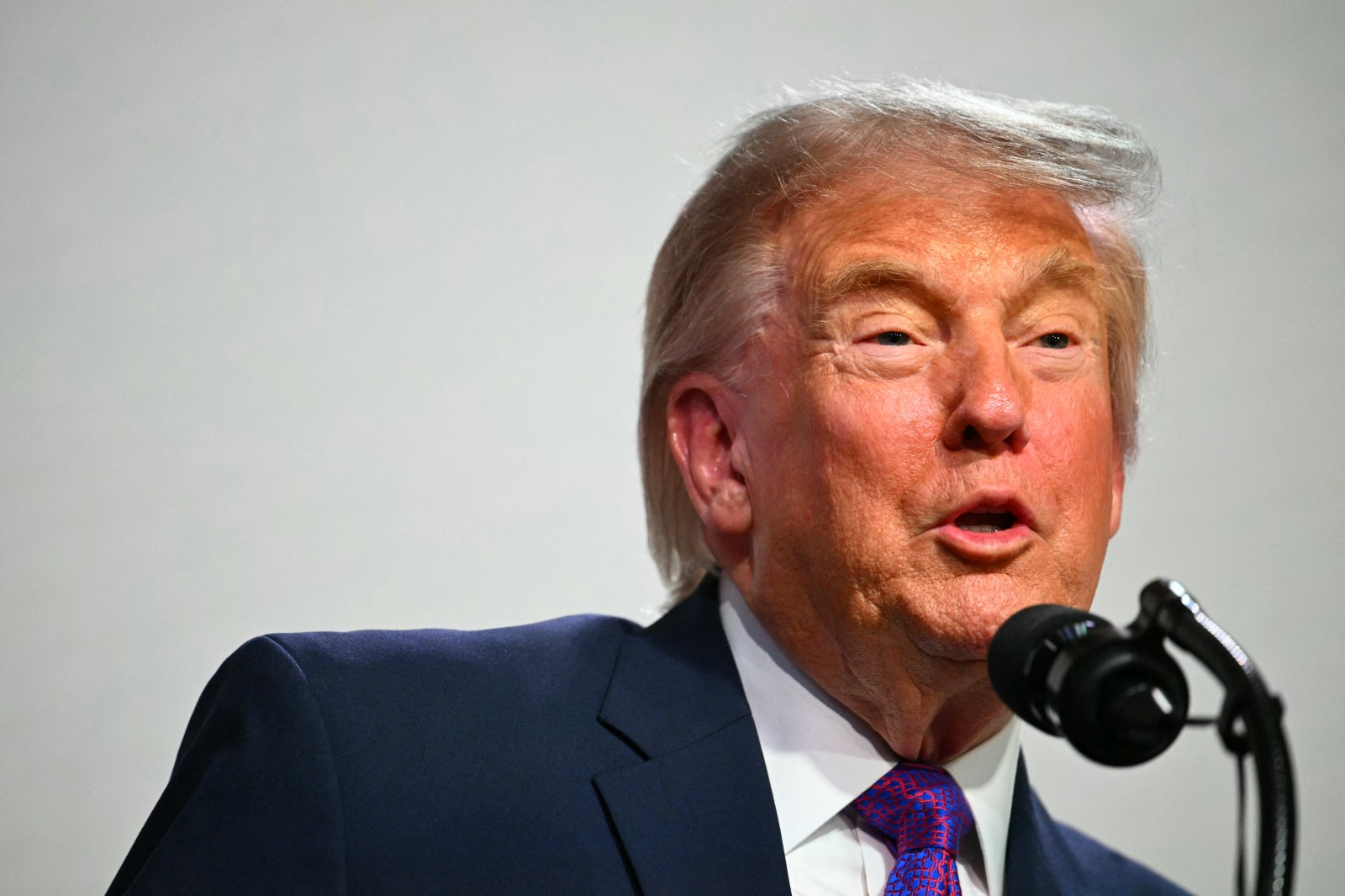
A new poll from AP/NORC revealed that Republicans’ dissatisfaction with President Donald Trump’s economic management has reached 37 percent, marking a significant concern for the GOP with the 2026 midterm elections approaching. This record level of disapproval within his party could indicate a shift in Trump’s support base, despite his emphasis on economic strengthening and inflation control as critical components of his 2024 campaign. Americans still grapple with an unstable economy and rising living costs over a year into Trump’s term. The ongoing Iran war has exacerbated this, with the national average gas price reaching $4.555 per gallon, as reported by AAA.
White House spokesperson Kush Desai, speaking to Newsweek, maintained confidence in the economy’s strength under Trump. He reassured that as Congress advances the President’s healthcare and housing affordability measures, Americans could anticipate improvements in the second Trump term.
According to the poll, conducted from May 14 to May 18, 2026, 30 percent of Republicans also disapprove of Trump’s management of the Iran situation, escalating the global economic disruption. The survey included 1,117 adults and carries a margin of error of 3.8 percentage points. In evaluating Trump’s economic handling, only 33 percent of Americans expressed approval, while 67 percent rated his performance negatively.
Trump’s Approval Rating Experiences Modest Growth
Despite rising discontent with Trump’s economic strategies among Republicans, the poll indicated a slight improvement in his overall approval rating since April. This metric rose from 33 percent to 37 percent, though it remains lower than the 41 percent approval noted in May 2025.
Trump’s Continued Influence Over GOP Primaries
Trump’s status within the Republican Party remains formidable, evidenced by his continued strong influence, even if his national approval rating has weakened. Recent GOP primary outcomes underscore his dominance. Notably, in a Kentucky House GOP primary, Trump-endorsed Ed Gallrein defeated Representative Thomas Massie, who had been critical of Trump’s handling of the Epstein files and the Iran conflict. Similarly, Trump-endorsed representatives advanced in significant primaries, such as in Louisiana, over opponents who previously voted against Trump.
Additional Polls on Trump’s Approval
Other recent polls also show a decline in Trump’s approval ratings, both nationwide and in crucial swing states:
- Reuters/Ipsos (May 15-18): 35 percent approval, 63 percent disapproval
- Echelon Insights (May 14-18): 40 percent approval, 59 percent disapproval
- YouGov/The Economist (May 15-18): 37 percent approval, 57 percent disapproval
- New York Times/Siena College (May 11-14): 37 percent approval, 59 percent disapproval
Impact of Trump’s Approval on Upcoming Midterms
Trump’s approval ratings are expected to play a significant role in the midterm elections, which traditionally evaluate the incumbent president’s performance. Typically, the party in power loses seats. During Trump’s first term, Democrats gained control of the House by flipping 41 seats in 2018. In 2022, under former President Joe Biden, Republicans captured nine seats; by contrast, in 2010 during President Barack Obama’s first midterm, Republicans gained 62 seats.
If Trump’s ratings remain low, a similar outcome could be anticipated. On Wednesday, the market prediction platform Kalshi suggested a 74 percent chance for Democrats to reclaim the House, while Republicans had a 54 percent chance to hold the Senate. Similarly, Polymarket indicated an 81 percent likelihood of Democrats securing the House majority, yet projected Republicans maintaining Senate control at 52 percent.
Challenges of Rising Gas Prices for GOP Amid Midterms
Gas prices have surged due to the Iran war’s impact on the Strait of Hormuz, a key oil transportation route. Normally, 20 million barrels of oil, representing a fifth of global consumption, transit through this channel. The conflict-induced closure has further strained oil markets, raising gas prices in the U.S.
Gas prices increased from $4.533 per gallon on Tuesday to $4.555 per gallon on Wednesday, according to AAA data. A year ago, the average was $3.177 per gallon. California currently faces the highest prices, at $6.145 per gallon. Democrats attribute rising gas prices to the conflict, emphasizing this in their political messaging.
Experts suggest that a resolution between Washington and Tehran might eventually reduce gas prices, yet relief could take time. Trump’s remarks have been inconsistent, initially forecasting a swift resolution to the conflict. Meanwhile, Congress is proactive; House Republicans have passed a bill permitting year-round sales of E15, a gasoline-ethanol blend. This measure aims to address rising fuel costs, as E15 is typically less expensive than other blends.
Leave a Reply