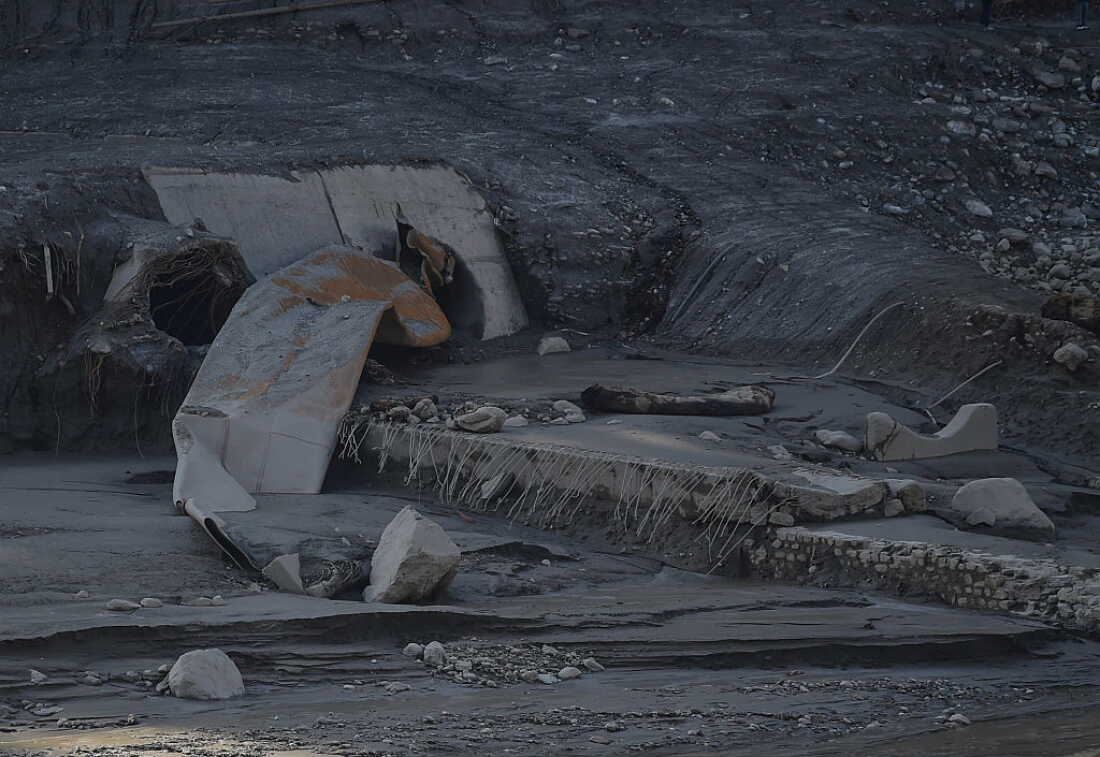
In the wake of catastrophic floods that swept through riverside communities in Tibet and Nepal, rescuers are working tirelessly to locate potential survivors. The disaster, which claimed over 1,000 lives, has left numerous people trapped beneath mud and debris at hydro-power plants.
According to rescuers, one major challenge is locating the tunnels where workers may have sought refuge during the flooding. As described by tunneling expert Arnold Dix, the aftermath resembles a landscape ravaged by an explosion.
The rescue operation is extensive, engaging about 21,000 Nepali security forces, as highlighted by Lok Bahadur Poudel Chhetri, spokesperson for the Ministry of Foreign Affairs. The search is primarily focused on uncovering the tunnels of power plants buried under up to 50 feet of debris caused by the flood.
The disaster was triggered by a massive chunk of glacier breaking off from a mountain and rushing into a river valley, carrying with it mud, rocks, and ice. The resulting torrent obliterated local communities and hydropower stations, primarily those lining the Trishuli River.
“Power stations have essentially gone missing from the surface,” Dix stated. The altered terrain has complicated locating the sites; however, rescuers are employing advanced mapping techniques to trace tunnel entrances that may lead to the buried turbine stations.
Dix emphasized the potential for survival in some turbine houses. He is spearheading efforts at Trishuli 3A, a power plant believed to harbor numerous trapped individuals. Recent work there has unearthed huge boulders and mud blocking tunnel entrances, requiring military intervention to remove obstacles using controlled explosives.
To prevent water inundation, the team has engineered an artificial drainage system to clear tunnels. While the task is daunting, some success has been achieved, with nearly 300 people rescued from various hydropower projects.
One survivor, Janak Thapaliya, recounted narrowly escaping after scrambling onto a floating water tanker amidst the chaos. Tragically, not all his colleagues survived.
Frustration has brewed among Nepalis over perceived government hesitance in seeking international aid. Prime Minister Balen Shah’s government has refuted these claims, asserting that assistance has been aligned with on-ground requirements. Senior adviser Ashish Pradhan of the International Crisis Group noted improvements in response efforts.
International teams, including specialists from India, China, and an impending Korean team, have joined Nepali efforts to execute these challenging rescues effectively.
Leave a Reply