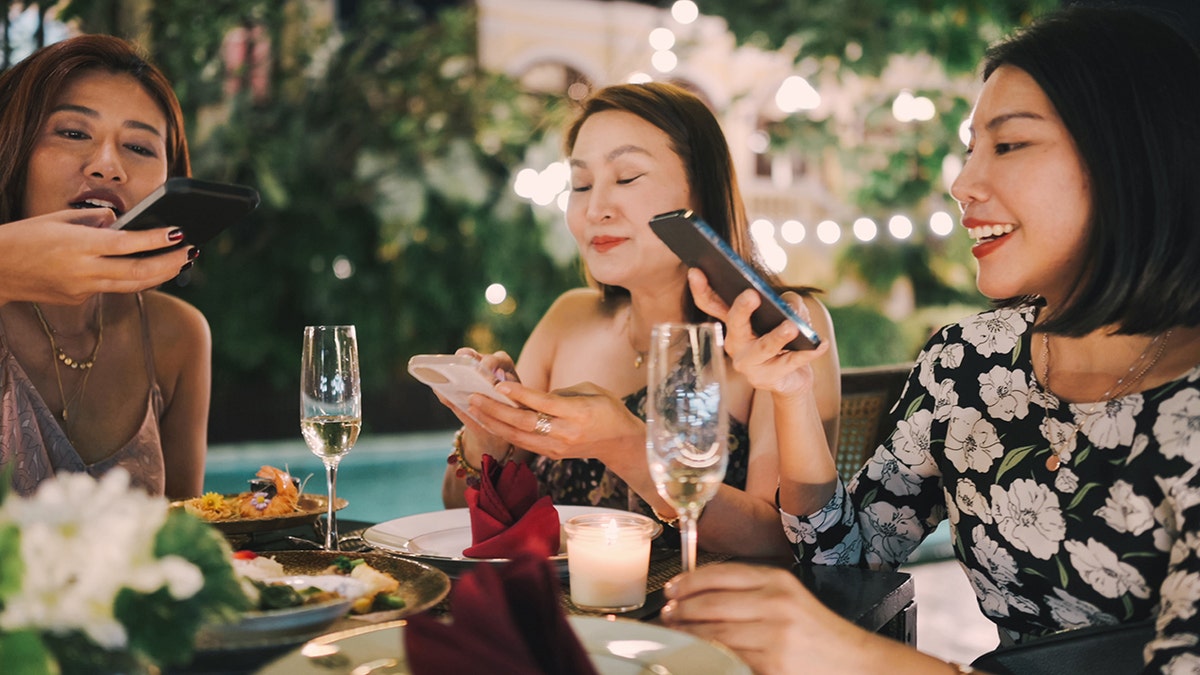
As cigarette smoke has faded from dining rooms, smartphones have become a new source of distraction in restaurants. Some restaurant owners are finding creative methods to encourage diners to focus on the experience rather than their screens.
At Antagonist, a cocktail bar in Charlotte, North Carolina, guests receive a lockable pouch for their phones upon entry. The goal, according to Adam Horner, the bar’s general manager, is to rekindle human connection.
“We all feel that technology has taken away a slice of human connection,” Horner said.
Another venue, The Saloon in Washington, D.C., prohibits phone use entirely. Regular patrons appreciate the policy for promoting a social bar atmosphere.
In Manhattan, Eulalie bistro starts with a no-phone policy visible at the entrance and on menus. Co-owner Tina Vaughn notes that diners often seek an excuse to disconnect from their devices.
Hop Sing Laundromat in Philadelphia bans calls, texting, and photos as part of its speakeasy experience.
Although some establishments strictly enforce no-phone policies, there are more subtle methods, such as The Edge Harlem in New York City, which does not offer Wi-Fi. A sign reads, “No Wi-Fi. No Screens. Connect With Each Other.”
Restaurants in Europe are also adopting unique strategies. Spy Bar in London covers phone camera lenses with stickers, while AI Condominio in Verona, Italy, rewards diners with wine in exchange for their phones.
The trend appears most popular at curated experiences like tasting-menu restaurants and cocktail lounges. Some major chains, like Chick-fil-A, also experiment with phone limitations. Their “Cellphone Coops Challenge” encourages patrons to store phones in a box for free ice cream.
Phones disrupt service rhythms, according to Sanwar Mal Khokhar, a Dallas-based mixologist. “A photo is fine,” Khokhar said, “but flash photography and blocking areas can affect staff and guests.”
“A photo of a drink or dish is acceptable,” Khokhar added. “Checking a message or looking up an ingredient is part of modern life.”
He suggests voluntary phone-free events and rewards for participation as alternatives to bans.
Rachael Barclay, founder of Vantage, argues phone overuse is a societal problem. She feels locked pouches can oppose hospitality.
“Phones have affected bars, but a pouch might be too far,” Barclay said.
Both Khokhar and Barclay agree that reducing phone use can lead to more meaningful conversations and experiences.
Leave a Reply