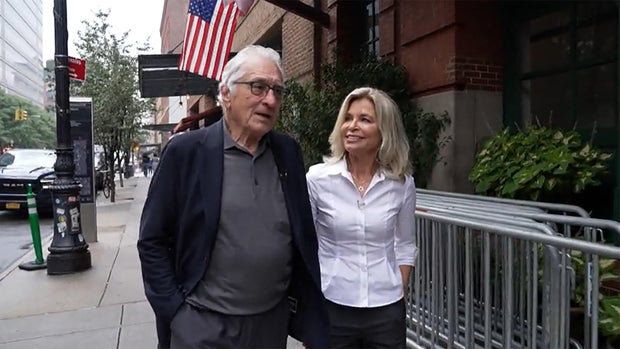
Film icon Robert De Niro has long been associated with Lower Manhattan. The September 11, 2001 attacks impacted him deeply, both personally and professionally. “You know, the East Side is another world to someone like me who’s Lower Manhattan,” he commented. On that fateful day, De Niro had plans to travel to California. Instead, he found himself witnessing the tragic events unfold firsthand. “I was at a meeting in Midtown, and instead of going to the airport, I came back down here, and saw the tower, the North Tower, the smoke coming out, and so on. And then saw the South Tower fall,” he recounted.
Following the attacks, Lower Manhattan turned into a ghost town. De Niro remembered the dust-strewn neighborhood vividly. “The thing I remember most is, right up here it was with the dust that was wet down, as I say, every day, every few hours maybe, with the sanitation water trucks to keep that stuff down.” The dust, a toxic and hazardous remnant from Ground Zero, seeped into homes and buildings. Concerned for his safety, De Niro taped his windows to prevent dust infiltration.
“I always felt it would come back,” De Niro reflected. “It could never not come back. Like anything, it could take time.”
In response to the city’s devastation, De Niro and his business partner, Jane Rosenthal, contemplated ways to help rejuvenate their community. Rosenthal, a mother of two, shared her fears but also her resolve. “I was scared: What’s going to happen again? I mean, it’s all those feelings. But it’s also like, okay, how can we help?” Their answer was the Tribeca Film Festival, which they had already considered before 9/11 but, after the events, became a beacon for healing.
The first Tribeca Film Festival was inaugurated in May 2002. It drew a significant audience and renowned guests like Nelson Mandela. De Niro remarked, “It just seemed like the right thing to do.” For Rosenthal and De Niro, the festival was their way of saying, “This is going to be okay.” Over 150,000 attendees lined up for the initial festival, embracing a message of resilience and hope.
Over the years, the festival has expanded beyond films. It now includes concerts, talks, industry panels, podcasts, virtual reality, and game offerings across New York City. De Niro has passionately engaged with politics off-screen. Recently, he participated in “No Kings” rallies advocating for democracy. The festival continues to serve as a platform for addressing societal traumas. Rosenthal explained, “We’re a festival that was started because of an act of war. It was to say to the rest of the world, ‘We’re still here.'”
De Niro views the festival as an “act of defiance” against troubling political landscapes. He openly criticizes the Trump administration, calling for change. The administration’s response to De Niro’s critiques has been dismissive, labeling him as having “Trump Derangement Syndrome.” De Niro counters, “‘Trump Derangement Syndrome’ is because of what he’s done. They revert it. He reverts things and inverts them and twists them around.” Emphasizing the importance of speaking up, he notes, “things being said now here have to be allowed to be said.”
As the Tribeca Festival approaches its 25th anniversary, a new documentary, “Tribeca 25,” premieres on Netflix, highlighting its journey. The festival has significantly contributed to Lower Manhattan’s revival, bringing thousands of films and millions of dollars to the area. It has launched careers of renowned directors and continues to impact the cultural landscape.
Expressing pride in the festival’s achievements, De Niro summarized, “I’m very proud of what we’ve done. That’s all.” He acknowledged that Tribeca indeed needed such a festival, confirming its unique role.
Leave a Reply