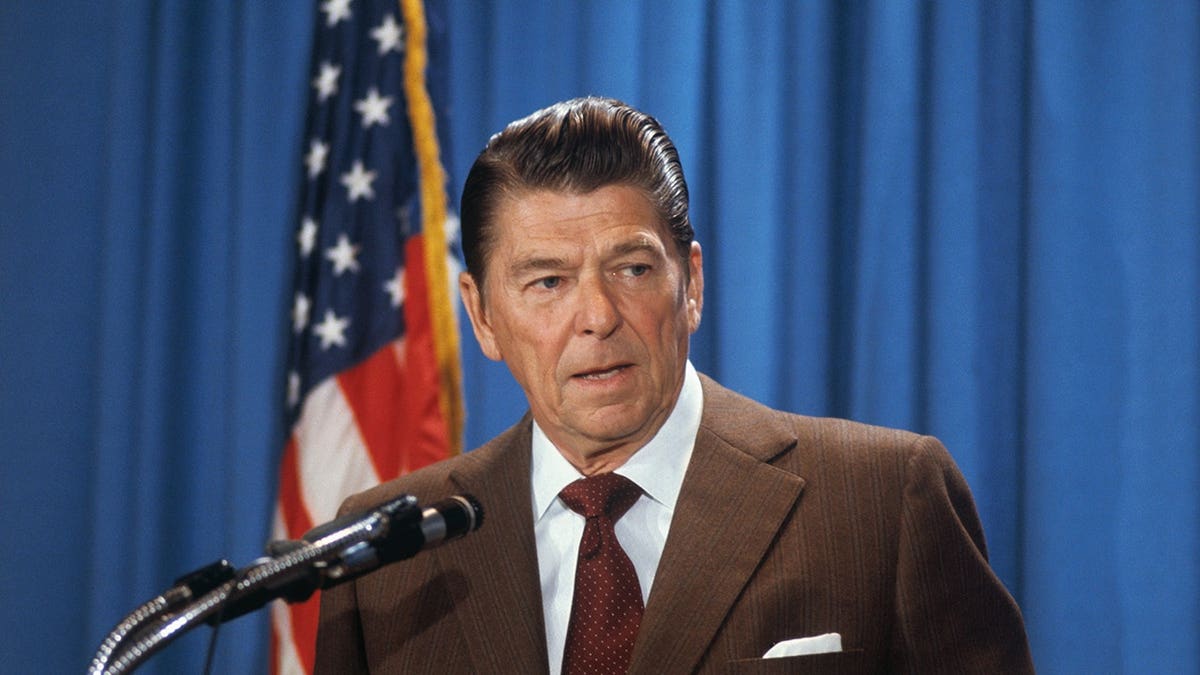
The United States faced significant pressure from the Soviet Union to maintain nuclear superiority beginning with the Cuban missile crisis. As the U.S. became entangled in the Vietnam War, the Soviet Union sought to enhance its nuclear capabilities. This push for dominance reached a critical point just as Ronald Reagan defeated Jimmy Carter, taking office with plans of a defense buildup unprecedented in peacetime America.
Roger Zakheim’s new book, “Peace Through Strength: How Reagan’s Military Buildup Won the Cold War,” delves into the strategic efforts Reagan and his advisors undertook to restore America’s military strength. Zakheim draws upon his experience as the director of the Ronald Reagan Institute and past roles as general counsel of the House Armed Services Committee to provide insights into Reagan’s lengthy campaign for rebuilding U.S. defense capabilities.
The book explores Reagan’s strategic commitment dating back to his campaign for the Republican nomination and eventual presidency in 1980. This dedication to strengthening the American arsenal relied upon a network of advisors, whose efforts covered both political and public spheres, aiming to counter the Soviet threat and promote peace via overwhelming military strength.
“Winning the Cold War was a primary goal of President Reagan, achieved through a comprehensive and well-funded military strategy,” Zakheim writes.
Reagan’s defense program involved complex and costly measures, aided by key figures like Secretary of Defense Caspar Weinberger and Allied advocates on Capitol Hill, such as Senators John Tower and Sam Nunn. Despite setbacks, such as debates over missile systems, the administration’s efforts ultimately fortified America’s position during the Cold War.
The authors discuss how, although Congress commands the construction and maintenance of military assets like nuclear-powered aircraft carriers, these elements face inevitable obsolescence. Hence, a continuous effort to update and replenish U.S. defenses is essential. Presently, as the national debt surpasses $40 trillion, questions arise over funding defense among other budget priorities.
President Trump’s administration has initiated steps towards revitalizing the national security infrastructure, yet continued progress is in jeopardy with shifting congressional priorities. Today’s threats, including China’s emerging power, mirror Soviet-era concerns, suggesting the need for strategic vision akin to Reagan’s.
Zakheim’s book not only appeals to history buffs but also serves as a crucial read for aspiring politicians. It underscores America’s previous resolve to prioritize defense amid complex global threats, reinforcing the importance of such focus in future presidential campaigns.
Leave a Reply