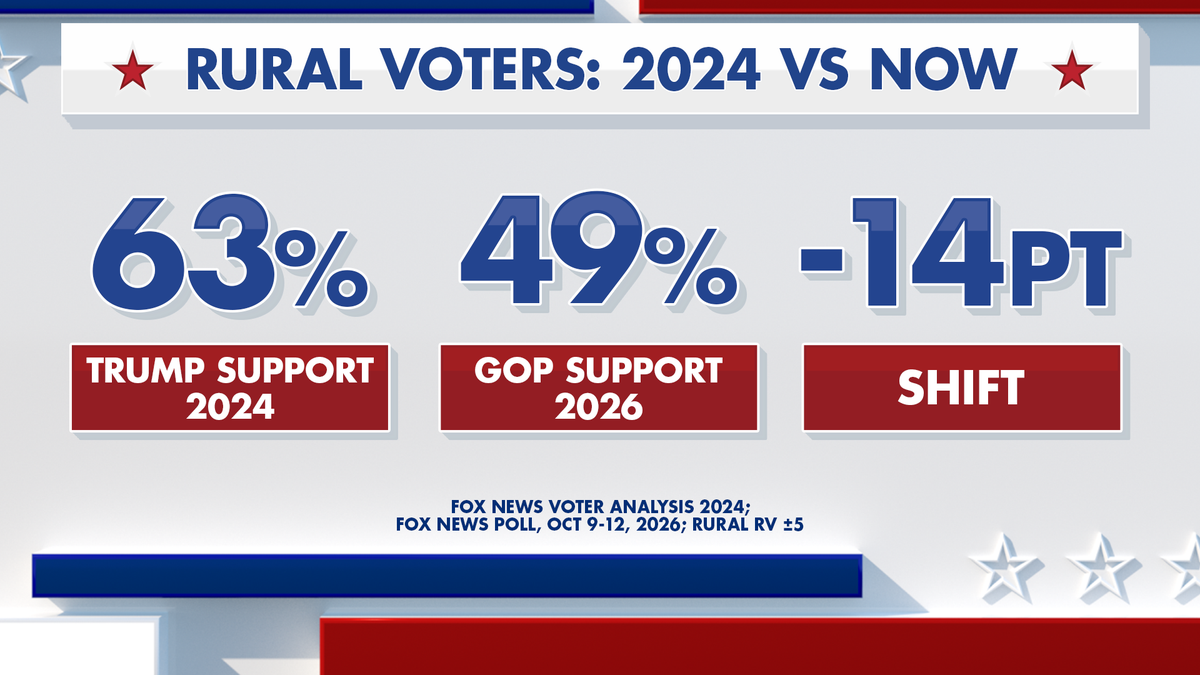
Republicans have experienced both wins and losses in elections this century. Historically, they could rely on the support of rural voters. Once evenly divided, rural voters have shifted significantly toward the Republican Party over the last twenty years, with almost two-thirds supporting President Trump in the recent 2024 election.
Rural Voter Concerns
Currently, less than half of rural voters express support for the GOP. Like many Americans, rural voters are worried about financial issues. In a recent survey, 19% identified the rising cost of living as their main economic concern. Gas and energy costs followed closely behind. The Trump administration attempted to address these worries by highlighting job growth and advancements in AI, yet frustrations persist among rural voters.
Fewer than 25% of rural voters consider the economy to be in good condition, with unemployment being a major issue. Eight percent cite the lack of jobs as their biggest concern, and only 28% believe there are good job opportunities locally. Data centers also play a role, with 2% identifying them as their largest economic problem, surpassing concerns about housing, cost of living, or employment.
These challenges create difficulties for Republicans, especially in heartland states like Ohio and Iowa, where races have been competitive. Even districts previously won by Trump with clear margins are now closely contested. In Wyoming, campaign ads for Republican Chuck Gray omit mentions of Trump or the GOP, despite Trump’s prior strong performance there.
Low rural voter turnout or party switching could tighten GOP races in states such as Florida, Mississippi, and South Carolina. Four states are noteworthy due to independent candidates challenging Republicans in rural-heavy regions: Idaho, Montana, Nebraska, and South Dakota. These candidates emphasize anti-establishment policies, including congressional term limits and corruption. They intend to remain unaffiliated with either main party, or possibly form an independent caucus if elected.
Given the weak Democratic presence in these states, the Democrats have largely withdrawn from the race, save for a candidate in Montana. Typically, in such scenarios, it leads to a reduced victory margin for the incumbent party. However, this year offers voters alternatives, potentially narrowing the vote gap.
Over the last decade, these states have seen competitive races. Democratic Sen. Jon Tester maintained his seat in Montana in 2018, and Republicans achieved narrow victories in South Dakota and Nebraska. Even Idaho’s 2014 gubernatorial race had a tight outcome.
Gubernatorial Races and Their Dynamics
With the final weeks of campaigning underway, some gubernatorial races are getting more competitive. In Florida, both GOP figures Trump and Gov. Ron DeSantis have achieved strong electoral results, with DeSantis winning his last re-election by a large margin. Republicans have built structural advantages in the state, including a significant voter registration lead. Yet DeSantis initially won by less than a percentage point in similar circumstances to today.
Hispanic voters will play a crucial role. In a recent poll, 31% of them preferred the Republican candidate, a drop from their previous support levels. Republican candidate Rep. Byron Donalds benefits from DeSantis’ endorsement, while Democrat David Jolly gains support from former President Bill Clinton. Despite current trends, the Florida race moves from ‘Likely R’ to ‘Lean R’.
In Nebraska, sitting Republican Gov. Jim Pillen seeks a second term. Although he won comfortably before, shifting voter sentiments on Trump make the current race challenging. The candidacy of independent Dan Osborn could increase Democratic turnout, potentially aiding challenger Lynne Walz. Local opposition to Pillen’s budget cut and hiring freeze further complicates the election. Third-party candidate Brett Lindstrom adds another dynamic, having previously contested against Pillen in a GOP primary.
Leave a Reply