The integration of artificial intelligence (AI) is redefining roles at the German software giant SAP. The company is encouraging employees to reshape their positions instead of eliminating them entirely. This approach has gained mixed reactions from experts regarding its feasibility.
AI and Job Transformation
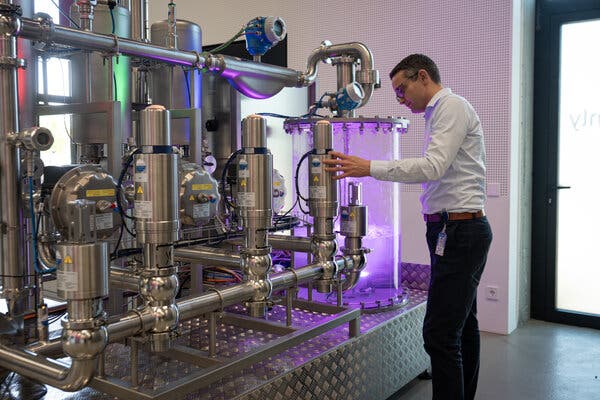
Matthias Deindl, a product management executive, utilizes AI in an enhanced production line located in Walldorf, Germany. Here, AI has taken over substantial components of software engineering roles, such as brainstorming, competitor research, and coding.
Yet, employees like Fabrizio Primerano continue to contribute to SAP despite AI’s growing capabilities. His role now demands fewer routine tasks but involves managing and mentoring AI agents, also known as bots. These bots are programmed to function similarly to personal assistants or human colleagues.
“It’s freeing me up to do more of this creative work,” Primerano emphasized, highlighting the shift in job responsibilities.
SAP’s Strategic Shift
SAP, recognized as Europe’s leading software company by market value, is adopting an ’embrace and transform’ strategy towards AI technology. This technology increasingly challenges its core business model and the necessity for human coders. The firm’s leaders acknowledge AI’s impact in reducing human involvement in numerous tasks.
In a significant restructuring two years ago, SAP reduced its workforce by nearly 10,000 jobs, citing AI as part of the reason for the cuts. The company has not disclosed how many of these jobs were directly affected by AI nor the specific types of jobs that were eliminated.
Despite this reduction, SAP has proactively promoted innovation among its workforce to create new, valuable roles using advancing technology. The company has introduced over 3,500 new positions since 2023. Among these roles are ‘forward-deployed engineers,’ who collaborate with clients to develop AI-driven solutions.
Christian Klein, SAP’s chief executive, expressed his vision that traditional coding roles might phase out over the next few years. He anticipates sustaining a workforce that is not smaller, but remarkably different.
“I’m not sure if here someone in two or three years will still code software,” Klein noted, forecasting significant changes in the company’s workforce composition.
Leave a Reply