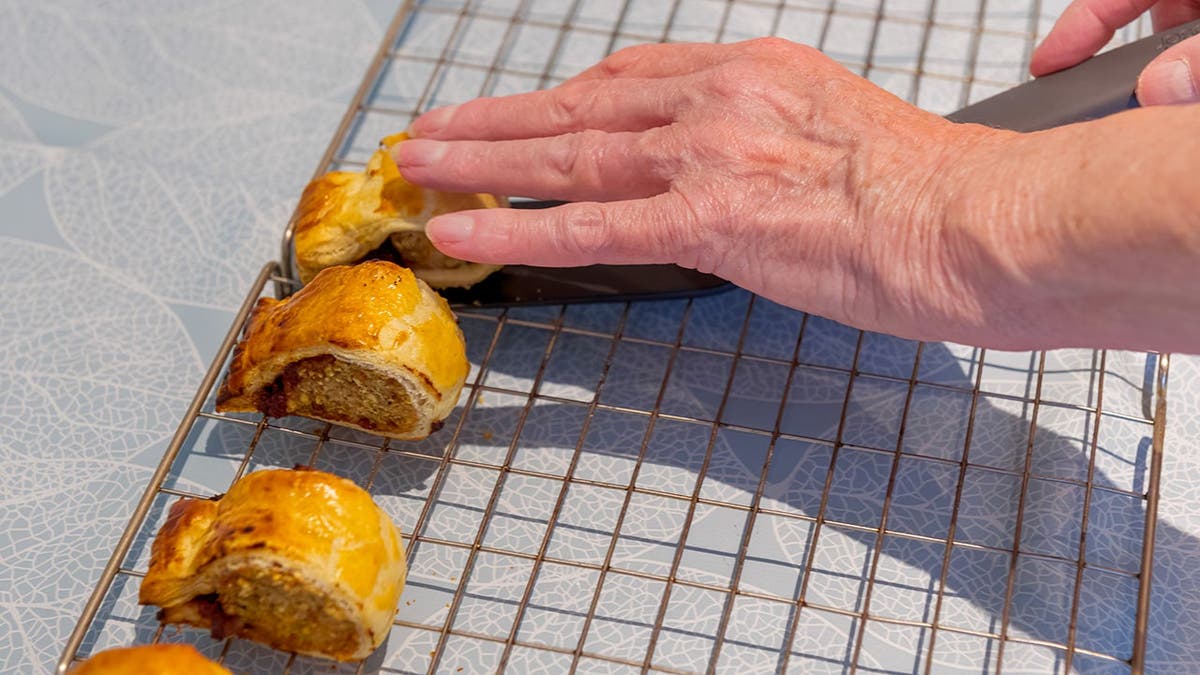
Scottish scientists aim to create a healthier version of the classic sausage roll by developing a plant-based alternative to traditional fats used in pastries. Researchers at Heriot-Watt University in Edinburgh have begun testing their innovative approach outside the lab, collaborating with food industry partners to assess consumer acceptance.
Sausage Roll Popularity
Sausage rolls are a staple in British diets. Annually, the UK sees the sale of 10 to 15 million sausage rolls weekly. Each contains between 11 to 12.4 grams of saturated fat, surpassing 60% of the daily recommended intake for adults.
Addressing Health Concerns
Lead researcher Professor Stephen Euston remarks on the project’s focus to maintain the flavor and texture of traditional pastries while reducing saturated fat. The team is also exploring applications for laminated pastries like croissants and turnovers.
Traditional pastry methods use butter or lard, creating flaky textures through steam expanding between layers. Replacing these with liquid oils usually fails due to the lack of structure in separating layers.
Innovative Methods
The research employs a process called oleogelation, allowing plant oils such as sunflower and rapeseed to mimic solid fats. This approach aims to lower saturated fat content and enable the use of locally-sourced, sustainable crops.
Despite early promising results, some dietitians, like Kelly Springer, caution the need for extensive research before confirming health benefits. Euston, however, envisions oleogels reducing the need for chilling dough, streamlining baking processes.
Debate on Seed Oils
The development comes amid debates over seed oils. Critics argue seed oils, prevalent in processed foods, increase health risks. However, Euston and institutions like the British Heart Foundation counter these claims, highlighting seed oils’ lower saturated fat content. Heriot-Watt’s technology emphasizes using cold-pressed oils that avoid chemical processing.
Leave a Reply