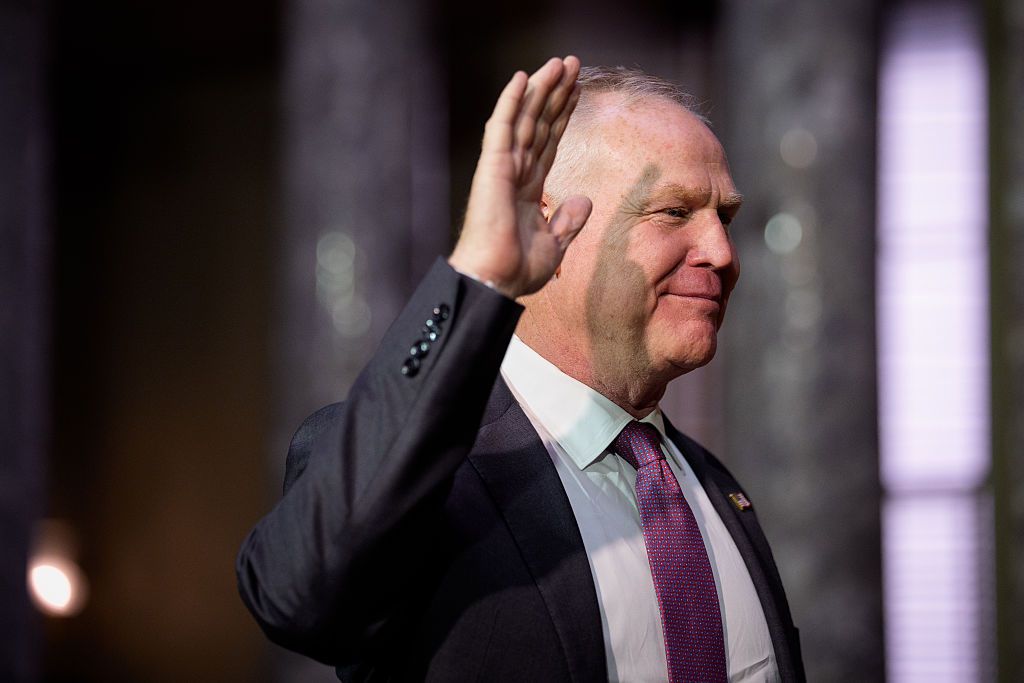
Senator Armstrong’s Stance on Federal Permitting Rules
Oklahoma Republican Senator Alan Armstrong advocates revamping federal permitting rules to support new power infrastructure. This initiative, he argues in a Newsweek interview, aims to meet growing electricity demands from data centers without burdening households with extra costs. The context arises from artificial intelligence becoming a significant factor affecting affordability.
“We have to have data centers,” Armstrong stated in his Newsweek interview. “Data centers have mistakenly become scapegoats for high energy prices.”
He suggests replacing the blame on data centers with concerns over inadequate generation and grid infrastructure, introducing a proposal where large new users bear the additional costs they impose.
Public Opposition to Data Centers
The public sentiment against data centers is noticeable. Gallup’s survey found that 71% of Americans oppose a local AI data center construction, with a notable portion expressing strong opposition. Concerns extend to resource use and potential economic impacts like rising utility bills.
Armstrong argues against hindering industry growth, highlighting that blocking progress has rarely succeeded. He supports establishing clear government rules and safety standards for AI to maintain a business-friendly environment, warning that halting development could drive investment abroad.
Economic Debate on Data Centers and Electricity Costs
The economic debate regarding data centers’ impact on electricity costs is ongoing. Studies reveal varied conclusions. A Lawrence Berkeley National Laboratory and Brattle Group analysis predicts a significant rise in electricity demand from data centers, raising utility concerns about infrastructure investment risks.
Another study by Cameron Scalera and colleagues links data centers to higher residential electricity prices. They found that about ten data centers can lead to an 11-13% increase. Armstrong’s proposal to balance these costs via large-load tariffs is being considered, though more research is needed for conclusive assessments.
In contrast, an Electric Power Research Institute study suggests data-center growth had lowered average retail electricity rates. Researchers caution against applying past findings to the emerging AI expansion due to potential constraints and unmatched facility sizes.
Addressing this, Armstrong aims for data centers to carry incremental and existing charges, thus possibly reducing other customer bills.
Armstrong’s Views on Energy Permitting and Presidential Aspirations
Armstrong criticizes Trump’s stance on Russian diesel, advocating for expanding domestic infrastructure instead. He believes restrictions have hampered America’s response to energy shortages.
Appointed to the Senate by Oklahoma Gov. Kevin Stitt, Armstrong has no further political office plans. He confirms he will not run for president in 2028 and eventually plans to explore business opportunities after his Senate term.
Reflecting on his experience, Armstrong shares his frustration with Washington’s sluggish policy-making, particularly on long-term issues like permitting reform. He believes community concerns over AI-related infrastructure costs are valid but should be viewed with the intricate layers of the current debate in mind.
Leave a Reply