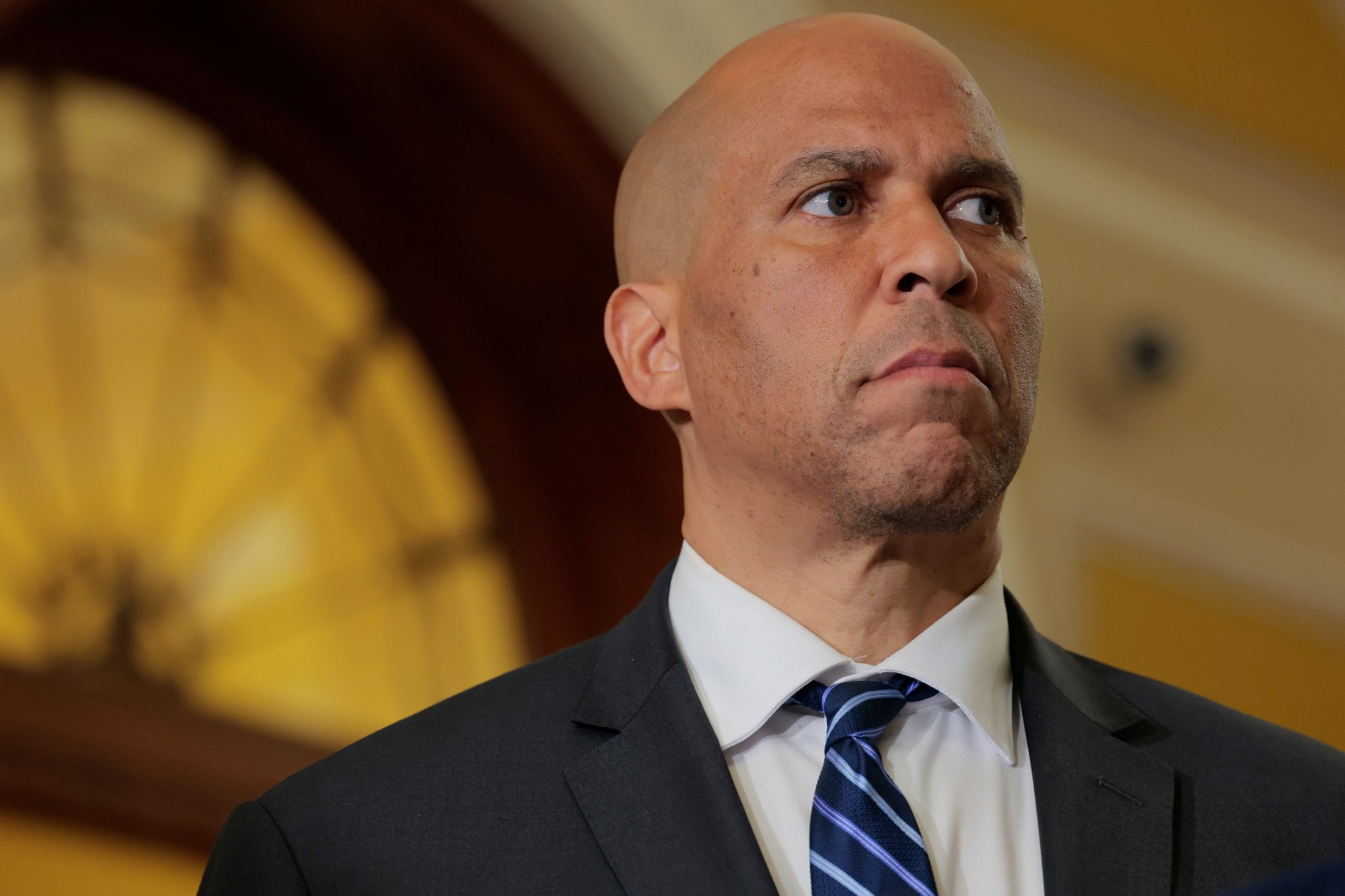
Senator Cory Booker’s Opposition
Senator Cory Booker from New Jersey expressed opposition to the Trump administration’s 60-day interim agreement with Iran. He argues that the deal offers significant economic relief to Tehran without securing lasting concessions for the United States.
On NBC News’ Meet the Press, Booker differentiated between ending the conflict, which he supports, and the method of exiting it. He warned that the current approach reduces American leverage at a crucial time. This position places Booker at odds with the administration and some Democrats, associating him with conservative critics who believe the agreement favors Iran.
Disagreement with James Carville
Booker’s stance clashed with veteran Democratic strategist James Carville, who credited President Trump for ending the war. Carville argued that exiting a failing conflict can be a wise decision, despite viewing the Iran war as a mistake from the start.
Carville likened Trump’s actions to those of Lyndon Johnson in Vietnam, suggesting Trump deserves credit for withdrawing from a problematic situation. Booker rejected this notion, stating Trump should not be rewarded for backtracking on a crisis he initiated.
Booker likened giving Trump credit to acknowledging an arsonist for fleeing a fire they started. He emphasized that the president led the nation into a problematic scenario, weakening American power and capitulating to the enemy.
Criticism of the Interim Agreement
Booker criticized the interim agreement as a one-sided outcome, labeling it an “abject surrender.” He contended that the deal benefits Iran excessively, granting them billions of dollars.
Booker noted that Iranian leaders view the situation as a victory, believing Trump has embarrassed himself internationally. Booker highlighted his support for War Powers resolutions aiming for U.S. withdrawal from the conflict and his critiques of Trump’s withdrawal from the 2015 nuclear deal.
The interim agreement is a memorandum of understanding designed to cease hostilities while negotiators work on a broader resolution. Core elements include:
- Iran’s commitment not to acquire or develop nuclear weapons.
- Reopening the Strait of Hormuz to restore global oil transit.
- Rolling back U.S. naval blockade measures.
- Potential sanctions relief, offering Iran access to financial resources.
- Halting significant military activities across various fronts.
Critics argue the agreement grants Iran early benefits without solid assurances. Meanwhile, supporters claim the temporary arrangement is meant to test cooperation and prevent escalation.
Trump Administration’s Defense of the Deal
The Trump administration defended the framework as a practical step following prolonged conflict. White House spokeswoman Olivia Wales stated that the memorandum of understanding advances U.S. interests by ceasing hostilities, reopening the Strait of Hormuz, and pressuring Iran to abandon nuclear ambitions.
Wales emphasized that the President’s achievements in both the battlefield and negotiations are noteworthy, aiming to enhance American security for years.
Growing Conservative Opposition
Criticism of the deal has emerged from conservative figures, including Republican lawmakers skeptical of its structure. Republican Senator Bill Cassidy voiced concerns about Iran’s nuclear ambitions not being curtailed and warned that Iran might leverage threats in the future.
Former Vice President Mike Pence criticized the deal as resembling “appeasement,” arguing it lacks firm commitments concerning Iran’s nuclear program, missile development, and support for regional proxies.
Media outlets controlled by Rupert Murdoch, such as Fox News, the Wall Street Journal, and the New York Post, have also published critical coverage of the interim agreement.
Booker remarked, “When you have Democrats and Republicans, conservatives and progressives, all coming out talking about capitulation, surrender, catastrophe, you know how bad this deal is.”
Leave a Reply