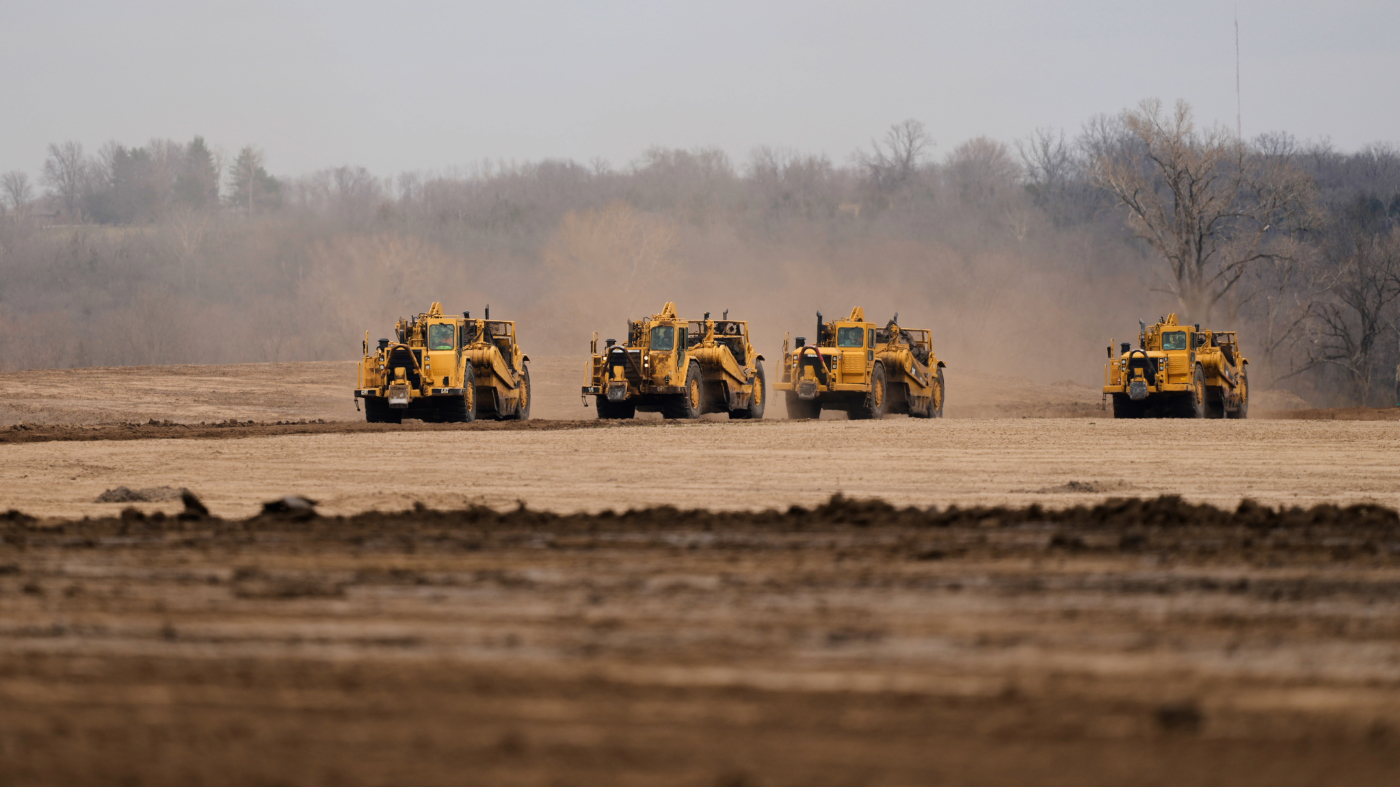
Earth movers have started preparing Independence, Mo., for a massive, 2.5 million square-foot AI data center. This development highlights a growing opportunity for Republicans. With Democrats showing increasing opposition toward the artificial intelligence and energy sectors, Republicans can champion American technological leadership. Rural, Republican-dominated areas, with their natural advantages, are primed to benefit from this shift.
Many factors make red states attractive for AI development. Land prices, grid capacity, and the physics of heat dissipation align well in these areas. Google recently agreed to a $4.3 billion deal to reactivate a nuclear power plant in Iowa and upgrade others. The first upgraded facility is expected to supply electricity by 2028.
Data centers planned by 2028 will be situated an average of 175 kilometers from major cities, compared to 46 kilometers previously. This trend toward rural locations favors Republican states as AI infrastructure increasingly depends on favorable geography over engineer proximity.
Companies aim to build in red America where land is cheaper, and electrical infrastructure can expand without years of litigation. Competitive industrial power prices bolster this appeal. Friendly regulatory environments provide significant advantages for attracting new investments.
“It’s the digital equivalent of moving a steel mill closer to its supporting coal mine to reduce transportation costs.”
Analysis by the commercial real estate firm JLL revealed that most upcoming data centers are in states that supported President Trump in 2024. Two-thirds of the proposed U.S. facilities are set to rise in rural counties, mainly in the South, signaling a business migration to these areas.
Loudoun County, Virginia, demonstrates the potential for economic growth from this trend. Next year, it will earn $1.3 billion in taxes from data centers and related industries, comprising roughly 40% of its revenue. This funding supports local schools, recreation centers, and infrastructure, while also reducing property taxes by 30%. Local officials estimate that data centers support 15,000 jobs in the broader economy.
Geography isn’t the sole advantage. Red-state utility commissions and legislatures streamline permitting and legal processes. This, combined with natural benefits, amplifies opportunities for development in these regions. The Pacific Research Institute highlighted California’s severe power supply issues due to aggressive green energy mandates, which hinder data center growth.
Persistent ideological constraints on energy policies in blue states pose challenges. Such policies risk ceding technological advantages to competitors like China willing to expand their energy supply. Proposals from Democratic leaders, such as the AI Data Center Moratorium Act, could exacerbate this risk by stalling data center advancements.
Despite the U.S. leading in AI software and development, restrictive energy infrastructures in blue states threaten this position. A data center might take two years to build, but critical electrical infrastructure can require up to 15 years. Thus, policy plays a significant role.
Republicans have a chance to leverage this misstep. Advocating for growth and technological progress could reinforce red state economies and ensure U.S. dominance in the field.
Leave a Reply