On August 3, 2026, a coalition of twenty-five states filed a lawsuit against the Trump administration concerning its recent imposition of tariffs. The states claim these tariffs serve as a replacement for import taxes that the Supreme Court deemed unconstitutional in February.
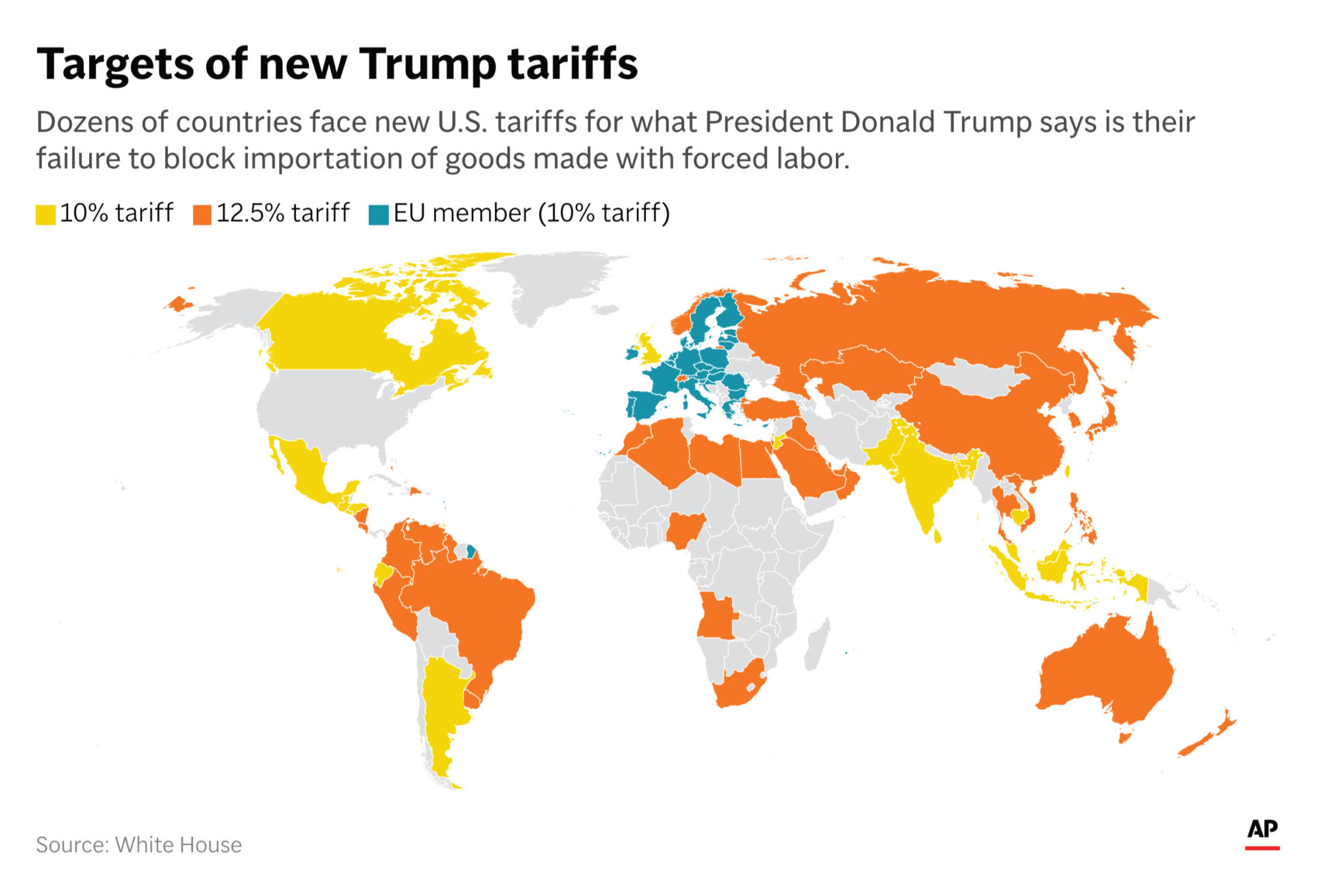
Last month, the United States enacted new tariffs ranging in the double digits on imports from 59 countries and the European Union. The administration justified these tariffs by accusing these entities of insufficiently addressing imports made with forced labor. This tariff implementation coincided with the expiration of previously established temporary tariffs, which President Donald Trump had used following the Supreme Court’s decision.
New York Attorney General Letitia James criticized the administration’s action, stating, “After losing at the Supreme Court, the administration is once again trying to illegally raise taxes on families and businesses with a new round of tariffs.” Trump, advocating for higher tariffs to bolster American manufacturing, shifted U.S. policy from its decades-long preference for lower tariffs and open trade. He cited the 1977 International Emergency Economic Powers Act (IEEPA) to impose significant tariffs on nearly all imports, arguing that the persistent trade deficit signified a national emergency. However, the Supreme Court ruled that IEEPA did not sanction such tariffs, resulting in the administration issuing refunds to affected importers.
To counteract the revenue losses, Trump subsequently implemented temporary 10% tariffs worldwide, but these lapsed on July 24. He has now resorted to more enduring tariffs through Section 301 of the Trade Act of 1974. This Act enables the president to impose import taxes on nations conducting unfair trade practices. During his first term, Trump leveraged Section 301 to establish significant tariffs on China, which withstood legal challenges.
The administration utilized Section 301 to enact tariffs addressing forced labor, set between 10% and 12.5%, impacting countries responsible for 99% of U.S. imports. White House spokesman Kush Desai asserted, “The United States is using its lawful authority to obtain the elimination of unreasonable acts, policies, and practices that burden U.S. commerce.” Desai emphasized that foreign countries failing to effectively prohibit the import of forced labor goods create unreasonable burdens on U.S. commerce, necessitating these tariffs. He noted that Section 301 tariffs had proven legally robust since the President’s first term.
President Donald Trump announced these new tariffs during a 2025 event at the White House. The speech aimed to address ongoing concerns about forced labor and its effects on U.S. commerce and workers.
Leave a Reply