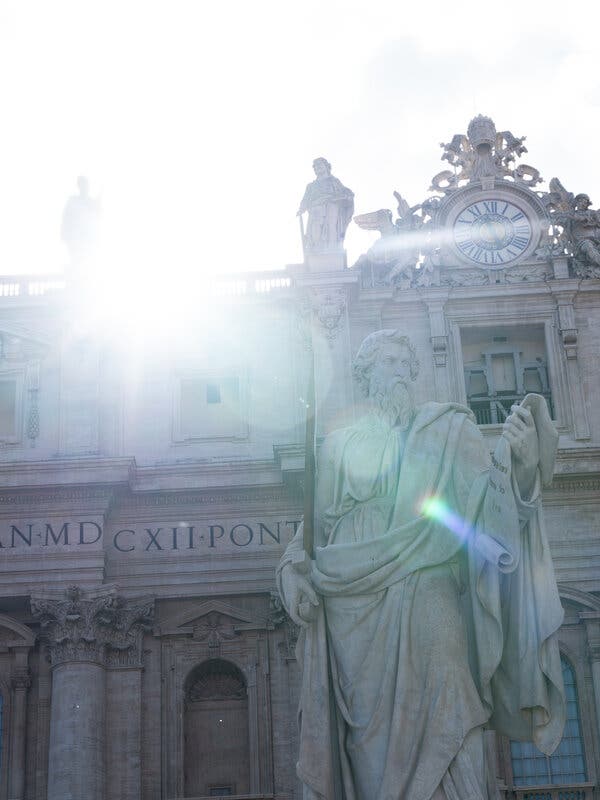
Steven Spielberg’s latest film, “Disclosure Day,” delves into a significant debate: would discovering extraterrestrial life threaten religious beliefs? This discussion has gained traction, particularly after the Pentagon’s release of U.F.O.-related documents.
The movie’s viewpoint, in line with Spielberg’s fascination with aliens and his respect for religious themes, suggests that encounters with extraterrestrial beings do not necessarily undermine faith in a higher power. A character, a nun, asks why a divine being would create an immense universe but reserve salvation for humanity alone. She seems to echo the film’s sentiment.
However, the narrative acknowledges that extraterrestrial contact poses potential challenges to organized religion. Aliens could assume roles traditionally held by religious figures, like popes, prophets, mystics, or angelic messengers.
“Disclosure Day” taps into UFO mythology in various ways. Unlike the common trope of Pentagon involvement, Spielberg’s movie implicates a government-affiliated contractor in the cover-up of alien encounters. This mirrors claims by some alleged whistle-blowers. A case in point is Republican Congressman Eric Burlison, who openly followed leads related to organizations such as RAND, MITRE, Aerospace Corp., M.I.T. Lincoln Labs, and Northrop Grumman.
The portrayal of aliens in the film draws from stories of UFO encounters with a supernatural flair, referencing elements from William James’s discussions on religious experiences to folklore about mysterious meetings with fairies.
In the story, one main character recounts her alien encounter in a fairy-tale setting during childhood, where the aliens appear as benign creatures. Her experiences, which validate her encounter, resemble religious mysticism. She communicates in various languages and reads others’ thoughts, implying that the aliens aim to guide humanity towards spiritual maturity.
Leave a Reply