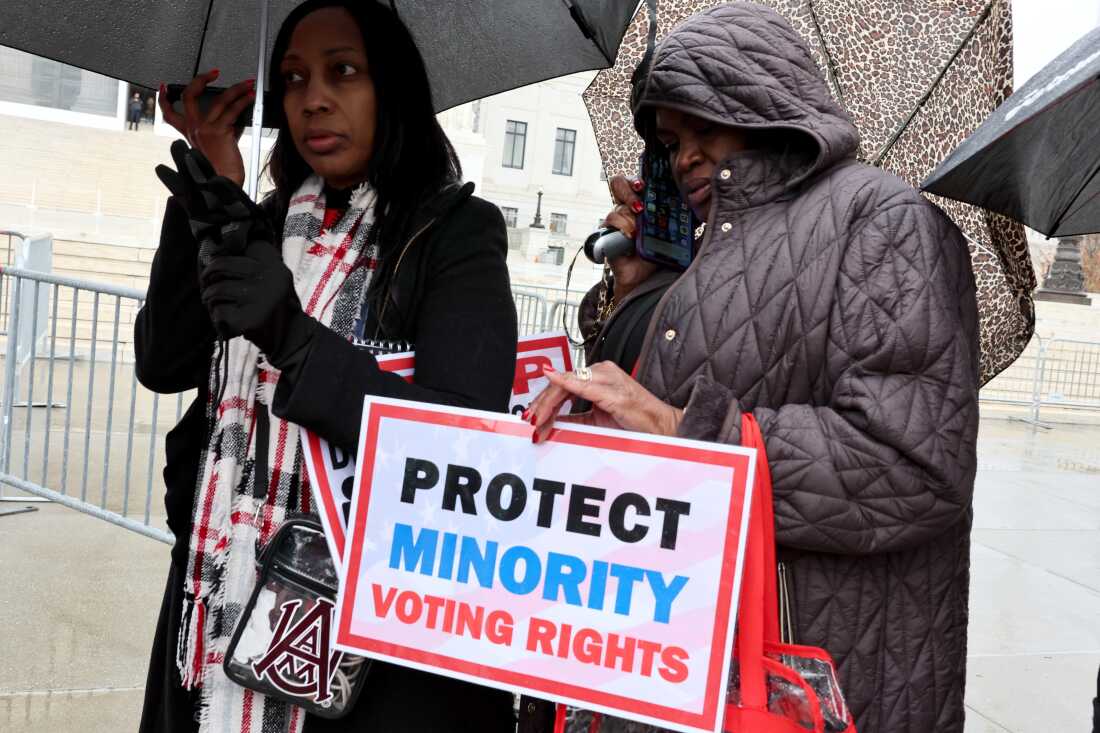
The U.S. Supreme Court has chosen not to review a decision originating from Arkansas, impacting the Voting Rights Act significantly. Demonstrators outside the Supreme Court hold signs to ‘PROTECT MINORITY VOTING RIGHTS.’ This refusal leaves in place a 2025 ruling by an appeals panel that affects seven predominantly Midwestern states. These states include Arkansas, Iowa, Minnesota, Missouri, Nebraska, North Dakota, and South Dakota.
This ruling indicates that private individuals and groups cannot sue to enforce Section 208 of the Voting Rights Act in these states. Section 208 allows voters with disabilities or challenges in reading or writing to receive assistance from a person of their choice during voting.
The Supreme Court’s decision follows their earlier ruling that weakened the Voting Rights Act, prompting changes in redistricting nationwide. Recently, the court declined to address the ‘private right of action’ concept in cases from Mississippi and North Dakota involving Black and Native American voters.
Historically, enforcement of the Voting Rights Act has relied on lawsuits from private individuals and groups. However, Justice Neil Gorsuch’s 2021 opinion raised questions about who can initiate these lawsuits. Some Republican officials argue that only the U.S. attorney general should have this capability, potentially reducing voting rights lawsuits due to the Justice Department’s resource constraints and changing political priorities.
The current case involves Arkansas United, an immigrant advocacy group assisting limited English proficiency voters with interpreters at polling sites. They contested an Arkansas law prohibiting non-poll workers from aiding more than six voters. In 2022, a federal judge ruled the state law violated Section 208, but upon appeal, the 8th Circuit panel dismissed the group’s right to litigate. This court’s stance contrasts with established legal precedents concerning the Voting Rights Act’s enforcement.
Leave a Reply