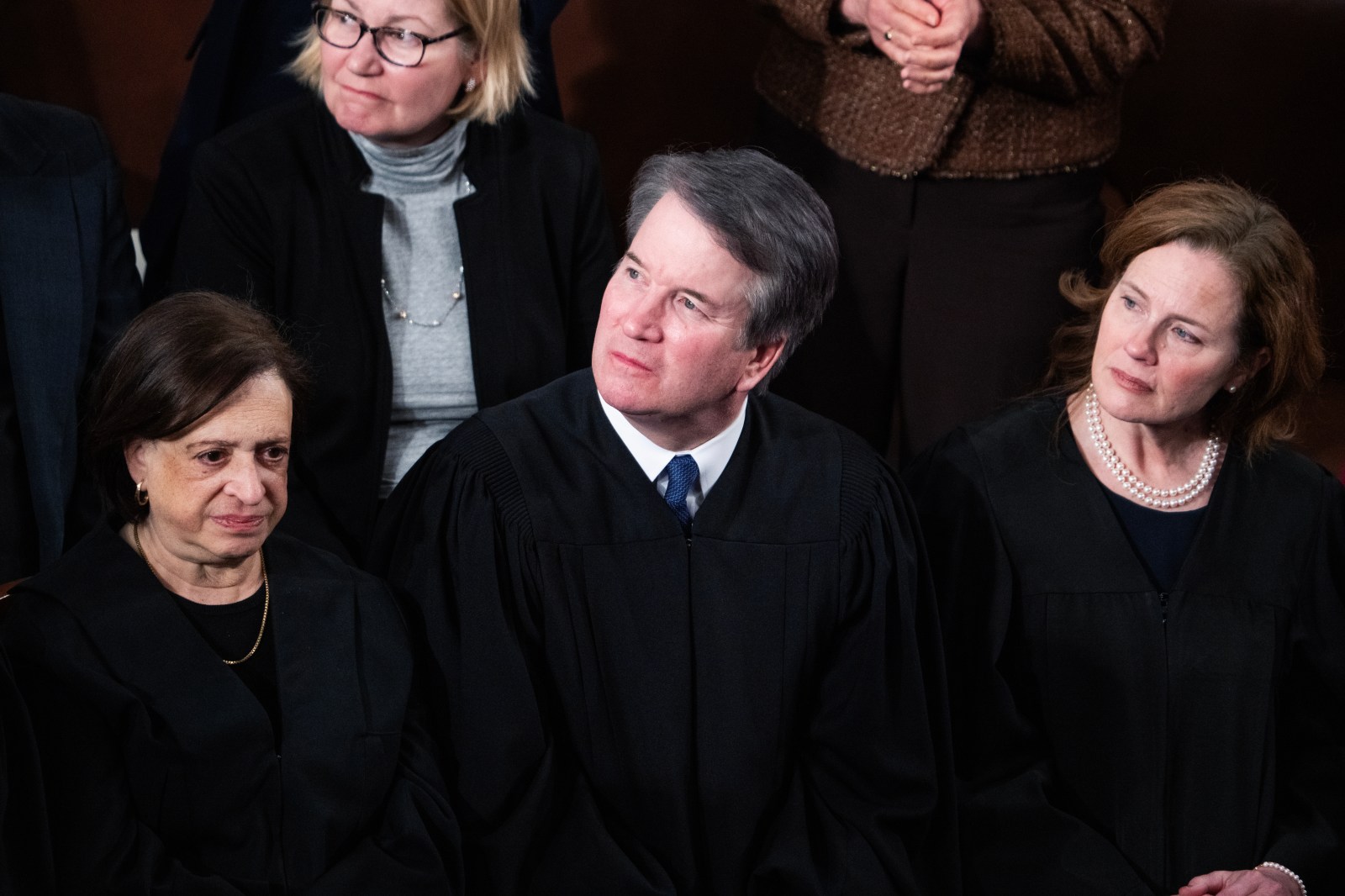
The U.S. Supreme Court, on Thursday, paused Missouri Republicans’ efforts to implement a new congressional map, a significant development as midterm elections approach. Conservative Justice Brett Kavanaugh referred the emergency request to the full court, which then stayed a federal judge’s order that had reinstated districts favorable to the GOP. Critical to this case is the map drawn by Missouri Republicans, aimed at altering the state’s U.S. House districts.
The Supreme Court’s course of action follows a decision earlier in the week, where Justice Kavanaugh declined an emergency plea to overturn an earlier Missouri Supreme Court decision. This ruling had blocked the GOP-backed map ahead of the midterms. Vikram Amar, a legal scholar from UC Davis, expressed approval of the court’s decision in a statement to Newsweek.
“Good for the Court!” said Vikram Amar.
The political group People Not Politicians led the legal challenge against the map. They sought a referendum to reject the proposal. Executive Director Richard von Glahn, representing the group, emphasized that over 305,000 voters from various political alignments had opposed the new districts, advocating for voter power over political manipulation.
The Supreme Court’s agreement to hear the case, accompanied by a stay, occurred shortly after Justice Kavanaugh’s refusal to uphold Missouri’s appeal. People Not Politicians argued successfully at the state level that a petition demanding a referendum had suspended the new map. They insisted Missouri should use the 2022 map, preventing a potential conflict of voters’ rights during both primary and general elections.
On the contrary, Missouri Secretary of State Denny Hoskins contended that reverting to the 2022 map after primary elections infringed on voter rights. With ballots already prepared under the 2025 map, Hoskins highlighted possible voter disenfranchisement, as it would prevent some electors from impacting candidate nomination and selection.
The U.S. government supported Missouri’s stance, warning that altering district maps between election phases could split voters into two groups. This division could prevent some voters from having a complete say in congressional representation. The Justice Department also questioned the standing of People Not Politicians in pursuing this appeal.
At the heart of the debate is whether Missouri should adopt the 2022 congressional map or the redesigned districts from last year. The updated map would potentially give Republicans control of seven out of Missouri’s eight House seats. This map was utilized in the August primaries after receiving legislative approval and Governor Michael Kehoe’s signature. Approximately 1.2 million voters participated in these elections under the new mapping arrangements.
Leave a Reply