Since its inception in 1991, the Solid Waste Agency of Lake County (SWALCO) has consistently diverted waste from landfills by recycling diverse materials such as electronics, batteries, paint, household chemicals, and more. This progress is a result of collaborative efforts with 43 municipalities within Lake County. SWALCO’s Executive Director, Walter Willis, credits creativity and education as key contributors to the organization’s success.
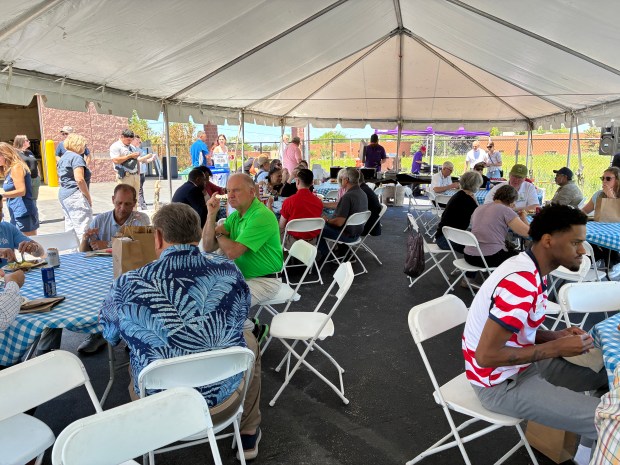
During the 35th anniversary celebration at their facility in Gurnee, guests listened to speakers and toured the plant. Willis highlighted the agency’s partnerships with waste haulers, which include initiatives like combining food scraps with yard waste to keep meat bones and spoiled vegetables out of landfills. He noted, “We worked with a hauler to combine food scraps with yard waste. It’s kept tons of food waste from landfills. We continue to make more things recyclable.”
SWALCO’s journey began before its formal establishment, starting in 1986 when the concept of a solid waste management plan was introduced. The Illinois General Assembly soon mandated larger cities and counties to develop such plans, placing Lake County at the forefront. According to Willis, building relationships with municipalities was essential. “Lake County took it very seriously. Developing relationships with municipalities was very important. Every town in Lake County has considered recycling,” he said. The agency’s motto remains, “Recycle first, trash last.”
SWALCO collaborates effectively with waste haulers to collect recyclables from residents in single-family homes, and it is making strides with apartment communities. Commercial recycling poses greater challenges. Highwood was the pioneer city, followed by Highland Park. In many towns, individual businesses manage their contracts with waste haulers. However, cities that mandate commercial recycling establish unified contracts for all businesses. Currently, towns like Highland Park, Highwood, Deerfield, Bannockburn, and others involve full commercial recycling.
Education plays a significant role in promoting recycling over landfill disposal. Willis shared insights from canvassing campaigns in Waukegan, North Chicago, and Zion, which began in March of last year. “More than 800 customers were doing it wrong before we started,” he said. “By April, it was down to 200, and then it was 150. We’ve seen a huge improvement in performance.”
SWALCO offers solutions for items that cannot simply go into recycling bins, such as batteries, paint, and clothing. According to Emily Wachter, the senior communications manager, people can bring these items to the Gurnee facility during business hours. The facility uses specialized machines to handle such items safely. “We have a high expansion foam fire suppression system,” Wachter explained, detailing how it extinguishes fires rapidly, preventing potential damage to marine life from items like batteries and paint.
Recycling coordinator Peter Adrian emphasized the need for special handling of batteries, electronics, and textiles. The Illinois Environmental Protection Agency (IEPA) assists, often engaging third-party vendors to process these materials. “A lot of it is done by the IEPA or third-party vendors,” Adrian explained. “Some items are broken down into their raw materials for use. Some things are shredded.” Despite these efforts, about 5% of collected items are still not suitable for recycling.
Leave a Reply