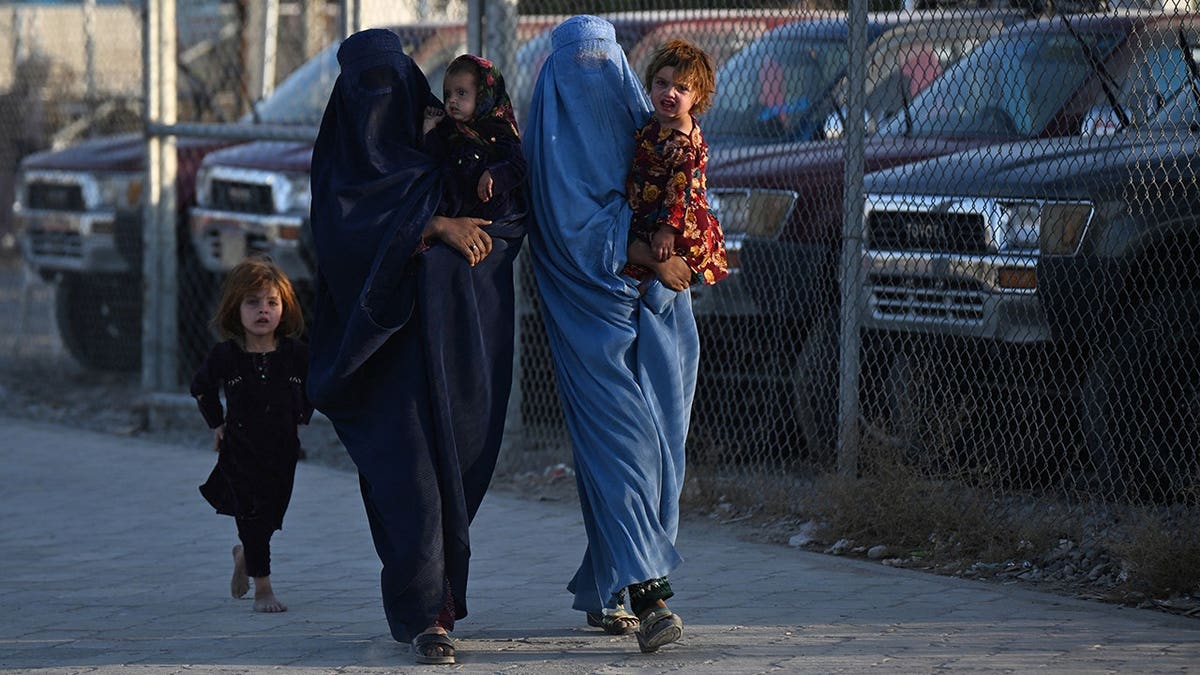
The Taliban in northern Afghanistan have reportedly enforced a ban on using women’s names in official documents. According to Spanish newspaper El País, some women are being called by offensive animal names.
This infringement on women’s rights affects medical records and prescriptions in Balkh province. There are concerns that the restriction might widen to the entire country.
Reports from Afghan news outlet Zan Times and The Guardian noted that healthcare workers and public employees now use the term ‘Bibi’ for women, signifying grandmother or old woman.
“This is a systematic process of dehumanization,” stated Afghan women’s rights activist Lalah Osmany.
Osmany mentioned that some women have been labeled with derogatory names like “goat” or “cow.” An Afghan activist speaking anonymously verified the order, though it is reportedly being ignored.
Femena’s Afghan program director, Zubaida Akbar, warned that the Taliban might apply the ban nationwide, as local restrictions have previously expanded countrywide.
Meanwhile, El País reports that over 144 decrees have curtailed Afghan women’s rights since the Taliban’s takeover. Girls over 12 are banned from schooling, women face workplace exclusion, and public speaking is restricted.
Despite prohibitions, some Afghan women operate underground businesses and schools to defy these rules, as reported by the Associated Press.
An unnamed Kabul salon owner reopened her business secretly after equipment confiscation. ‘Working as a woman in Afghanistan is considered a crime,’ she told the AP.
An assistant teacher at a Kabul secret school lives in fear of arrest, expressing constant dread to the AP.
Taliban’s Ministry for the Promotion of Virtue and Prevention of Vice spokesperson Mohammad Aslam justified the restrictions, emphasizing conformity to Sharia law.
Osmany cautioned that the naming ban could jeopardize female patients by creating medical errors due to identical names on records.
Previously, in 2017, Osmany spearheaded a campaign to include Afghan women’s names on official documents like birth certificates. Despite threats, this led to a 2020 change allowing voluntary mother name inclusion, a short-lived victory.
In August 2021, the Taliban resumed power as the U.S.-backed government fell during President Joe Biden’s chaotic military withdrawal. This event saw 13 American military personnel killed in a terrorist attack amid the evacuation.
Five years later, Afghan women’s freedoms have been severely restricted under the Taliban’s rule. Activists caution that their identities are increasingly at risk.
“Calling a woman by her real name in Afghanistan is an act of resistance,” Osmany told El País.
Jasmine Baehr is a breaking news writer for Fox News Digital, focusing on politics, military, and social policy issues.
Leave a Reply