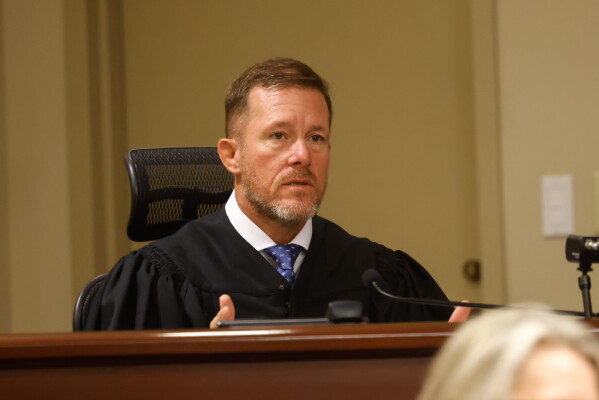
A judge delivered a sentence of life in prison without parole to Colt Gray, a 16-year-old who killed two students and two teachers during a shooting at Apalachee High School in Georgia. Barrow County Superior Court Judge Nicholas Primm made the decision after hearing extensive testimonies from victims’ family members and other parties involved.
Gray had pleaded guilty to 55 counts, including murder, related to the September 4, 2024, shooting. The incident occurred in a school situated about 45 miles northeast of Atlanta. Primm emphasized the heinous nature of Gray’s actions, stating they represented “deliberate, contemplated evil.”
Murder charges in Georgia come with a mandatory life sentence. The sole question was if Gray would ever be eligible for parole. Judge Primm decided against allowing parole, describing Gray as someone who idolizes other murderers, showing no guilt or remorse for his actions.
District Attorney Brad Smith argued that Gray showed no capacity to value human life, making him a danger to society. Conversely, Gray’s defense attorney, W. Charlton Allen, argued that his client was not irreparably damaged, proposing that a possibility for parole could offer a glimmer of hope and a chance for change.
The victims were teachers Richard “Ricky” Aspinwall, 39, Cristina Irimie, 53, and students Mason Schermerhorn and Christian Angulo, both 14. The shooting also resulted in injuries to another teacher and eight students. Families of the victims addressed Judge Primm, urging him to deny any chance of parole for Gray. Shayna Aspinwall, wife of victim Richard Aspinwall, spoke about the enduring grief and trauma experienced by those left behind.
“This is not a happy day. This is a relief day,” Smith reflected, indicating a sense of justice for the victims and their families.
Investigations revealed that Gray was fascinated with mass shooters and sought notoriety in a similar vein. Testimonies during the sentencing revealed Gray’s involvement in online conversations surrounding mass shootings and his eagerness to gain attention for his actions.
Prosecutors shared recordings of phone calls between Gray and his mother, highlighting Gray’s excitement over public discussions and “fan art” about him. District Attorney Smith mentioned how Gray, aware of infamous mass shooting details, had meticulously planned aspects to ensure his actions would be publicly recognized, aiming for fame within the “true crime community.”
Defense arguments touched on Gray’s difficult childhood and lack of adequate support. His grandmother, Debbie Polhamus, depicted his upbringing as unstable, recounting his increasing aggression prior to the shooting. She emphasized her attempts to secure help for Gray, as his parents had largely failed him.
Polhamus testified about Gray’s progress with treatment and medication while detained, noting his interest in obtaining a GED. His foster care arrangement was prompted by his father’s incarceration and his mother’s restricted access due to a no-contact order.
Candice Broce, overseeing his case, testified on Gray’s significant improvements following the no-contact order and the start of medication, describing a change in his demeanor. Despite acknowledging Gray’s troubled background, Judge Primm ruled that such factors did not excuse his choice to embrace violence and infamy.
Leave a Reply