On a cold January morning in Washington, city leaders gathered, concerned over the federal government’s aggressive immigration enforcement, which included the tragic deaths of two U.S. citizens in Minneapolis. Amidst the tension, FIFA President Gianni Infantino took the stage at the National Conference of Mayors.
Attempting to lighten the mood, Infantino humorously announced, “For the first time in 250 years of U.S. history, you will not only be invaded but conquered.” He clarified, “You will be conquered by soccer.” This was in reference to the upcoming World Cup, co-hosted by the U.S., Mexico, and Canada.
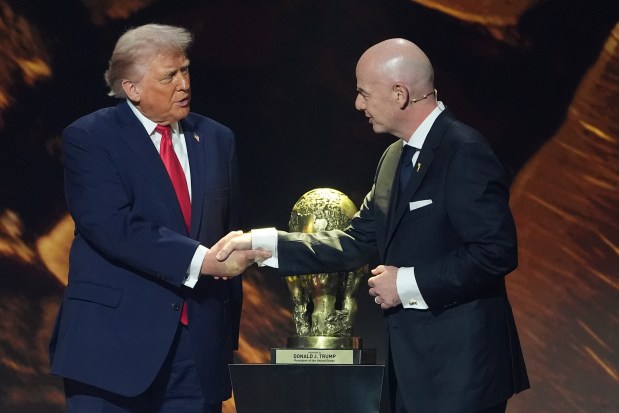
Infantino has sought allies in high places, working closely with President Donald Trump. His efforts included awarding Trump a newly created peace prize and regularly visiting the White House, including a notable photo opportunity with Trump outside the Oval Office.
“For the first time in 250 years of history of the United States of America, well, you will not just be invaded but you will be conquered,” Infantino remarked with a playful tone.
While Infantino has found some support in the administration, skepticism remains widespread outside it. His leadership of FIFA, the governing body for soccer, has been met with criticism across political lines.
Ticket Controversies
Ticket prices for the World Cup have stirred bipartisan criticism. Figures like New York’s Zohran Mamdani and Los Angeles’ Karen Bass, both Democrats, objected to pricey admissions. Mamdani managed to secure 1,000 tickets for $50 each for New Yorkers. Meanwhile, Democratic attorneys general of New York and New Jersey launched investigations into pricing practices.
In New Jersey, Democratic Governor Mikie Sherrill faced pressure over transit costs related to the event. Even Trump weighed in, lambasting ticket costs, declaring $1,000 too steep for the opening U.S. game against Paraguay.
Republican Senator Todd Young of Indiana criticized FIFA’s elitist tendencies and concerns over corruption, noting, “They really have had problems with corruption over the years.” He lamented that FIFA often overlooks its mission to promote the sport globally.
Similarly, Democrat Representative Rick Larsen expressed a desire for Infantino to focus more on promoting soccer. Despite differing opinions on FIFA’s leadership, enthusiasm for the tournament remains high among critics and supporters alike.
Trump’s Sporting Image
The World Cup heralds a series of high-profile sporting events crucial to Trump’s second-term image. A UFC bout on the White House’s South Lawn is planned, culminating in the Los Angeles Olympics in 2028.
Regardless of the sporting fanfare, Trump’s presidency faces sharp political divisions. A May poll from The Associated Press-NORC Center for Public Affairs Research showed only 37% approval for his leadership.
Despite this, Trump intends to remain a central figure in American life, highlighted by large-scale Washington renovations and prominent events like “The Great American State Fair.” He also plans to attend NBA Finals games and the World Cup final.
Immigration and Security Challenges
The World Cup surfaces challenges for Trump’s administration, which prioritizes strict immigration enforcement. High-profile arrests have eased, yet a welcoming stance for World Cup visitors has been adopted. The requirement for bonds for visiting fans was temporarily suspended.
Nonetheless, Homeland Security Secretary Markwayne Mullin threatened airport customs halts in cities opposing immigration policies. Clashes at New Jersey’s immigration center, near the World Cup final venue, highlight ongoing tests for the administration.
Former State Department official Ashleigh Huffman sees the World Cup as a chance to unite amidst division. She recognizes the scrutiny and opportunities surrounding the event, touching on critical issues like human rights.
“Unprecedented opportunity to heal a country that is deeply divided and a world that is struggling,” Huffman explained about the World Cup’s potential impact.
Andrew Giuliani, involved with the White House Task Force on the World Cup, assured legal residents they have nothing to fear, emphasizing visitor enjoyment alongside national safety.
Polarized Views on Soccer
Political splits permeate World Cup interests, with Democrats and independents more likely than Republicans to watch games, according to a May Ipsos poll. Despite fewer Republicans viewing games, a stronger sense of national pride accompanies the U.S. team’s participation.
For soccer supporters in Washington, the hope is for the tournament to bridge divides. Republican Senator Todd Young noted the potential for a “real opportunity to use this platform as a stage for unity and commonality across nations.” Representative Rick Larsen eagerly anticipates the games, ready to cheer and call for red cards.
While the political climate remains charged, the coming of the World Cup offers a stage for sports diplomacy and unity.
Leave a Reply