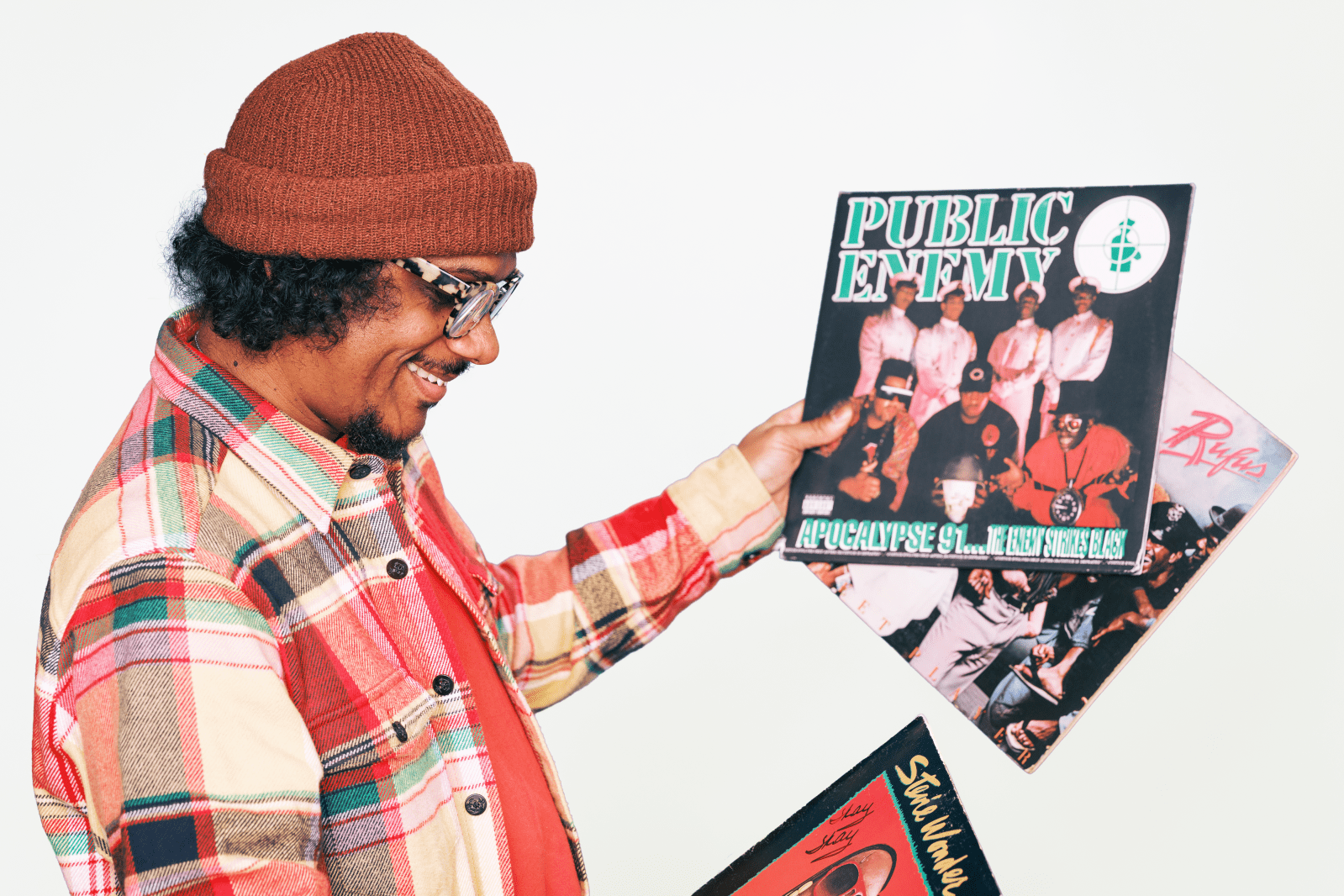
Many listeners grew up immersing themselves in music message boards, studying liner notes like sacred texts, and exploring internet rabbit holes for behind-the-scenes stories. Donwill, a member of Tanya Morgan, naturally understands this impulse and has transformed it into The Almanac of Rap. Presented by Okayplayer, the podcast has won two Webby Awards by treating hip-hop history as vibrant and layered, worthy of nuanced exploration from all perspectives.
In conversations, Donwill appears as a dedicated keeper of records, emphasizing the restoration of context that digital culture often erases. “I’m always looking for the story behind the story,” he asserts, capturing the mission of his show.
Hip-hop was a constant presence in Donwill’s daily life since childhood; he wrote down lyrics from the radio, collected magazines, and studied release dates avidly. Sites like Okayplayer and its message boards further fueled his curiosity. “You could really go down a rabbit hole,” he recalls. “You’d read one thing, and that would lead you to something else.” That era defined the best of online rap discourse—expansive, communal, and detail-focused.
Donwill highlights a distinction between past and present internet experiences in his interviews. The older web rewarded curiosity, with headlines merely starting stories. “The headline wasn’t the whole story,” he notes. “You’d click the article, then find the writer, then discover three more things.” Despite its chaos and gatekeeping, the blog era encouraged further exploration. Today, he believes headlines often summarize everything. “A lot of people just stop at the surface,” he laments, a consideration driving The Almanac of Rap.
Podcasting feels natural for Donwill, aligning with his cultural engagement methods. He has experimented with audio forms since the late 2000s, before podcasting became trendy. Initially creating mixes and informal radio-style recordings, his work evolved into interviews, essays, and completed episodes. He considers conversation an art, valuing audio for its adaptability to listeners’ lives. “You can listen while doing anything,” he explains. “Walking, driving, working. Audio lets people stay with it differently.” Despite shifts toward video-centered content, this commitment remains central.
On The Almanac of Rap, Donwill arrives well-prepared but remains interested in details beyond the official timeline. “I want to know what was happening around it,” he states. “What shirt did you have on? What was the room like? What else was going on?” His aim is to grasp how careers, scenes, and movements truly felt when unfolding. “That stuff matters,” he insists, acknowledging the responsibility in an era of disappearing archives, broken links, and uncertain music journalism.
His views are particularly engaging when discussing new artists. Having risen during the blog era with Tanya Morgan, he recalls when independent rappers enticed listeners to delve online for songs, videos, or favorable reviews. Today, he observes many artists striving to convert online attention into tangible outcomes like ticket sales and community building. “Back then, we were trying to get people online,” he reflects. “Now people are trying to get them off the phone and into a room.” This shift reshapes the questions worth asking and redefines what success means for today’s artists. “That’s a completely different challenge,” he acknowledges.
The Almanac of Rap’s philosophy integrates perfectly into its structure. It asks significant questions about the genre, pairs them with interviews, and incorporates segments like “The Ballistics” and “The Big Playback” to refocus overlooked songs, ideas, and debates. Partnering with Okayplayer, the podcast broadened its reach while preserving depth, winning a Webby for Best Music Podcast in 2023 and another for Experimental Innovation in 2025. Donwill’s consistent belief is that rap is too complex for surface-level discussions.
If the blog era taught rap fans to pursue context, Donwill maintains that habit through a medium demanding patience. He continues asking the questions that encourage attentive listening, exploring beyond obvious answers, and considering hip-hop a lively archive. “I still believe people want the deeper story,” he affirms. In an attention-paced economy, The Almanac of Rap emphasizes depth and sustains an older internet ideal where curiosity mattered, memory had texture, and the best stories began just beyond the headline.
Leave a Reply