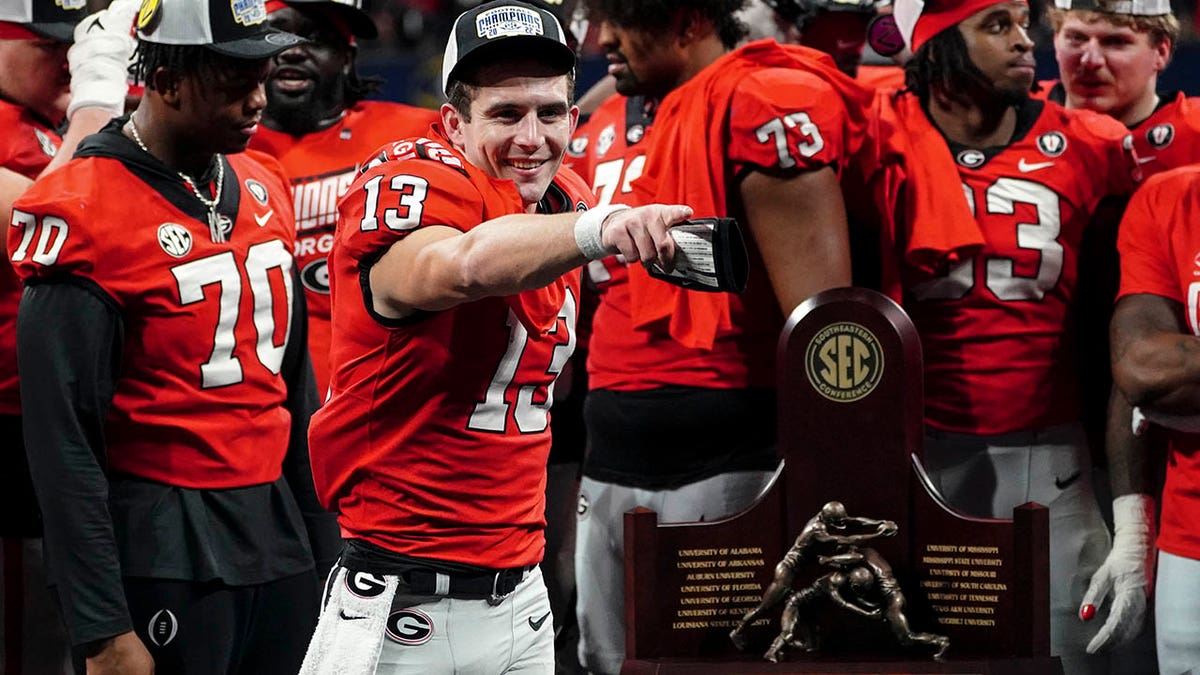
In college football, the Southeastern Conference (SEC) has long been a powerhouse. From 2006 to 2023, SEC teams clinched 13 out of 17 possible national championships during both the BCS and College Football Playoff eras. Yet, the conference hasn’t won a championship in three years and hasn’t reached the title game since Georgia’s victory in January 2023. This has sparked discussions about the SEC’s decline.
NIL (Name, Image, Likeness) and the transfer portal are often blamed, but these are oversimplifications. The reasons for the SEC’s struggles are multifaceted. Key issues include coaching decisions at major SEC programs, which have not always met expectations.
Coaching Challenges
Significant coaching changes have impacted Alabama and Florida, traditionally strong programs. Alabama, after the legendary Nick Saban’s retirement in 2024, brought in Kalen DeBoer. Though competent, DeBoer hasn’t matched Saban’s success, impacting Alabama’s historic dominance.
Florida’s situation is more severe. Since Urban Meyer’s departure in 2010, Florida experienced inconsistent leadership. The hiring of Billy Napier marked a low point, coinciding with Florida’s drastic decline starting in 2023, despite the program’s resources and talent pool.
LSU’s case is more complex. Brian Kelly was viewed as an upgrade over Ed Orgeron from a technical perspective. However, cultural misalignment and delegation issues limited Kelly’s success, contrasting with Orgeron’s successful tenure, aided by strong assistant coaches.
Quarterback Dynamics
Quarterback talent greatly impacts the SEC’s status. Historical success involved star quarterbacks like Tim Tebow, Cam Newton, and Joe Burrow. Recently, the balance has shifted, favoring the Big Ten, where notable talent now resides.
Though Georgia had success in 2021 and 2022 with Stetson Bennett, the SEC has seen potential quarterbacks like Arch Manning and Trinidad Chambliss play for less competitive teams. This mismatch affects the league’s overall performance.
Historically, exceptional quarterbacks have elevated their teams, as seen with Cam Newton’s transformative impact on Auburn in 2010, despite coaching shortfalls.
SEC’s Path Forward
The SEC still possesses talent and coaching capability to regain its edge, with figures like Kirby Smart and Lane Kiffin leading competitive teams. Whether the SEC can break its drought against the Big Ten in 2026 is uncertain but intriguing for football enthusiasts.
The nuances of the SEC’s current situation extend beyond simple solutions. The league’s ability to adapt will determine its future success.
Leave a Reply