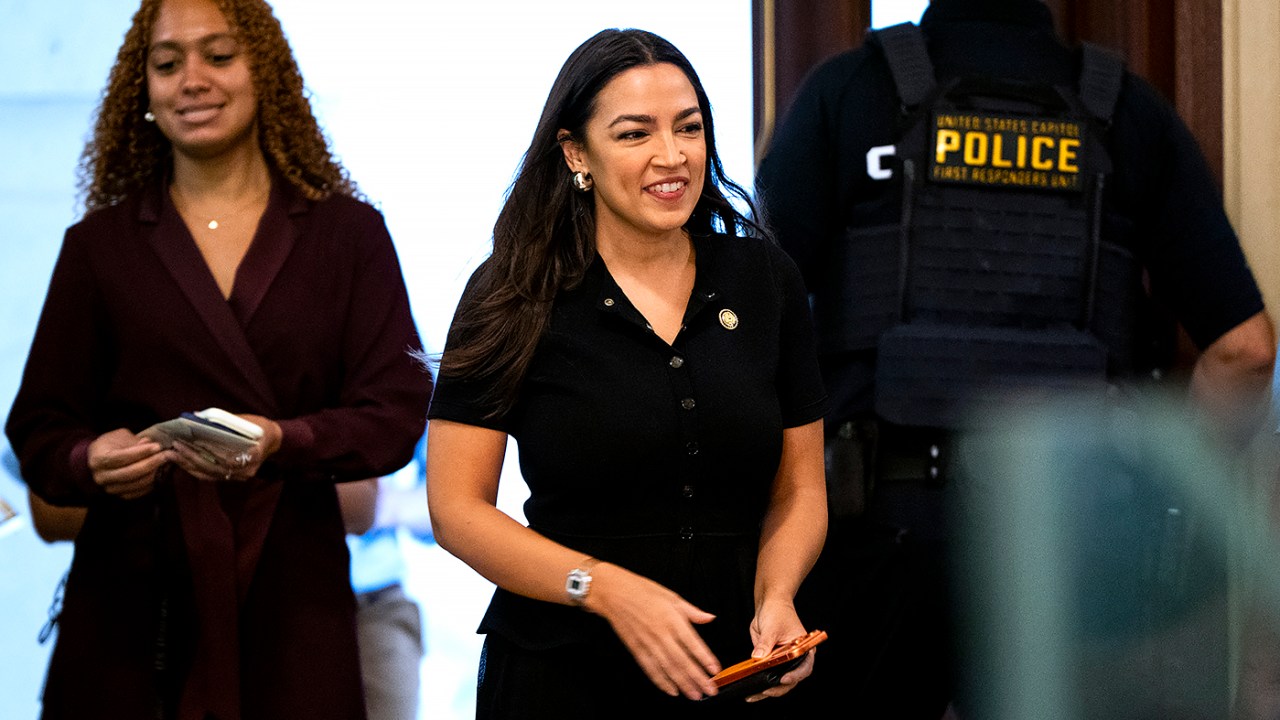
Democrats are evaluating their prospects for the 2028 presidential race with optimism. Currently, Republicans face challenges due to former President Trump’s low approval ratings and economic concerns among voters. Democrats believe the Republican nominee in 2028 will struggle to match Trump’s connection with the MAGA base while dealing with the president’s liabilities.
Potential Democratic Contenders
The Democratic field for 2028 appears wide open, with several credible candidates under consideration. Let’s explore The Hill’s current rankings of potential Democratic candidates.
1. Rep. Alexandria Ocasio-Cortez (NY)
Rep. Alexandria Ocasio-Cortez is increasingly seen as a strong contender for the nomination. Critics often doubt her chances due to her age, political stance, and background. However, Ocasio-Cortez, known as AOC, possesses significant political strengths. Her charisma and ability to connect with voters make her a prominent figure within the Democratic Party.
Recently, she has strategically positioned herself for a potential run. Her candid dismissal of certain criticisms and changes within her campaign team indicate her readiness for higher office. While she may decide to remain in the House or challenge Senate Minority Leader Chuck Schumer in a primary, a presidential bid from Ocasio-Cortez would be formidable.
2. California Gov. Gavin Newsom
Governor Gavin Newsom is another leading candidate. As the governor of California, a highly populous state, he has consistently expressed interest in pursuing the presidency. Newsom has been vocal in his criticisms of Trump and has taken steps to counter the former president’s agenda through legal means.
To broaden his appeal beyond coastal areas, Newsom has reached out to Southern states and shared personal experiences of his early life challenges. Fundraising would not be an issue for him, though concerns remain about his ability to win over heartland voters.
3. Sen. Jon Ossoff (Ga.)
Sen. Jon Ossoff emerged as a political star during the midterms, solidifying his position in Georgia, a state with a GOP tilt. His campaign videos and communication style draw comparisons to former President Obama. Despite skepticism about his reliance on media savvy, Ossoff would be a serious contender if he decided to run.
4. Former Vice President Kamala Harris
Kamala Harris, the former Vice President, presents an interesting case. Although her 2024 loss to Trump could hinder her potential candidacy, she remains the frontrunner in early polls. Harris benefits from historical significance and strong support among Black voters, key to Democratic success.
Her strategic decisions during the midterms illustrate her nuanced approach, focusing on where her assistance is deemed most beneficial. The South Carolina primary could further bolster her candidacy.
5. Former Transportation Secretary Pete Buttigieg
Pete Buttigieg exceeded expectations in the 2020 primaries despite limited political experience. His intellectual prowess stands out, yet questions linger about his core beliefs. Overcoming weaknesses with Black voters would be essential for his candidacy.
6. Illinois Gov. JB Pritzker
Gov. JB Pritzker, a vocal critic of Trump, confronts the challenge of climbing the ranks within the Democratic field. He is financially equipped to self-fund a campaign and brings tenacity typical of Chicago politics. Outmaneuvering higher-ranked contenders is crucial for his success.
7. Pennsylvania Gov. Josh Shapiro
Gov. Josh Shapiro’s popularity in Pennsylvania makes him a significant candidate. His electoral success in key battleground states positions him favorably. However, his stance on Israel might pose a challenge with progressives in the party.
8. Sen. Chris Van Hollen (Md.)
Sen. Chris Van Hollen’s mainstream appeal and progressive credentials could make him a viable candidate. If Ocasio-Cortez does not run, Van Hollen might attract left-leaning voters while still appealing to centrists.
9. Former Chicago Mayor Rahm Emanuel
Rahm Emanuel has been outspoken about the Democratic Party’s perceived weaknesses. While his views might resonate with some, his connections to the Clinton era could limit his appeal in today’s political climate.
10. Sen. Chris Murphy (Conn.)
Sen. Chris Murphy’s communication skills and message might attract both left and center-left voters. Navigating a crowded field would be a significant challenge for his candidacy.
Additional potential candidates include Kentucky Gov. Andy Beshear, Sen. Cory Booker, Sen. Mark Kelly, and Rep. Ro Khanna. Governors Wes Moore and Gretchen Whitmer could also become contenders if they reconsider running.
Leave a Reply