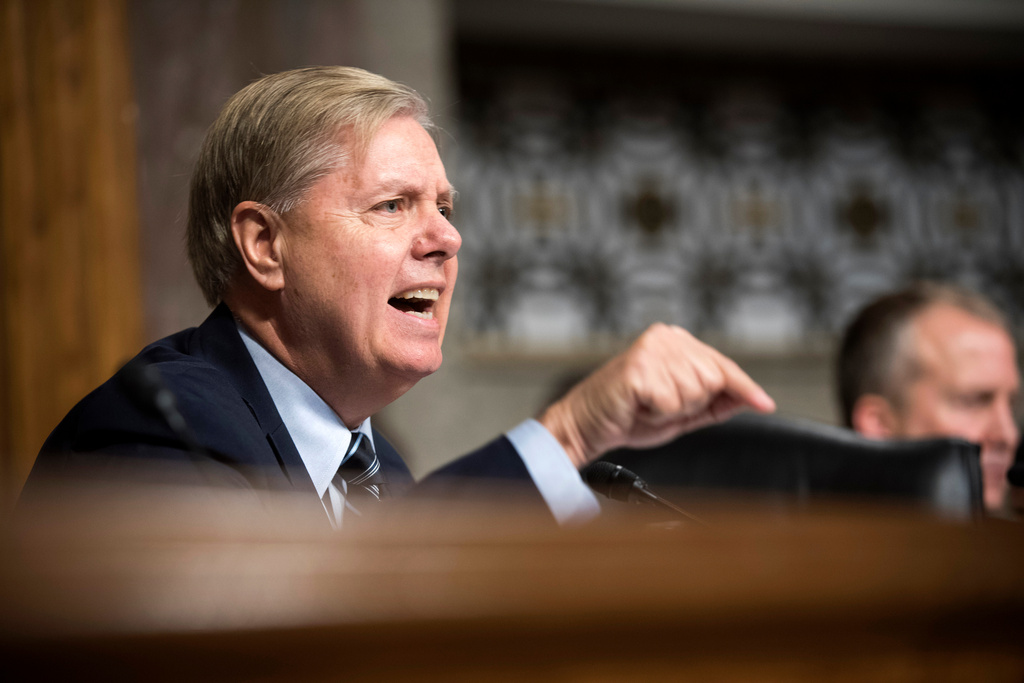
The passing of Senator Lindsey Graham, a Republican from South Carolina, leaves a significant gap in the U.S. Senate. His absence influences the political landscape, particularly concerning U.S. foreign policy.
For years, Graham served as a key proponent of hawkish interventionism in Washington. He bridged traditional Republican foreign policy views and the populist ‘America First’ approach of the current administration. While his allies mourn his leadership, his legacy shows he was adept at framing long-term conflicts as essential for national security and alliance management.
Strategic Influence
Graham’s strategic role was clear. He consistently argued for viewing Moscow and Tehran not as separate issues but as parts of a unified struggle against Western interests. His approach treated geopolitical complexities as a binary moral battle of ‘good vs. evil,’ simplifying discussions around diplomatic restraint.
This perspective often justified aggressive actions—such as when Graham urged Israeli leaders to act against Iran’s nuclear program, as confirmed by his office. He viewed war as supporting a preferred regional order rather than as a policy failure.
Political Ripples
His absence leaves a void during ongoing U.S.-Iran tensions. The recent collapse of the Islamabad Memorandum of Understanding highlighted the challenges of maintaining diplomatic stability. President Trump’s recent actions and Graham’s previous influence underscore significant implications for foreign policy discussions.
Graham was skilled at dressing hardline positions in diplomatic language, creating obligations aligned with foreign allies’ interests. His role as a key Senate figure is now open, leading to political changes.
The primary to fill Graham’s seat has begun, with figures like Nancy Mace and Ralph Norman expressing interest. However, they lack Graham’s extensive experience in both legislative power and foreign policy influence.
Messaging Crisis
The Trump administration faces challenges in messaging and policy presentation without Graham’s influence. Graham had a unique ability to align Trump’s transactional instincts with bipartisan values of ‘American interests’ and ‘global security.’
Now, administration rhetoric risks appearing raw and less tempered. New players may attempt to fill Graham’s role, yet matching his established credibility poses a difficult task.
Despite Graham’s absence, Trump’s alliance with Netanyahu remains strong. While stable, its political backing in Washington is weakened without Graham’s narrative shaping.
Overall, Graham’s death affects those advocating for interventionist policies, leaving leaders to question if such policies can maintain perceived prudence without his influential voice.
Charbel A. Antoun, a journalist focused on U.S. foreign policy, especially in the Middle East and North Africa, provides insight into these dynamics.
Leave a Reply