Connor Hellebuyck, a goaltender for the New Jersey Devils, faced backlash from fans when he returned to Winnipeg. His team’s management opted to keep him from playing, citing a reduction in win probability. Despite the decision, the Devils lost to the Jets, and the incident sparked debate on executive language in sports.
Devils General Manager Sunny Mehta defended the choice. He stated that playing Hellebuyck could risk a decrease in their chances of victory. This kind of language is common in modern sports management, often alienating to fans.
Philip K. Wrigley once remarked on the dual nature of sports and business. Today, sports leagues are often led by business professionals. Therefore, communication sometimes reflects corporate jargon rather than straightforward dialogue.
Mehta could have simply said the team wanted to avoid a hostile environment for Hellebuyck. Instead, the language used appeared designed to impress rather than inform. This is reflective of an analytical approach common in today’s sports management.
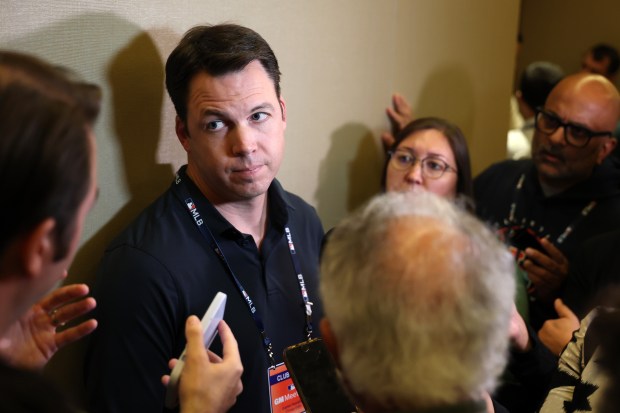
Examples of complex communication are not isolated to the Devils. At a recent GM meeting, Cubs GM Carter Hawkins issued a vague statement about various scenarios without offering concrete details. Such statements aim to prevent tipping strategic plans while still addressing reporters.
On the subject of risk, Blackhawks GM Kyle Davidson discussed decision-making in rebuilding a struggling NHL team. His cautious comments reflect an understanding common to any management role.
At these GM meetings, titles and roles often change. For instance, Boston Red Sox executive Craig Breslow received a title change but noted that his responsibilities remained the same.
Executives are not the only users of ambiguous language. Agent Scott Boras, known for his creative expressions, recently commented on teams’ interest in his client with unusual metaphors. These statements, although perplexing, offer a break from traditional corporate speech.
Despite the trend toward corporate speak, some within the industry, like Milwaukee Brewers manager Pat Murphy, maintain a plain-spoken approach. A candid comment he made about a player’s future wealth highlighted this contrast.
While Murphy’s words attracted attention, they also illustrate a need for straightforward communication. Such honesty, even when laced with profanity, provides a refreshing change from typical executive language. One can wish for more plain-speaking figures in executive roles.
Leave a Reply