At Coherent’s Sherman, Texas facility, CEO Jim Anderson and NVIDIA CEO Jensen Huang highlight the advances in data transmission using light for AI data centers. The technology is set for substantial growth as Coherent plans to quadruple output soon.
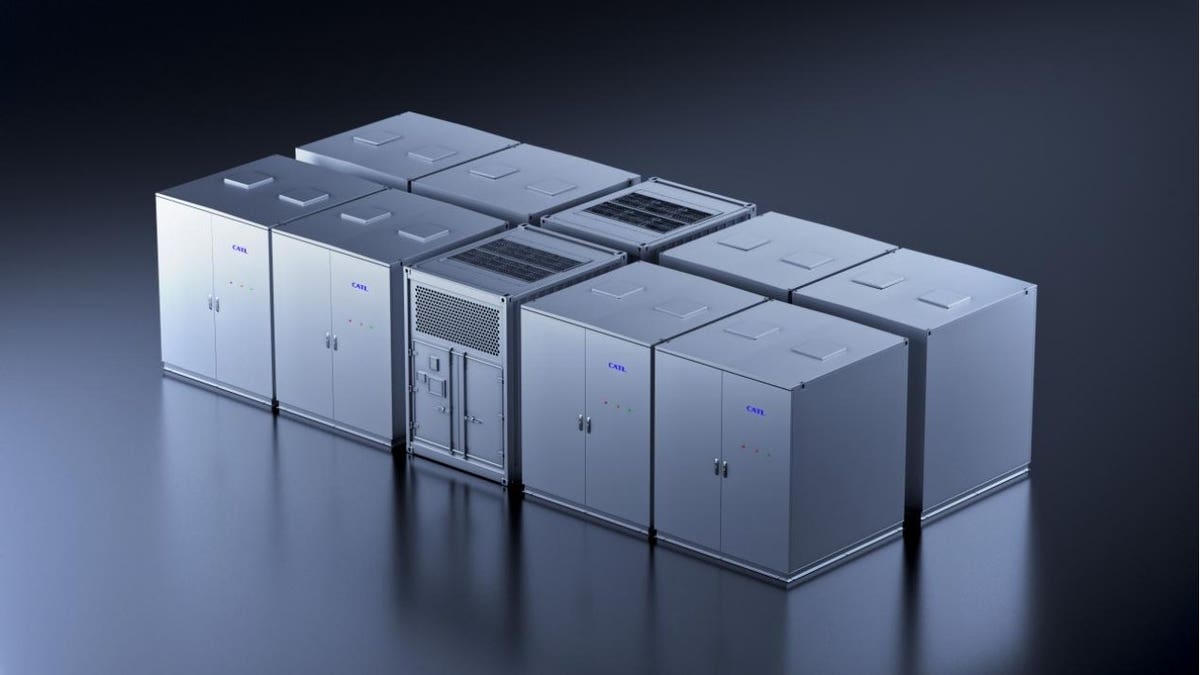
A new Chinese innovation could impact energy closer to home. CATL, a prominent battery maker, has introduced the TENER Sodium Energy Storage System, claimed as the world’s first commercial-ready sodium-ion battery system. This marks a shift towards sustainable grid storage solutions.
These sodium-ion systems are designed for large energy storage, not personal devices. Their role becomes critical as energy demands rise and weather conditions challenge power grids. AI data centers particularly stress electricity systems, prompting the need for efficient battery storage.
Though debuting globally, the system has no set U.S. release. CATL’s launch in Munich underscores the growing trend towards sodium-ion’s potential in grid storage.
Most current grid battery storage employs lithium-based systems. While efficient, lithium supplies face high demand and restricted access. Sodium provides a more abundant alternative, possibly easing these supply pressures. CATL emphasizes cooperating sodium and lithium systems for future storage solutions.
CATL claims the TENER Sodium system seamlessly integrates into existing storage platforms, matching the current infrastructure’s layout. This feature could streamline project updates without requiring major redesigns or approvals, promising significant storage capacity.
The design prioritizes robust performance in extreme climates while enhancing safety and efficiency. Its innovative airflow reduces heat production and operating power demands, ideal for rigorous grid conditions.
CATL’s extensive investment in sodium-ion research since 2016 culminates in this advanced system. Strategic collaborations and production expansions highlight serious commercial intent for sodium-ion technology. However, whether U.S. markets will adopt sodium-ion systems involves further considerations.
For consumers, the focus remains on practical grid storage developments. Emerging sodium-ion technology offers a prospective option to help stabilize electricity supply amidst increasing demands from AI data centers and renewable energy sources. Despite inherent challenges, sodium-ion batteries could support a more adaptable energy future.
For further insights, visit CyberGuy.com, where Kurt the CyberGuy shares tech practices for optimal security and efficiency.
Leave a Reply