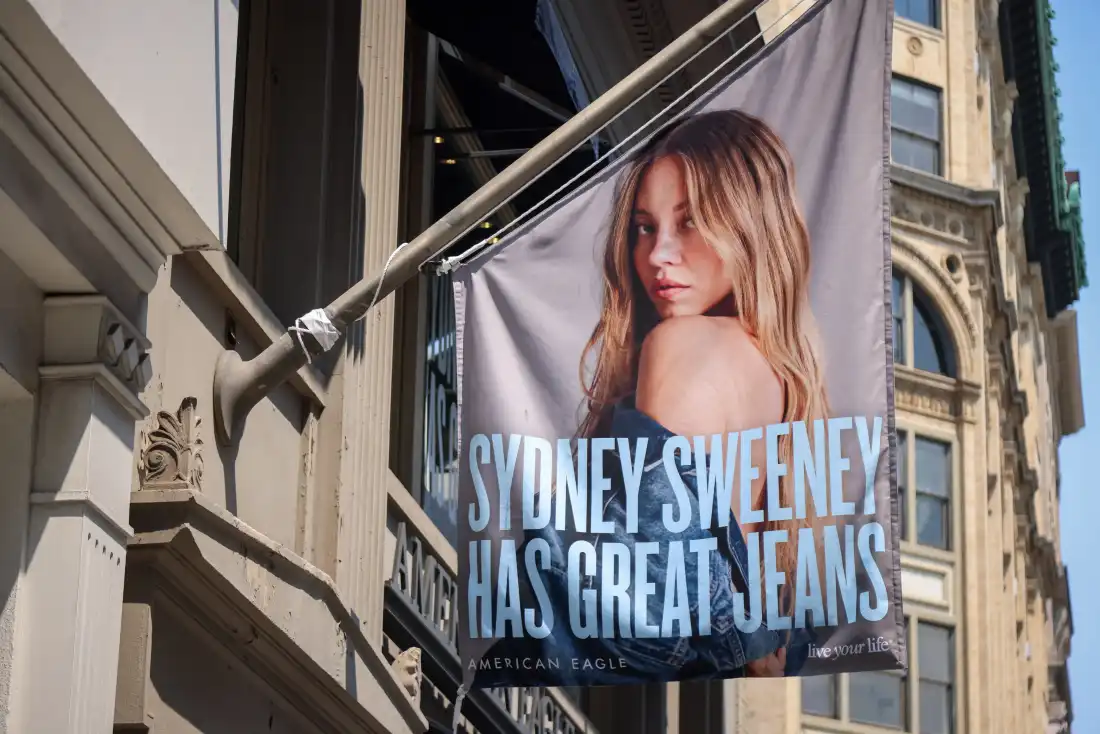
American Eagle launched a controversial advertisement last year featuring actress Sydney Sweeney, with the tagline “Sydney Sweeney has great jeans.” While the ad sparked discussions about its intent, more pressing issues about the production of those jeans remain largely ignored.
In Karachi, Pakistan, a single mother, known as S., works in a garment factory for Artistic Garment Industries. She earns approximately $144 a month, supporting both her son and her mother. S. shares that the factory conditions are “oppressively hot,” making her work environment nearly unbearable. She must process up to 1,600 pieces of clothing daily, often feeling faint and unwell due to the heat and pressure.
American Eagle responded in 2025, stating its commitment to the well-being of its workers through its suppliers. However, S. and others interviewed from Bangladesh and Pakistan revealed challenging conditions. Despite Artistic Garment Industries asserting it does not retaliate against workers raising concerns, S. and other workers worry about being silenced or losing their jobs.
“If you raise your voice, they’ll push you out,” S. explains.
The conversation around fast fashion extends beyond American Eagle, as workers in garment hubs frequently produce clothing for multiple brands like Levi’s, The Gap, and H&M. These workers report low wages and high production targets, highlighting issues of overwork and inadequate hydration due to conditions exacerbated by climate change.
Research from organizations like Cornell University highlights the dangers of extreme heat inside factories. Reports suggest that factory interiors can be up to six degrees hotter than outside temperatures, threatening workers’ health with heat illnesses and chronic conditions.
A researcher from Climate Rights International, Cara Schulte, observes that the demands placed on these workers stem from the brands’ expectations for rapid production with little margin, forcing workers to compromise their health.
In Dhaka, Bangladesh, an employee named R. describes working 12-hour days for $140 per month at MBM, another garment company. Despite better pay than other factories, R. endures harassment for not meeting production targets, driven by unreasonable deadlines.
Efforts to improve these conditions include the International Accord in Bangladesh, which aims to protect garment workers by enforcing health and safety standards. The accord will soon introduce heat stress protocols to ensure better working environments.
In Karachi, interviews with factory workers reveal severe working conditions despite the garment factories’ claims of following protocols. Workers describe high temperatures, health complications, and inadequate compensation for overtime work.
Fast fashion brands like Levi’s, H&M, and others have responded by pledging to protect workers’ rights and safety but many workers believe the auditing systems are inadequate. Allegations persist that supervisors often coach workers to provide positive feedback during inspections, overshadowing the real challenges faced.
The situation highlights the complexities of global garment production, where the realities for workers remain dire despite efforts to improve conditions. The persistent gap between brand policies and worker experiences underscores an urgent need for systemic change in the fast fashion industry.
Leave a Reply