On August 14, 1928, ‘The Front Page’ had its opening night at New York’s Times Square Theatre. The show ended with fervent applause, and one of its authors proposed to the renowned actress Helen Hayes, who accepted. This moment marked a pivotal beginning for a play crafted by Ben Hecht and Charles MacArthur, inspired by their experiences as Chicago newspapermen amidst political corruption and media frenzy.
The storyline, while straightforward, holds significant power. Reporter Hildy Johnson plans to leave his current role, get married, and switch to advertising in New York. However, his editor, Walter Burns, persuades him to cover one last story when convicted killer Earl Williams escapes jail, with an execution scheduled the next day. Set solely in a battered press room, the play introduces a cast of cynically amusing reporters, a mayor anxious about reelection, and a corrupt sheriff.
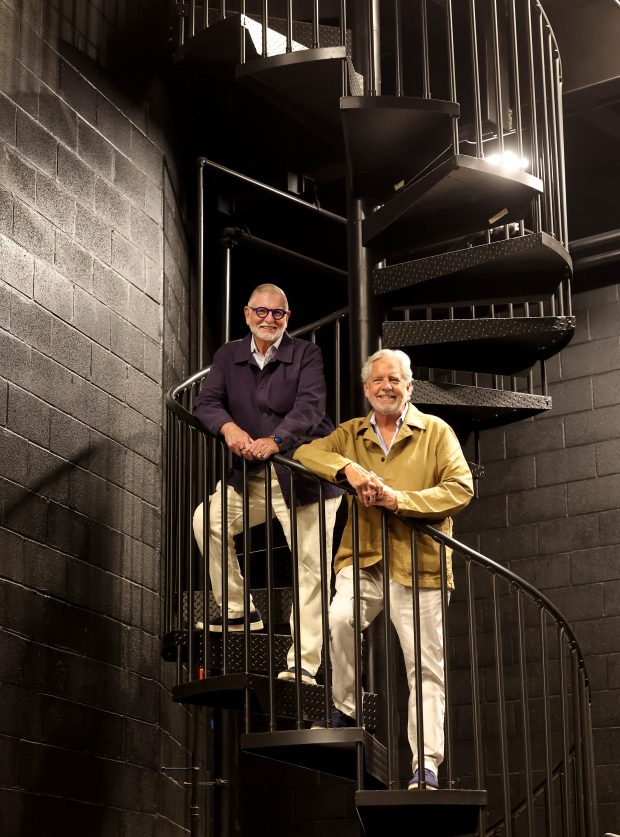
Northlight Theatre has selected this enduring play to inaugurate its new $32 million venue in Evanston. Artistic director BJ Jones expresses enthusiasm for the choice, stating, “I’m thrilled. I love this play and I think it has a great deal to say about our contemporary world. And it is so much about Chicago and I want to highlight that. I think it helps explain our era, our politics, our media. And it is so funny.” Tim Evans, Northlight’s executive director, echoes Jones’ sentiments, calling it “a big show, a momentous time for the theater. This play is so layered, still so appropriate.”
Initially, ‘The Front Page’ was brought to the stage by successful producer Jed Harris and director George S. Kaufman, who influenced comedy during the 1920s and ’30s. Though the names of its original stars are largely forgotten, the play received mixed reviews, such as the New Republic’s declaration of vulgarity, yet won praise from E.B. White in the New Yorker, who described it as a depiction of journalism’s vitality and humor.
E.B. White observed, “It parades the vulgarity, the humor, the feverish vitality, the banality of modern journalism; and it is written in the idiom of the fraternity.”
Tennessee Williams appreciated its raw street language and openness about matters like sex and prostitution, noting it “took the corset off American drama.” The initial run lasted 278 performances, and Broadway saw its revival four more times, featuring performers such as Nathan Lane and John Goodman. Notable film adaptations include ‘The Front Page’ in 1931 and ‘His Girl Friday’ in 1940.
Most recently, Jeffrey Hatcher revamped the play for Northlight with a 13-member cast, previewing on September 9th following the ‘Girl Friday’ template by making Hildy female. Veteran actor Gary Houston, reflecting on his past with the play, related stories of the play’s accuracy in embodying newsrooms, citing praise from City News Bureau members.
The newspaper industry today starkly contrasts with the world portrayed in the play, focusing more on digital-first initiatives and social media. Nonetheless, Hecht and MacArthur brilliantly encapsulated a period where sensational headlines often overshadowed genuine human concerns, with rapid reporting triumphing over factuality.
E.B. White remarked on the enduring nature of the play, “The only thing the matter with it is its perfection.”
Illuminating its time and continuing to draw audiences with its vigorous dialogue and satirical take on media dynamics, ‘The Front Page’ remains a significant piece of theatrical history.
Leave a Reply