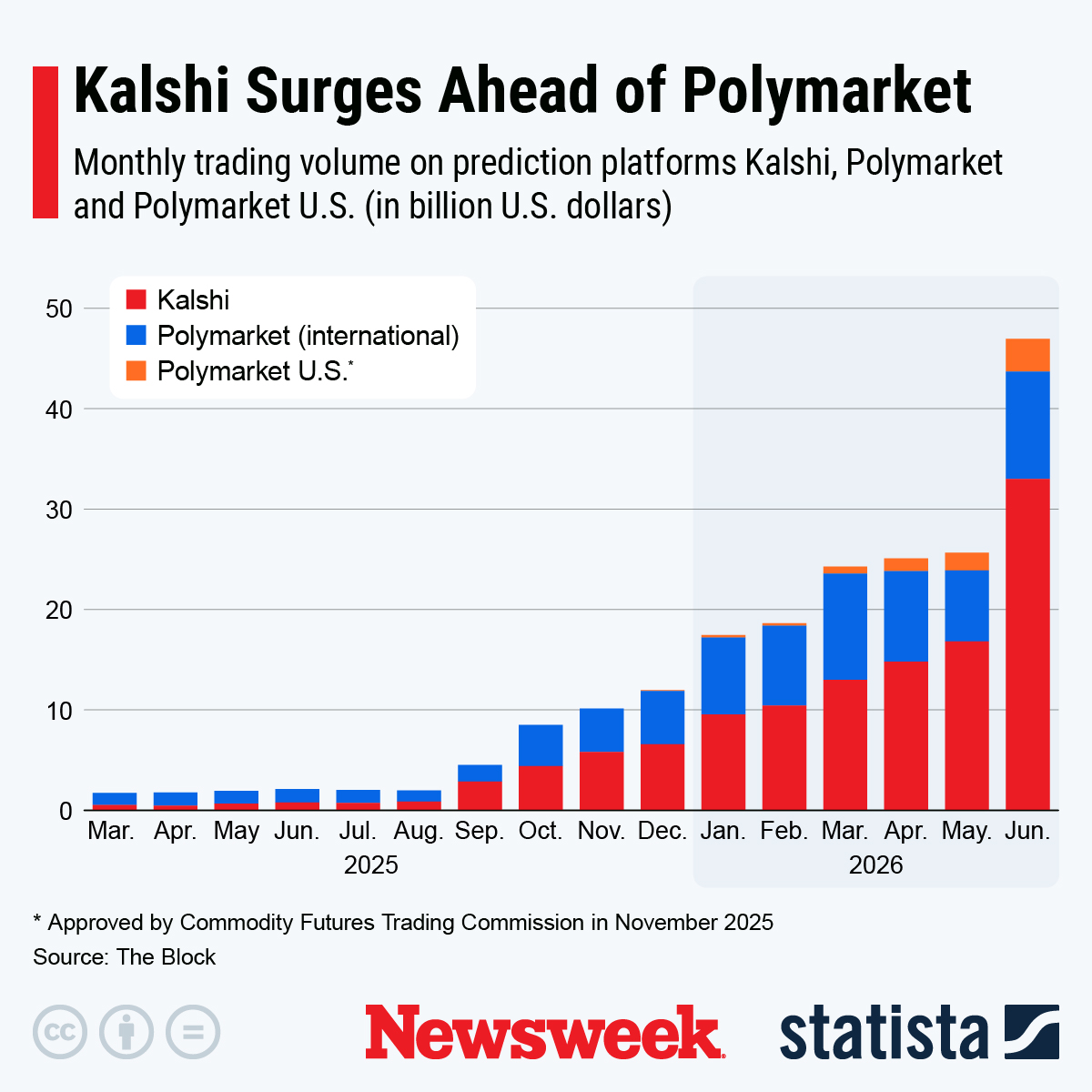
Insight into Prediction Markets
Recently, news emerged of a White House employee on unpaid leave after allegedly betting on the content of Donald Trump’s speeches. This incident was less surprising, considering the reputation of platforms like Kalshi and Polymarket as hubs for betting, sometimes veering into insider trading territories.
While betting on trivial matters such as a preference for wallpaper color may seem inconsequential, stakes rise significantly when predictions involve political elections or military operations. Prediction markets may offer a clearer view amidst today’s information overload, where fake news abounds.
Inside Information in Public Markets
The publication does not condone insider trading.
Despite ethical concerns, prediction markets have broadened access to practices once exclusive to the elite. Politicians and executives formerly manipulated market dynamics for profit, leaving the public in the dark. Prediction markets do not morally cleanse insider trading, but they enhance visibility of such information.
This shift allows insiders to bet beyond the stock market, revealing traces of secretive activities influencing policies globally. When hidden authorities or governments engage, even innocent-seeming bets can expose significant undertakings.
For instance, a U.S. soldier faced charges for using classified military intelligence to predict movements of Venezuelan President Nicolás Maduro. Observers can interpret such bets as signals of impending government actions.
Digital Age Polling Tools
Analysts differentiate between public opinion polls and prediction markets. Polls traditionally gather opinions; prediction markets focus on what people risk money on. Notably, prediction markets operate quickly, offering timely insights in a fast-paced digital world.
Although polls are vital for understanding public sentiment, information moves rapidly today, potentially outpacing traditional polling mechanisms. Quick shifts from viral media or leaked information could influence public discourse sooner than conventional polls can capture.
Studies suggest prediction markets may even surpass polling accuracy. Vanderbilt University research highlighted Polymarket’s proficiency in forecasting the outcome of the 2024 Presidential Election, especially in swing states.
Further investigation is needed before asserting prediction markets as definitive replacements for polls, but monitoring them ahead of elections might offer better insights than sensational headlines and algorithm-driven social media biases.
Broader Implications of Prediction Markets
Beyond personal understanding, prediction markets hold promise for applications such as climate forecasting. Accurate climate predictions involve complex technology and scientific expertise with varied informational needs, from flood defenses to agricultural planning.
However, climate forecasting is hindered by flexible incentive structures. A consultant might provide favorable forecasts for client satisfaction. Researchers propose prediction markets could refine forecasts by encouraging accuracy over convenience.
While not a solution to climate change, prediction markets might improve forecast accuracy. Conversely, their potential misuse poses ethical concerns, evident in legislative actions such as the prohibition of prediction market betting by U.S. Senators.
The manipulation potential in prediction markets extends to geopolitical strategies, hinting at future power shifts. Observers must be vigilant about their influence, accepting prediction markets as powerful tools requiring careful use.
Leave a Reply