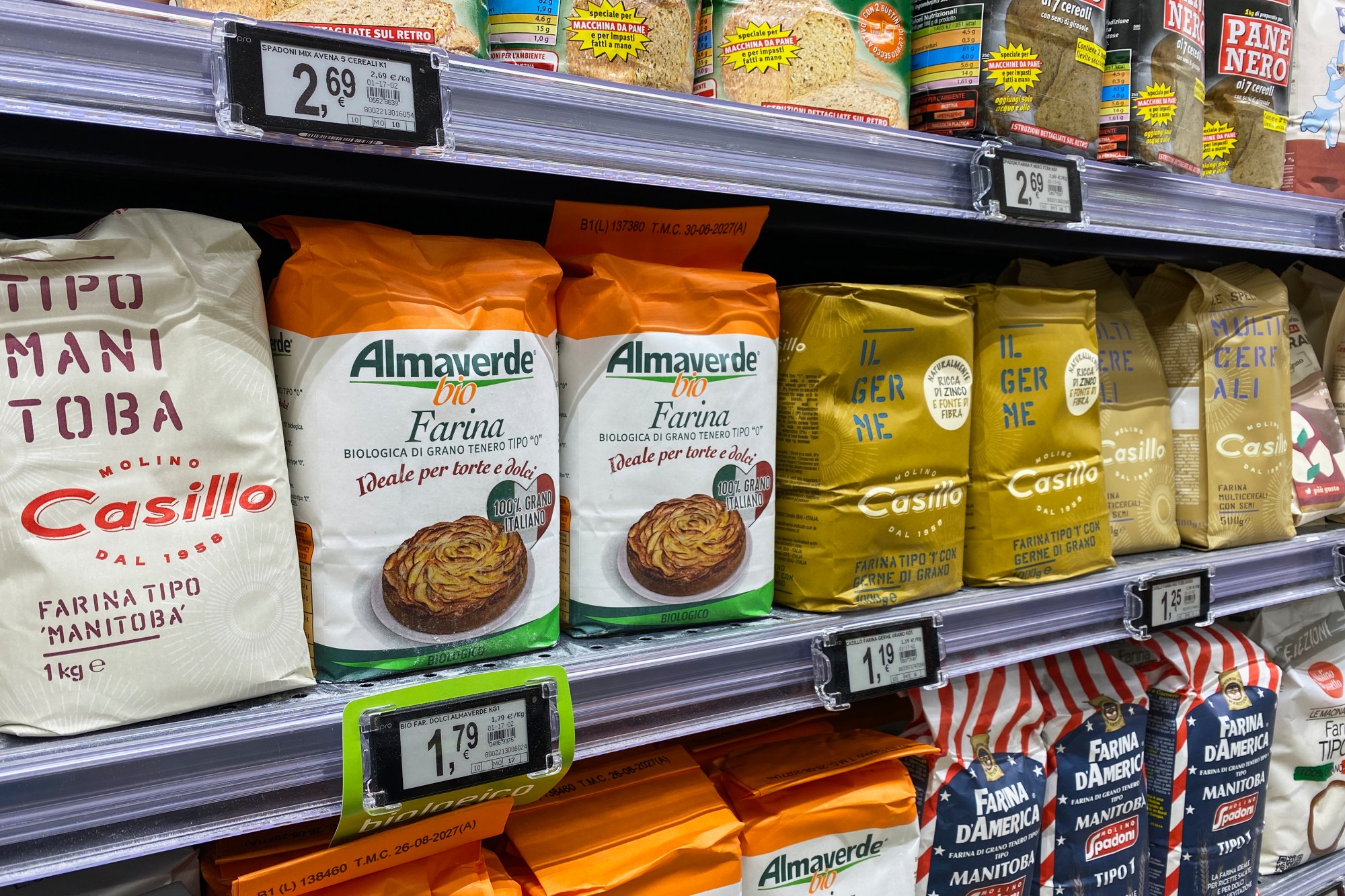
In supermarkets across Bari, Italy, bags of flour from renowned Italian brands like Casillo, Almaverde Bio, and Molino Spadoni are displayed. The selection includes Manitoba-type flour, organic wheat flour, wheat germ flour, and American-style Manitoba flour, all with digital price tags mounted below.
Half a century ago, the introduction of bar code scanners in stores faced opposition from consumer groups wary of inflated prices and health risks from lasers. Today, electronic shelf labels are gradually replacing printed price tags globally, allowing stores to adjust prices swiftly via computers or tablets.
In Europe, approximately 80% of supermarkets have embraced electronic labels, while the U.S. lags due to concerns about potential price manipulation. A report by AFL-CIO, the largest federation of labor unions in the U.S., expressed worries about rising grocery prices and job loss due to electronic label implementation. Despite such fears, technological advancements have driven changes in the grocery sector for over a century, enhancing the shopping experience and proving advantageous for both consumers and retailers.
Innovations, including shopping carts, bar code scanners, and self-checkouts, have revolutionized supermarkets. Essentially, jobs within the grocery industry have persisted. For example, California, home to the largest food retail sector, saw a 38% growth in grocery employment since 1992, surpassing the state’s population growth of 28%. Electronic shelf labels likely won’t eliminate jobs, as labor remains challenging for supermarkets due to high turnover rates, highlighting difficulties with employee retention.
Eliminating manual label replacement gives workers more time for checkout duties, stocking shelves, assisting customers, and maintaining store cleanliness. This reallocation of labor enhances productivity across the store.
Electronic shelf labels could potentially lead to lower and more efficient pricing. ‘Sticky’ food prices—those that remain unchanged despite shifts like energy costs—are inefficient, leading to issues such as foregone profits and food waste. A typical supermarket carries around 40,000 products, and adjusting prices involves significant labor and printing expenses. Digital labels facilitate easier price adjustments, allowing for accurate prices aligned with cost pressures.
Concerns about electronic label adoption differ from worries about surveillance pricing or price gouging. Regulation is essential to address these concerns, ensuring profit pursuit doesn’t hinder food security. In Europe, electronic shelf labels haven’t resulted in price hikes, and laws can prevent practices like facial scans during shopping. Most states already have price gouging laws, applicable to both printed and digital prices.
The highly competitive U.S. grocery industry operates on thin margins. Technologies like electronic shelf labels may stabilize and reduce food price inflation by decreasing operating costs. Providing retailers with efficient management tools, alongside regulatory measures, will prevent anticompetitive pricing behavior.
The evolution seen with bar code scanners is unfolding once more. Paper price tags and shelf stickers may soon be viewed as outdated, costly, and wasteful.
Leave a Reply