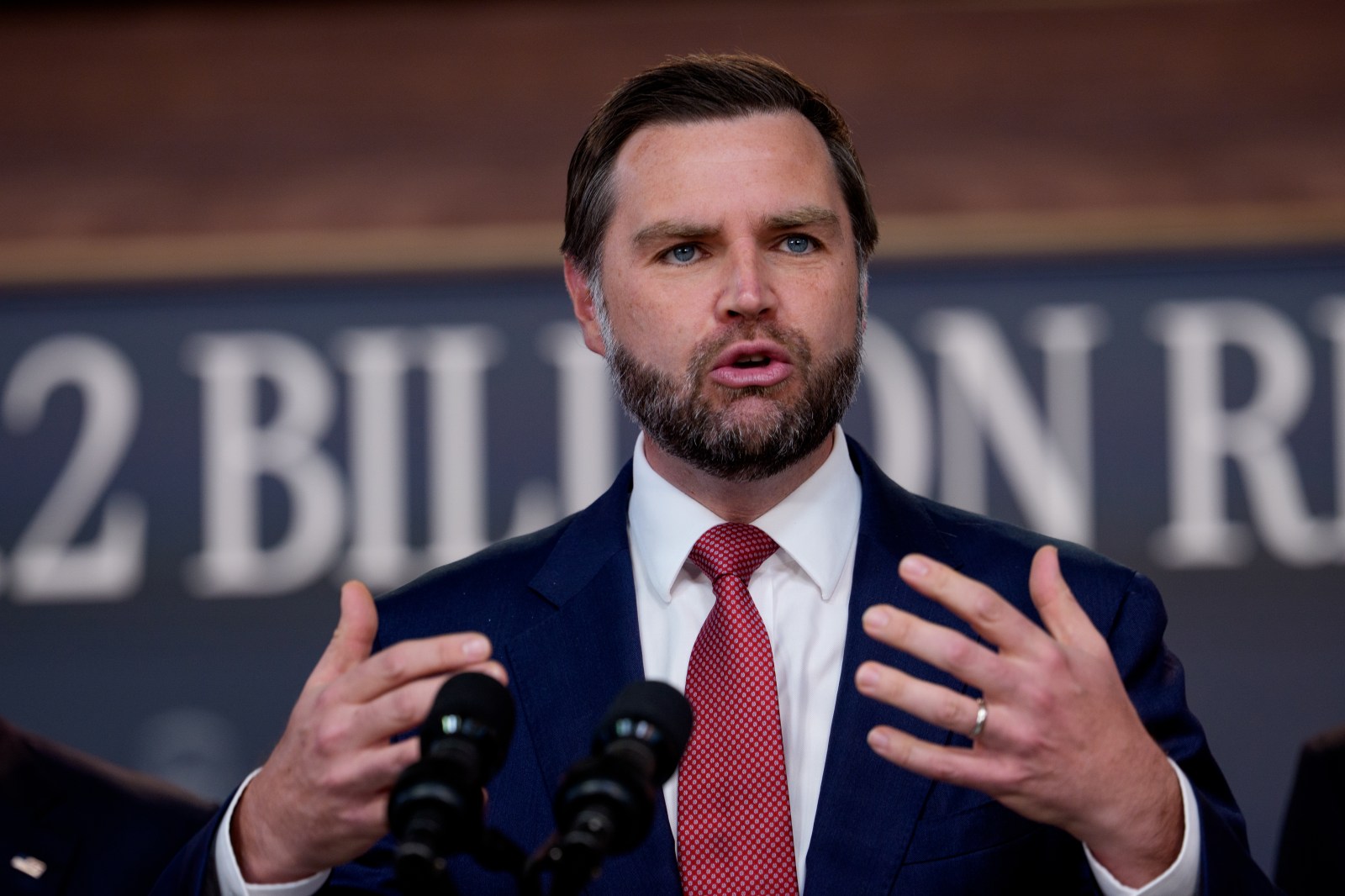
The Trump administration is evaluating measures to stop companies from laying off American employees while recruiting foreign workers through the H-1B visa program. Vice President JD Vance highlighted this as part of an effort to implement tighter controls on employment-based immigration.
Scrutiny on Employers:
Vance, designated by Trump as the administration’s ‘fraud czar,’ mentioned that officials are assessing employers’ layoff histories. The aim is to prevent the replacement of U.S. workers with lower-paid foreign labor through H-1B visas. During an appearance on the “All-In Podcast,” Vance expressed surprise at companies applying for H-1B visas while having recently laid off large numbers of domestic workers.
New Visa Restrictions:
The administration has introduced several changes to the H-1B program intended to increase regulation. This includes a prioritized selection system favoring higher-paying positions, extending security and biometric fees for large employers, and proposing the removal of a rule allowing some foreign workers to stay in the U.S. for 60 days post-employment.
On September 18, President Trump signed an executive order increasing scrutiny of H-1B petitions when potential displacement of U.S. workers is involved. This directive asks the departments of State, Labor, and Homeland Security to review employers’ recent or planned layoffs when considering H-1B applications.
Legal Actions and Proposals:
Federal authorities have taken action against several companies for alleged misuse of the H-1B program. The Labor Department’s inspector general suspended Cognizant’s ability to file new applications under the PERM program due to suspected fraud. Software company Cloudera faced similar action. As of September 28, five employers were disqualified from participating in the H-1B program.
The Department of Homeland Security proposed a $103,265 charge on cap-subject H-1B petitions. Despite this cost, DHS believes employers will continue filing about 85,000 cap-subject petitions annually. The proposal suggests that businesses using the program have the resources to manage the expense. This is separate from a previously imposed $100,000 payment requirement for certain H-1B beneficiaries, which a federal court ruled unlawful.
Goals and Arguments:
The administration contends that these changes aim to align the H-1B program with its intended purpose—supplementing, rather than displacing, the domestic workforce with highly skilled foreign employees. White House spokesperson Lauren Bis stated that all measures are designed to prioritize American workers.
Opponents of the program argue that it disadvantages U.S. workers. In contrast, tech companies argue they rely on H-1B visas for specialized labor. Adam Klein, a former DHS official, noted that if U.S. companies find the process too complex, they might move work abroad instead.
Political Context:
Vance admitted that legal limits restrict the administration’s actions unless Congress intervenes. Congressional opinion on H-1B visas is divided, with some lawmakers calling for reforms, restrictions, or even elimination, while others support its use for accessing specialized foreign talent.
Vance emphasized that the H-1B program should enrich the American economy rather than replace American workers with low-wage foreign labor.
Leave a Reply