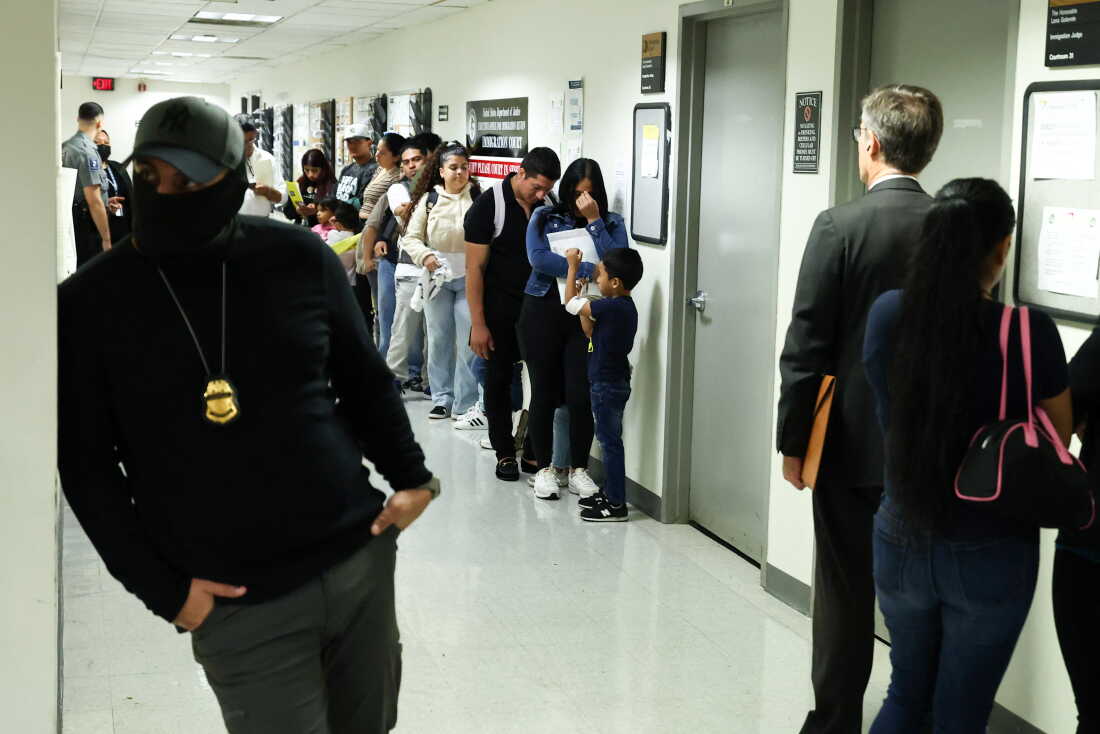
In recent developments, immigrants face unforeseen challenges at U.S. immigration hearings. Changes in court locations and short notice create confusion and legal hurdles. Reports from five immigration attorneys reveal last-minute notifications about in-person hearings in previously unknown venues. These changes seem to be part of strategies to expedite deportations and arrests, minimizing due process options.
Over the past few weeks, locations for scheduled hearings have shifted. Immigrants initially expected to appear in Hyattsville and Baltimore in Maryland or Sterling, Virginia, are now redirected to Washington, D.C., and Falls Church, Virginia. These buildings do not currently host immigration courts equipped for in-person hearings. The site in D.C. was not affiliated with the Justice Department, sparking further confusion.
Immigrants received notices just days before new appointments, and some never received notifications. This oversight breaches Justice Department regulations requiring at least ten days’ notice. The American Immigration Lawyers Association, represented by officer Kel White, criticized these practices for potentially leading to deportations by default due to lack of fair notice. White mentioned a policy manual indicating that ample notice is essential.
People are not getting notice of these hidden tribunals, or the mail doesn’t arrive in time, risking absentee orders of removal.
Many immigrants lack legal representation, complicating efforts to argue their cases. Without attending scheduled hearings, they risk receiving an “in-absentia order of removal,” allowing deportation. The Executive Office for Immigration Review manages around 60 immigration courts, with recent statements indicating continual adjustments for timely and lawful case handling. However, why immigrants are directed to these unconventional locations remains unanswered.
The Trump administration has focused on reducing the immigration court case backlog, totaling approximately 3.5 million cases, while challenging the courts’ effectiveness. A White House press release from April highlighted an “aggressive and successful immigration enforcement overhaul,” emphasizing rapid deportation efforts.
Lawyers express concern over increasing confusion and lack of clarity in the immigration court system. The Falls Church location, previously an adjudication center for remote hearings, now accommodates in-person hearings, adding to legal ambiguities. White described hearing proceedings where the judge and prosecutor appeared remotely, demonstrating imbalance in fairness.
The Federal Center Plaza in D.C. will soon host hearings, yet it lacks DOJ courtrooms and an EOIR facility. The General Services Administration failed to comment on the usage of their space for DOJ activities. Amidst a “surge” to secure space for more immigration courts, at least 18 potential locations are identified, but no public announcements confirm new court openings.
Immigrants continue to struggle with new venue assignments. NPR cited an anonymous individual who discovered a scheduled hearing change via the app MigraConnect, sparing them from a potential path to deportation due to a missed mail notice. Typically, immigrants attend the nearest immigration court, which was not the case with current relocations. Lawyers detail scenarios where clients needed to traverse multiple states for hearings, complicating legal processes.
Lucelia Justiniano, an attorney, recounted a case of a client unknowingly rescheduled from Hyattsville to Falls Church. Contacting the court revealed a new center opening, highlighting the potential for missed hearings without adequate notice. James Reyes shared another instance where rescheduled hearings impacted the case progress significantly.
Over the past year, the Trump administration accelerated final removal orders for immigrants seeking deportation relief. These recent changes in hearing locations align with actions to hasten court proceedings. Mega master calendar hearings, where groups over 100 immigrants have appeared, increase in-absentia deportation orders and decrease asylum approvals.
Immigration attorneys emphasize these strategies disadvantage unrepresented immigrants, particularly regarding hearing notification. Reports from Baltimore office show in-absentia removals rising substantially within the past year. These last-minute venue changes exemplify growing challenges for immigrants navigating an overwhelming court system.
Leave a Reply