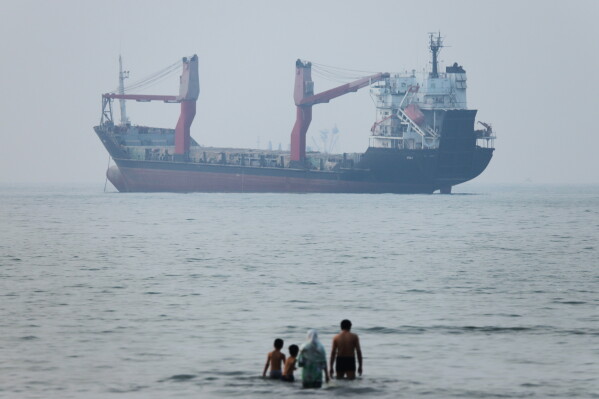
President Donald Trump announced that he believes the ceasefire with Iran has come to an end. He expressed uncertainty about wanting a deal anymore, stating that the U.S. should “finish the job.” Despite this, he clarified that ongoing attacks do not equate to war or long-term military action. Trump’s mixed messages and approval of consecutive military strikes raise significant questions about the conflict’s future, especially after recent diplomatic efforts aimed at reaching an initial agreement between the adversaries.
Trump’s shifting rhetoric could be a strategy to pressure Tehran into halting attacks on oil and natural gas transporters in the Strait of Hormuz and conceding to U.S. demands regarding its nuclear program. This is a tactic Trump has attempted before. Whether as a negotiation strategy or an indication of escalating conflict, mediators are urgently working to preserve the interim deal. The situation might worsen Republican prospects in the November midterm elections if gas prices remain high.
On Wednesday, Trump warned of upcoming U.S. attacks while downplaying suggestions of returning to full-scale warfare. Shortly after, the military announced new strikes aimed at decreasing Iran’s capacity to threaten navigation freedom in the Strait of Hormuz. “Anything that happens is going to happen very fast,” Trump stated. “We’re not looking for a long time.” Key officials are working to save the ceasefire as mutual mistrust grows, according to a regional intelligence official involved in the mediation efforts. High-level discussions continue around-the-clock to salvage the agreement.
The foreign ministers of Pakistan and Qatar, alongside Egypt’s intelligence chief, lead these efforts, with participation from Turkish President Recep Tayyip Erdogan and leaders from Saudi Arabia. U.S. officials are dismayed by ship attacks in the Strait of Hormuz and accuse Iran of delaying discussions on its nuclear program. These nuclear talks were pivotal in transforming the interim deal announced last month into a permanent solution. However, Iran accuses the U.S. of violating the agreement concerning the strait and failing to ensure a ceasefire in Lebanon that includes an Israeli withdrawal.
Michael Eisenstadt, a former U.S. military analyst now directing the Military and Security Studies Program at the Washington Institute for Near East Policy, noted that negotiations continue despite the president’s statements. Eisenstadt believes the declaration of the Memorandum of Understanding (MOU) being over is part of the negotiation process. Trump has publicly stated his disinterest in maintaining the ceasefire, saying, “I think it’s over.” He indicated that the U.S. military might “just finish the job.”
Mohammad Bagher Qalibaf, Iran’s lead negotiator, accused Trump’s administration of repeatedly violating the initial agreement’s terms, prompting Iran to respond appropriately. “The era of bullying and extortion is over. It leads nowhere. We don’t fold,” Qalibaf declared on X. Pakistan, a broker of the ceasefire, deemed renewed conflict in “no one’s interest” and urged both parties to fulfill their commitments. “There is no alternative to continued engagement, dialogue, and diplomacy to achieve the shared goal of peace in the region,” its foreign ministry stated.
Trump, however, dismissed Iran’s leadership, calling them “scum” and “sick people,” despite previously describing them as “very rational” and “nice to deal with.” Vice President JD Vance criticized Iran’s recent strait attacks at an event in Milwaukee, stating that if Iran shoots at ships, the U.S. will retaliate forcefully.
Trump may be employing another negotiating tactic. Before the initial U.S.-Iran ceasefire in April, Trump increased threats, pledging American forces would bomb Iranian infrastructure and posted online threatening a civilization’s eradication. He reiterated such threats before a tentative 60-day deal to end the war was reached last month.
Seeking negotiation strength, Trump might aim for greater leverage with new strikes. Yet stating the ceasefire’s conclusion could liberate Iran militarily, causing volatility in oil prices and financial markets. Ali Vaez, Iran director at the International Crisis Group, argued escalating threats are riskier now considering domestic and international U.S. stakes. He suggested coercive bargaining could unintentionally become full-blown war. Despite risks, Iran remains motivated to return to negotiations due to promised economic relief under the interim deal.
Trump’s mixed messages extend to economic impact concerns. He previously insisted rising American gas prices were irrelevant to his Iran policies, but later claimed part of his agreement motivation involved preventing an “economic catastrophe.” He has highlighted declining oil prices post-deal.
Upcoming elections could affect Trump’s decision-making. Potential strikes on Iran civilian infrastructure, including Kharg Island oil hub, could again inflate oil prices. With midterm elections approaching, Republicans aim to keep legislative control. Rising oil prices amid conflict uncertainty suggests Americans might face higher pump costs. Trump downplayed such concerns, saying any military action raises prices slightly. In reality, oil futures climbed significantly. Trump acknowledged oil influences everything, stressing baring Iran from nuclear weapon ownership justifies the ordeal.
Amiri reported from New York, Magdy from Cairo, with Associate Press writer Munir Ahmed contributing from Islamabad, Pakistan.
Leave a Reply