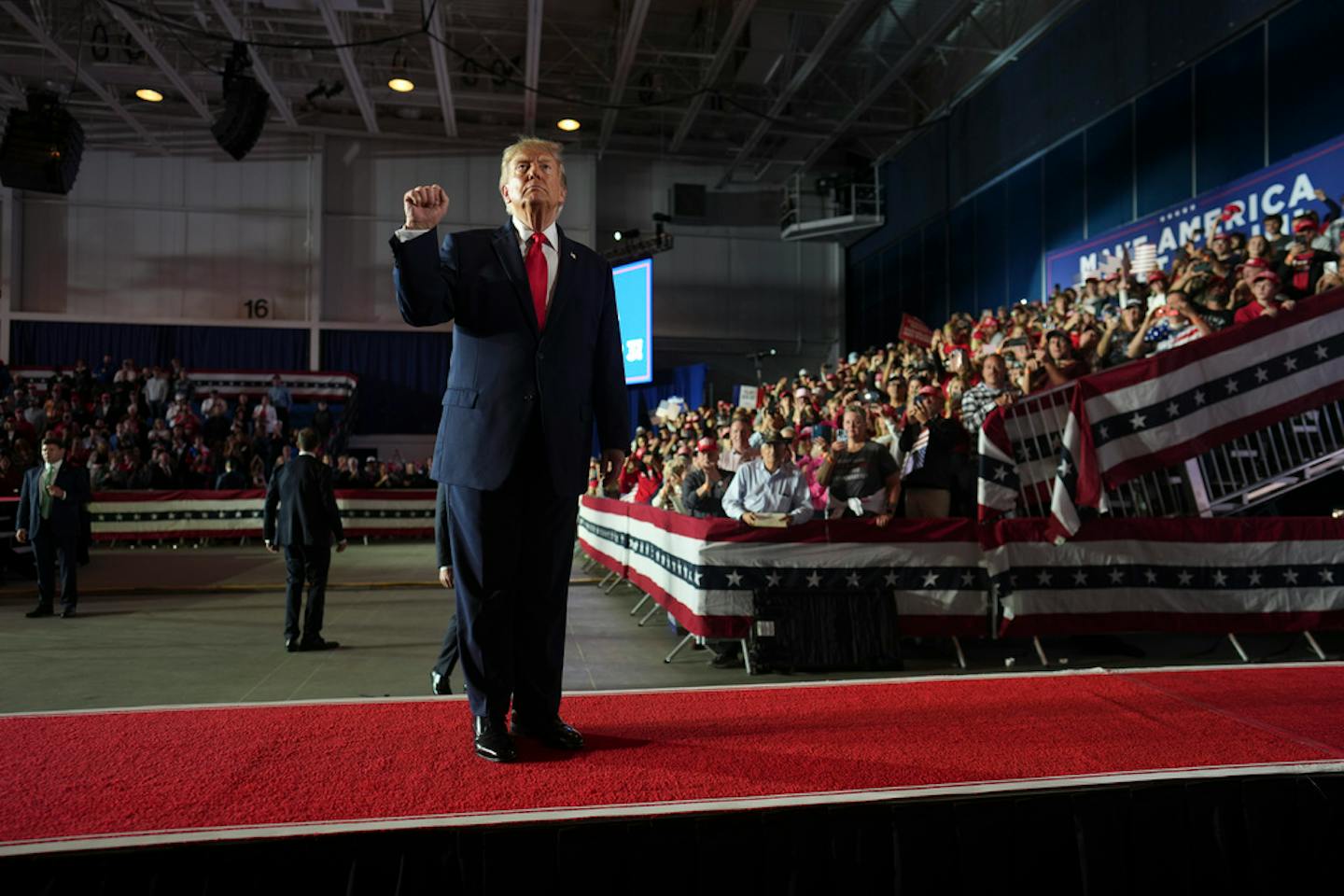
The recent midterm elections have demonstrated a significant shift in the U.S. political landscape, with President Donald Trump experiencing a notable backlash. The Democratic surge in congressional polls marked a sharp rebuke of Trump’s presidency, underlining growing public discontent.
Throughout the campaign, Trump urged voters to consider the midterms as a referendum on his presidency, saying, “pretend I’m on the ballot” on numerous occasions. Despite his appeals, the election results indicated a different outcome than he sought. The electoral pushback was evident even in traditionally Republican-strong regions, signaling a decline in Trump’s influence over his former coalition.
Foremost among voter concerns were high gas prices, ongoing conflict with Iran, and allegations of profiteering linked to Trump and his associates. Such issues led many former supporters to either support Democratic candidates or abstain from voting. Estimates from The New York Times suggested that Democrats achieved a 13 percentage point lead in the national vote for House seats, an unprecedented margin in recent congressional elections.
“It’s basically a repudiation of Trump and the Republicans and what they’ve done for the last two years,” stated Douglas B. Sosnik, a former White House political director.
Trump attempted to mitigate the perceived impact of the Democratic victories by asserting that his absence on the ballot influenced Republican turnout, a claim met with skepticism even among Republicans. His tenure saw contentious decisions, including initiating conflict with Iran, which negatively affected energy prices, and his involvement in the selection of certain Republican candidates.
Specifically, Trump-backed Senate hopefuls Ken Paxton in Texas and Darline Graham in South Carolina faced defeats, underscoring the potential pitfalls of his political strategies. Voters expressed dissatisfaction with policies such as tariffs and immigration enforcement, which they viewed as detrimental.
Despite setbacks, Trump retains two years of presidential authority, and his supporters caution against underestimating his resilience. Prominent voices, such as David McIntosh from the Club for Growth, emphasize the need for the Republican Party to reaffirm its guiding principles to achieve future electoral success.
Historical patterns demonstrate that dramatic electoral shifts do not necessarily lead to long-term changes in the political landscape. Past midterm waves, like the post-Watergate elections or the Republican gains in 1994 and 2010, inspired assumptions of enduring change, only for the political climate to fluctuate subsequently.
“It doesn’t mean the MAGA coalition is crumbling,” said Lynn Vavrek, a UCLA professor. “Are people less enamored of him? Yes.”
Observers suggest that Trump’s impact has indelibly shaped the Republican Party, altering its policies and priorities. Regardless of the recent election results, the party is unlikely to revert entirely to pre-Trump philosophies.
For Democrats, the election represented more than a mere opposition to Trump. Internal debates continue about the source of their success, questioning the roles of progressive energy versus moderate appeal to disenchanted Republicans.
The upcoming political climate will likely involve continued adaptation and realignment for both major parties, as indicated by James Blanchard, a political veteran of the post-Watergate era: “We can never go back, unfortunately.” The dialogue on the future direction of American politics remains open as the nation navigates the implications of the recent electoral outcomes.
Leave a Reply