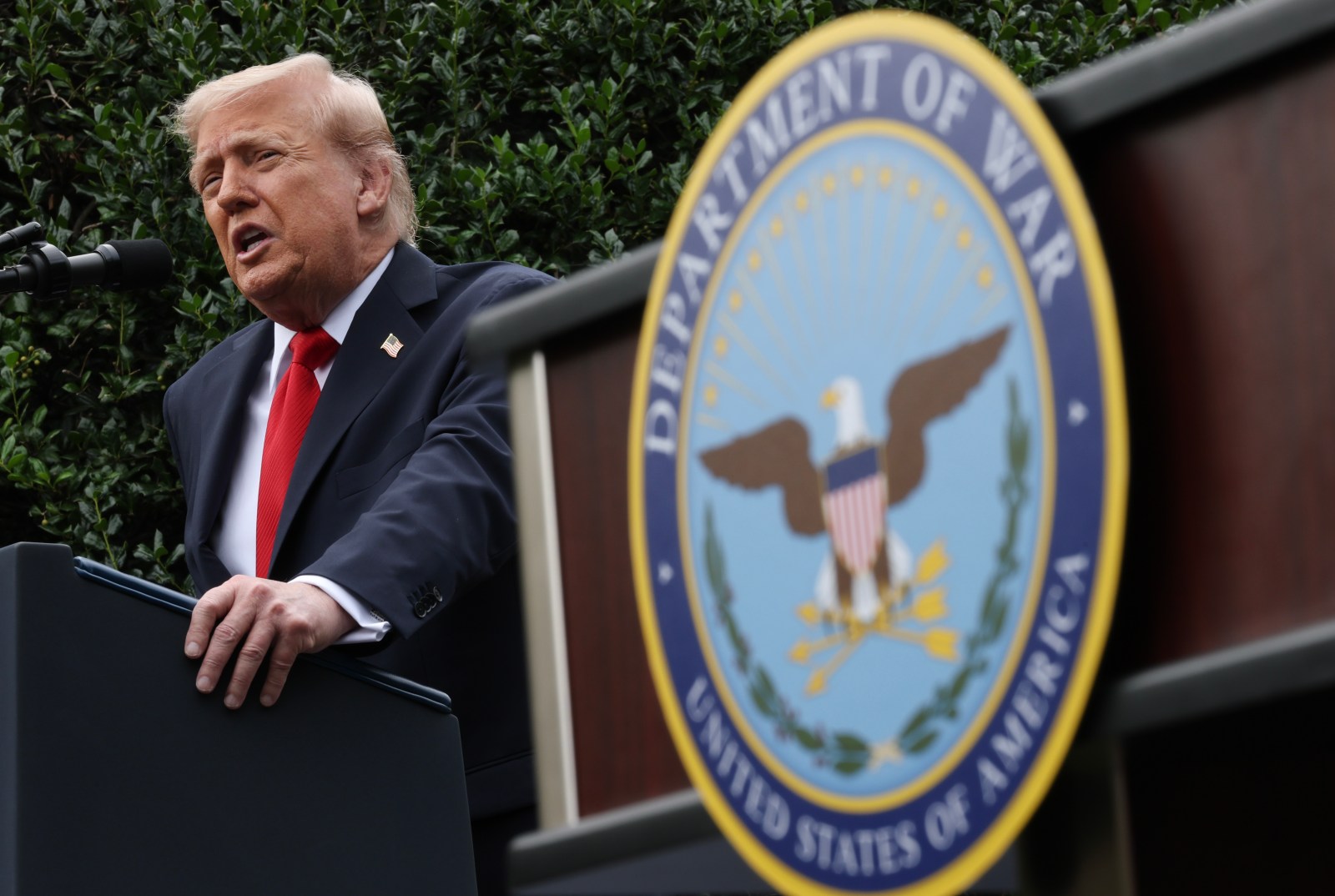
President Donald Trump urged Senate Republicans to swiftly approve a $350 billion military spending package. This push comes before Democrats assume control of Congress. He accused the incoming majority of planning to obstruct what he described as a historic investment in national security.
Trump wrote on Truth Social, stating, “I rebuilt our Military in my First Term, and we’re doing it AGAIN, bigger and better than ever before! They want to leave our Warriors weak, and unguarded, but the American People want their Warriors SAFE and STRONG.” His remarks focus on blaming Democrats. Despite his call for expedited approval dating back to June, the package’s main obstacles originated within his own party.
The Purpose of the $350 Billion
This funding is a segment of the administration’s broader $1.5 trillion defense budget request for fiscal 2027. The plan calls for $1.15 trillion through regular appropriations and $350 billion via reconciliation. The request allocates $47 billion for enhanced munitions production, $17 billion for the Golden Dome missile defense system, and over $48 billion for essential minerals.
Defense Secretary Pete Hegseth has urged lawmakers to support the plan. He claims it would expand the defense industrial base. The military has exhausted munitions in the conflict with Iran. A Congressional Research Service report highlighted “strategic inventory shortfalls” due to munitions spending in Operation Epic Fury.
Congress has only progressed on a portion of this request. House Republicans introduced a reconciliation framework in July with $60 billion for defense. This falls about $290 billion short of the White House’s request. The House narrowly passed a $95 billion budget resolution. The Senate has not voted on it before the midterms.
Challenges Within the GOP
The GOP is employing budget reconciliation, a process allowing the majority to approve spending bills with a simple majority, bypassing the Senate filibuster. Democratic support was unnecessary. However, Republicans faced internal disagreements.
The first public dissent appeared in June, a day prior to Trump’s initial demand. At a Senate Appropriations hearing, Senator Mitch McConnell stated another reconciliation bill seemed unlikely. Senator Susan Collins warned that relying on reconciliation involved significant risk. Senators Lisa Murkowski and John Cornyn echoed these concerns.
After the midterms, the pressure intensified. During leadership elections, conservative senators, including Ron Johnson, opposed the bill. Johnson clashed with Thune, who committed to striving for a budget resolution and defense reconciliation package during the lame-duck session.
Despite pledges from several Republicans, not all were convinced. Senator Rand Paul criticized the bill as “tone-deaf.” Senator Josh Hawley expressed his opposition as well.
Comparisons to Health and Education Spending
The military spending package overshadows domestic priorities. Trump’s 2027 budget proposed a 44% increase in military spending while reducing domestic spending by about 10%.
Under this plan, the Department of Education would see a reduction to $76.5 billion. The Department of Health and Human Services would face a 12.5% cut. This includes substantial reductions for the NIH and CDC.
The reconciliation request is significant, surpassing the $660 billion proposed for nondefense agencies. Medicaid and Medicare, operating on larger mandatory spending, also saw proposed reductions. The initial reconciliation package suggested cutting nearly $1 trillion from Medicaid over ten years.
Congress has mostly ignored Trump’s proposed domestic cuts for 2026. Instead, lawmakers increased NIH funding by $415 million.
Democratic Opposition
Democrats have resisted the defense funding increase, citing objections to the war with Iran. In July, most Senate Democrats opposed the defense policy bill, which lacked sufficient votes. Senator Jack Reed stated he could not endorse a bill facilitating a war with Iran that Congress had not authorized.
Democratic lawmakers have also criticized the disparity between military and nondefense spending. Representative Rosa DeLauro highlighted a significant increase in defense spending while domestic spending faced cuts.
Senator Chris Coons expressed doubt about the reconciliation package’s prospects. The reconciliation path was designed to bypass Democrats. With Democrats soon taking both chambers, that option closes for Republicans.
Some Republicans are exploring alternatives. Senator Collins and others are considering adding emergency defense funds to a stopgap spending bill. However, it remains unclear if Democrats would agree to this approach.
Leave a Reply