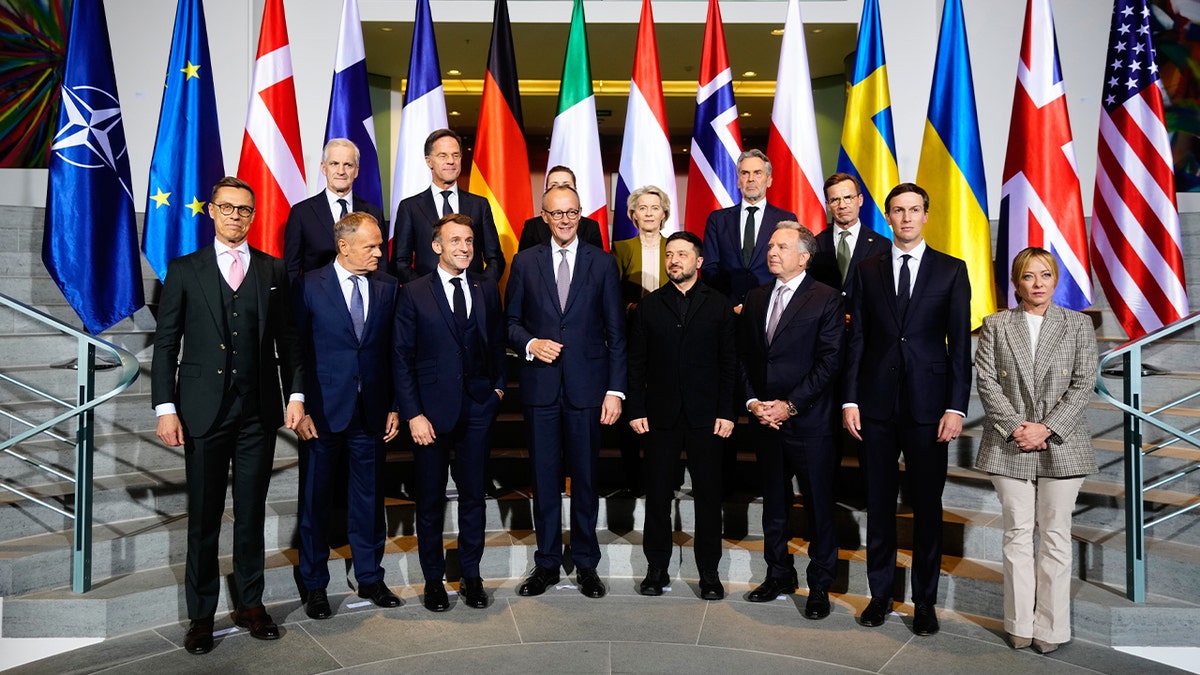
President Donald Trump has expressed intentions to negotiate an agreement with Russia to end the ongoing conflict in Ukraine. These efforts have raised concerns among NATO allies, as they fear such a deal might redefine European security issues.
Trump stated that the agreement would be significant, potentially involving more than just Ukraine. He suggested it could include broader European security arrangements.
Concerns Among NATO Allies
Retired General Philip Breedlove, the former Supreme Allied Commander Europe, warned about President Vladimir Putin’s ambitions. According to Breedlove, Putin seeks to divide global influence among major powers such as Russia, China, and the United States.
Zelenskyy’s apprehensions regarding the negotiations were also evident. He voiced concerns over a scenario similar to the 1945 Yalta Conference, where Europe was divided by global powers after World War II. Zelenskyy rejected the idea of a “Yalta 2.0,” emphasizing the risks of division instigated by Russia.
NATO and European Reactions
Secretary of State Marco Rubio mentioned ongoing discussions on European security post-conflict. However, Breedlove questioned whether any deal reached between Trump and Putin would have support from European governments or Ukraine.
Tensions increased after European leaders, including Finnish President Alexander Stubb and Norwegian Prime Minister Jonas Gahr Støre, had direct communications with Putin. Despite these separate diplomatic efforts, Danish Prime Minister Mette Frederiksen emphasized unity in Europe rather than individual initiatives.
French Foreign Minister Jean-Noël Barrot confirmed France’s participation in the upcoming negotiations in Abu Dhabi, signaling significant European involvement.
Potential Outcomes and Challenges
Breedlove highlighted the potential for resistance against any agreement that compromises Europe’s security in favor of Moscow’s demands. He cautioned that no plan would gain traction if it leaves European nations vulnerable to Russian aggression.
Ultimately, Trump’s efforts have sparked a robust debate about the future of European security and the role of global powers in shaping it.
Leave a Reply