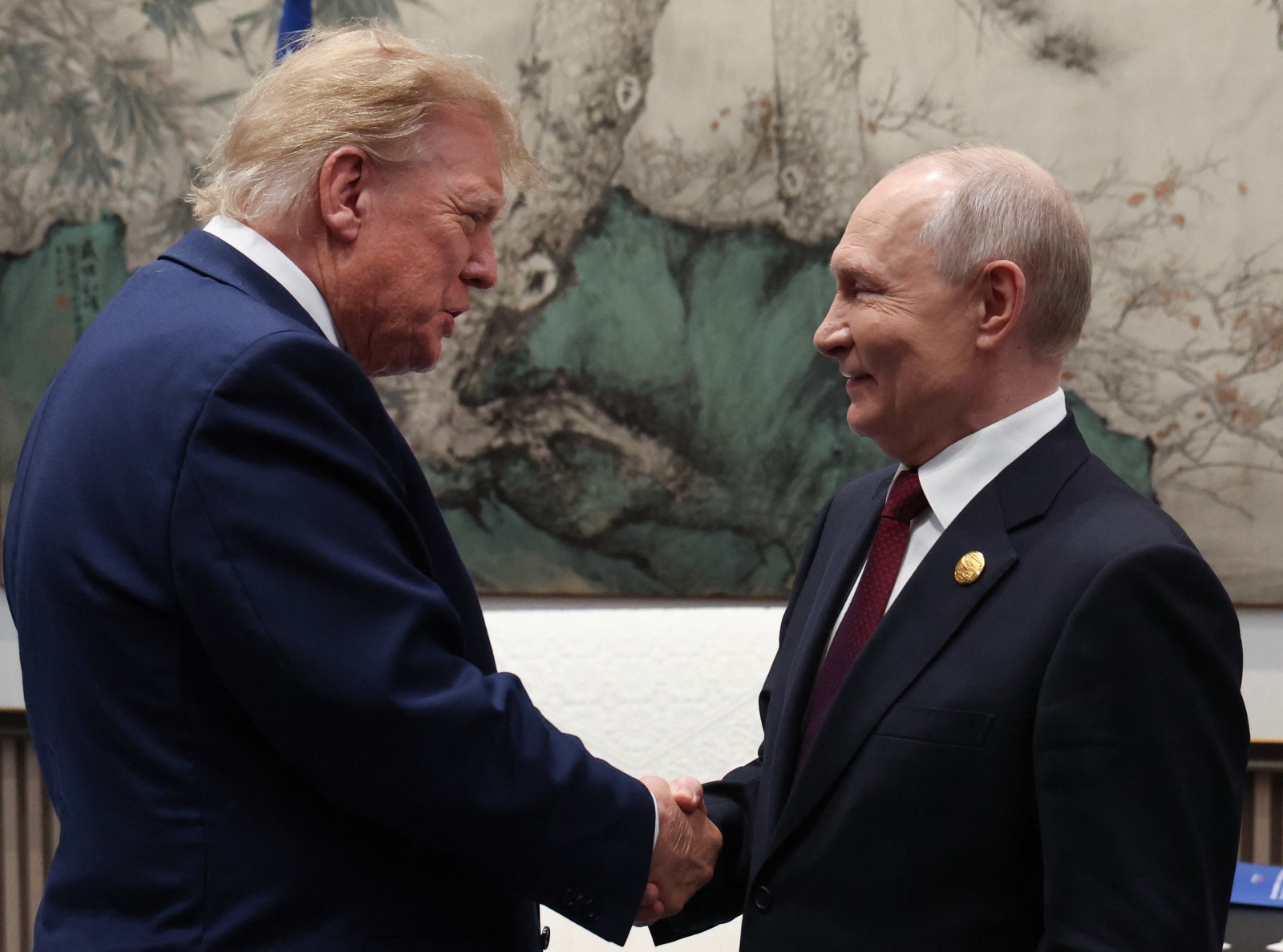
Donald Trump’s book The Art of The Deal highlights negotiating from strength, leveraging positions, and walking away. However, his recent dealings with Vladimir Putin suggest a chapter on flattery might also be fitting. Over the span of a week, Trump referred to the Russian leader as a “friend.” Additionally, Jared Kushner, Trump’s envoy, called Putin a “political grandmaster.” This comes as speculation mounts over whether such endearments could help broker a peace deal to end the war in Ukraine.
On Truth Social, Trump was asked about the contrast between his amicable descriptions of Putin and his call for Russia to withdraw all military aggression from Europe. Expressing his belief that a friendly interaction with Putin could aid in reaching a resolution, Trump reiterated his invitation for Putin to attend the upcoming G20 in Miami.
Trump suggested that a confrontational approach—such as stating “I don’t like you”—could result in similar discord as seen between Ukrainian leader Volodymyr Zelensky and Putin, who share mutual animosity.
Oleg Ignatov from the International Crisis Group remarked: “Trump calling Putin a friend is simply an aspect of his business culture. I don’t believe it holds much weight for Putin, though it might be personally gratifying at times.”
Kushner’s compliments towards Putin drew mixed reactions. While Trump maintains a history of praising the Russian leader, his “friend” reference continues to provoke surprise. Ukrainian president Volodymyr Zelensky described this relationship as “strange,” comparing it to embracing an aggressor like Adolf Hitler. Zelensky told the BBC, “As an aggressor and a killer, he can’t be a friend.”
Social media users also criticized Kushner for his comments, where he credited Putin for exercising restraint by not deploying nuclear weapons and criticized Europe’s support for Ukraine as a “proxy war.” Kushner’s meetings with Putin yielded no significant diplomatic breakthrough, showing a potential misreading of the conflict, according to Yuriy Boyechko, CEO of Hope for Ukraine. Boyechko added that Kushner’s portrayal of the situation reduced a complex conflict to transactional terms, much like a real estate dispute. Additionally, Ukrainian outlets challenged Kushner’s statement regarding a derailed meeting following a Ukrainian attack on Putin’s residence, which the CIA contested.
This illustrates the complications in future dialogues between Putin and Trump, according to Boyechko, who highlighted Kushner’s apparent vulnerability to Moscow’s disinformation.
No significant outcome emerged from the anticipated trilateral meeting involving Trump, Putin, and Chinese President Xi Jinping during the APEC summit. Their official statements did not address Ukraine. Ignatov emphasized that Moscow focuses on Washington’s negotiation approach, which the Kremlin described as constructive and solution-oriented. Kushner and other officials stressed their dedication to facilitative mediation rather than exacerbating the conflict. “I think Moscow is comfortable with that approach,” Ignatov added.
Trump’s remarks on Truth Social branding the war as a “complete bloodbath” and condemning Putin’s actions as “needless” and “playing with fire” are not new. Trump’s harsh criticism came when Russian attacks caused extensive destruction in Ukraine. Despite potential non-attendance at the G20 in December due to objections from members, negotiations moving into 2027 will remain challenging.
“Successful negotiations depend on multiple parties, including Putin, Zelensky, and European allies,” Ignatov explained. “Trump cannot unilaterally shift positions as his administration pleases.”
Ignatov believes Trump’s efforts toward forming a united front with European allies align well with addressing Putin. Although results have been elusive, closer US-Europe collaboration could enhance Washington’s leverage in discussions with Russia and Ukraine.
Leave a Reply