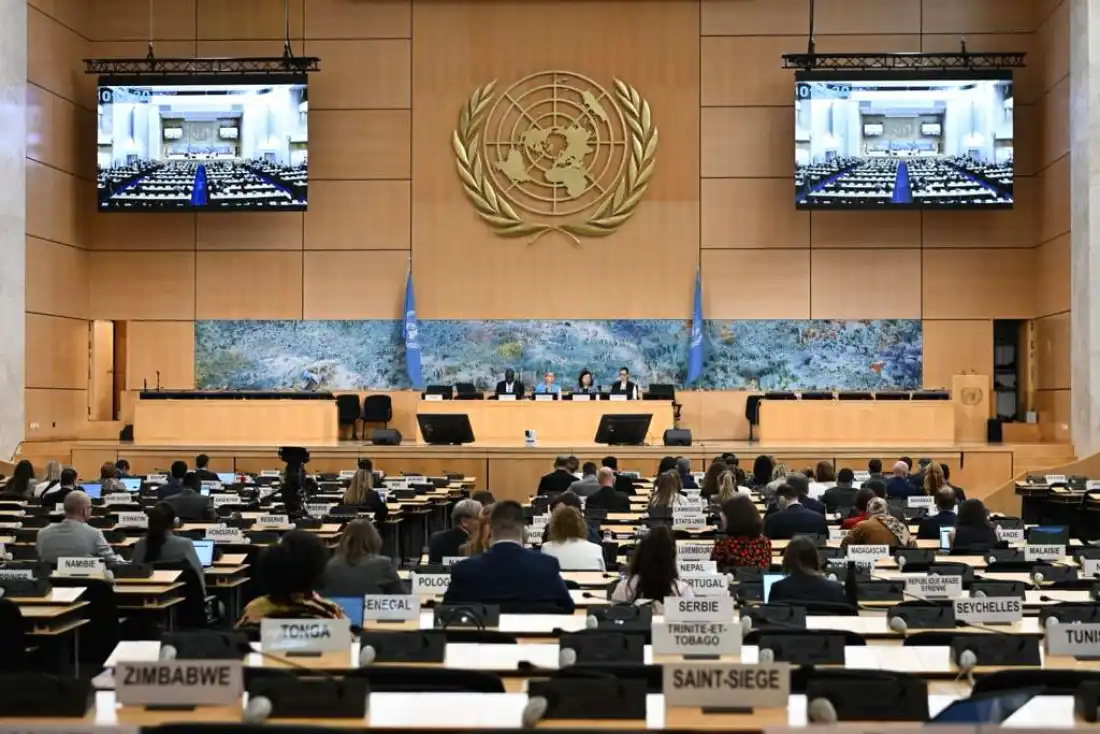
The United Nations Human Rights Council convened at the Palais des Nations in Geneva on September 30, 2026. Notably absent was the United States, choosing to boycott its human rights review for the second consecutive year. This unprecedented move makes the U.S. the only U.N. member state to do so.
The review in question, called the universal periodic review, is designed to be inclusive. Every state undergoes scrutiny every four to five years by fellow U.N. member states. This ensures that all nations, regardless of power, face a peer evaluation of their human rights records. Additionally, civil society organizations are permitted to submit their findings. The American Civil Liberties Union (ACLU) sent a delegation to Geneva.
Jamil Dakwar, human rights director of the ACLU, addressed journalists. He accused the current U.S. administration of openly violating human rights, citing the treatment of immigrants, student protesters, and the LGBTQ community. Dakwar urged the U.N. to hold the U.S. accountable, warning that the Trump administration aimed to undermine human rights.
A written response from the U.S. State Department highlighted their formal withdrawal from the U.N. Human Rights Council, criticizing it for promoting “anti-American rhetoric.” Withdrawal from the council, comprised of 47 elected members, doesn’t exempt the U.S. from participating in the review process mandatory for all 193 U.N. member states. Human rights organizations view the U.S.’s position as part of a growing disengagement from multilateral bodies, referencing U.S. sanctions on the International Criminal Court and departure from the World Health Organization.
The U.N. faces limited options to penalize countries that skip the review process. Israel once missed a review in 2013, protesting alleged anti-Israel bias, but returned nine months later after rescheduling. Until the U.S.’s recent absence, no country had ever boycotted the process twice.
Rights groups are advocating for the U.N. to conduct the review in absentia and accept evidence of alleged U.S. violations. A set of issues for the U.S. representatives was already prepared, including inquiries about the death penalty and abortion restrictions. However, U.N. officials are wary of the precedent set by holding a review without the participating nation. Even countries with authoritarian regimes, like North Korea, partake in their reviews. Permitting a review without U.S. involvement could embolden other nations to abstain, leaving reporting organizations without official dialogue.
For now, the U.N. has deferred decision-making on responding to these absences until early next year. Meanwhile, a process seen as a vital recourse for human rights victims is unavailable for U.S. citizens. A rights activist in Geneva described this situation as “a crisis of accountability.”
Leave a Reply