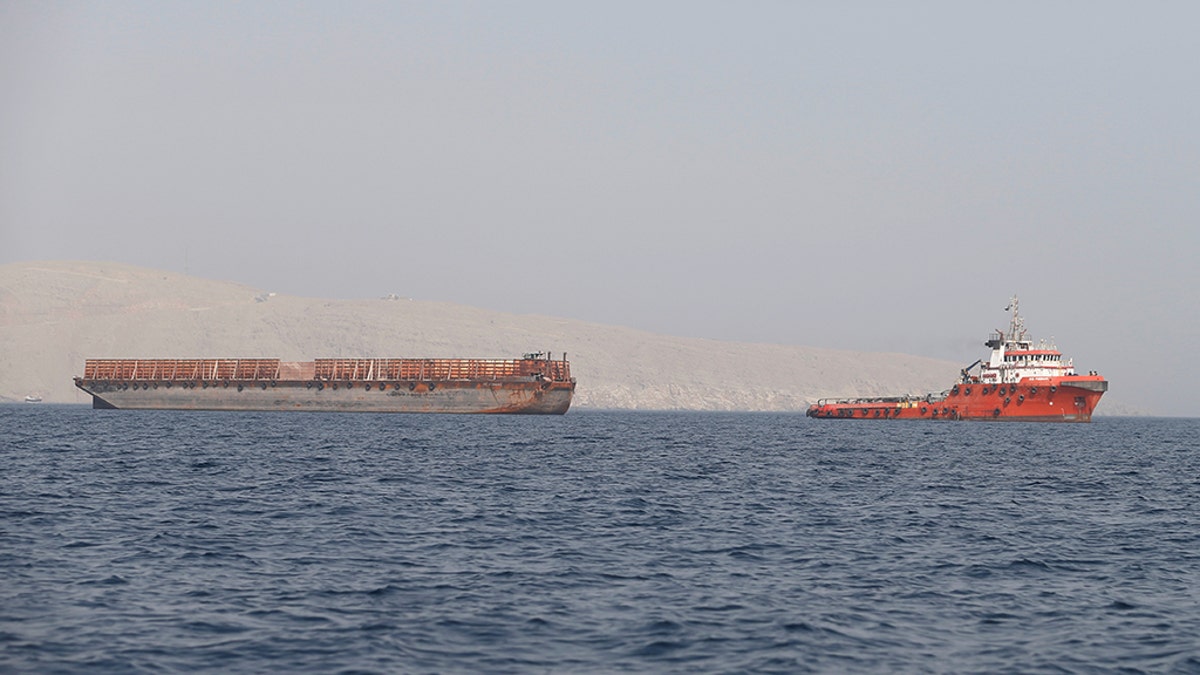
U.S. Central Command (CENTCOM) recently provided a comprehensive account of an operation to remove and detonate sea mines in the Strait of Hormuz. This marks a significant step following President Donald Trump’s declaration that U.S. forces had made international waters in the region safe for navigation.
The effort to clear the mines was a months-long mission aimed at securing established international shipping lanes. These lanes are crucial as they are used by commercial vessels to transport oil and other goods. However, the Strait’s threat level remains classified as “SEVERE” due to ongoing risks.
We have successfully cleared sea mines in the Strait’s international shipping lanes that were laid months ago by Iran’s Islamic Revolutionary Guard Corps,Adm. Brad Cooper of CENTCOM stated in a video update.
Strategic Importance of the Strait of Hormuz
The Strait of Hormuz, which narrows to 21 miles at its slimmest point, serves as a critical maritime route. It connects many of the world’s largest oil producers to the Indian Ocean. The shipping lanes are essential for global energy trade.
Adm. Cooper emphasized that internationally recognized transit routes are now free of Iranian sea mines due to U.S. military efforts. The U.S. forces used a mix of Navy divers, Navy SEALs, and air support to execute this complex operation.
Continuing Challenges and Technologies Used
The operation to clear mines was part of a broader transition in the Navy’s approach to mine warfare. Last year, the Navy retired its Bahrain-based mine countermeasure ships and began using newer unmanned systems. Defense analyst Bryan Clark highlighted that the Navy faced challenges with its mine-sweeping capabilities at the time.
According to retired Vice Adm. Kevin Donegan, these newer technologies involve autonomous systems that map the seabed and identify potential threats. CENTCOM used a mix of technologies and personnel, but details of their roles remain undisclosed.
Adm. Cooper expressed the difficulties faced during the operation, stating, “The circumstances were challenging and dangerous, but we got the job done.” Commercial lanes are now open, and efforts are underway to build momentum.
Mine-Detection Techniques Explained
Mine-clearance operations typically begin with surface and subsurface vessels, sometimes unmanned, identifying threats. Once located, autonomous systems, Navy divers, and SEALs destroy or neutralize mines. This process can occur in different waterway sections simultaneously, ensuring no mines are missed.
Donegan noted that the Navy employs a sophisticated detection model to ensure near-100% certainty that lanes are clear of mines. This involves multiple sweeps to bring down the probability of undetected mines.
Additional Developments and Maritime Risk Advice
CENTCOM reported assisting around 1,500 vessels through the Strait recently, protecting shipments of nearly 750 million barrels of oil. While enforcing a blockade against Iran, U.S. forces have turned away 75 vessels attempting to evade it and disabled three non-compliant vessels.
Despite these efforts, the Joint Maritime Information Center’s advisory keeps the Strait at a “SEVERE” threat level. Drifting mines pose ongoing risks, with commercial crews still facing attacks. The latest incidents involved tankers hit by unknown projectiles, causing fires.
Iran and Oman announced discussions for a temporary joint navigation corridor and mine-clearance project, but it is unclear how this aligns with U.S. efforts.
This detailed account from CENTCOM highlights the complexity and significance of ensuring safe passage through the Strait of Hormuz, a vital artery for global commerce.
Leave a Reply