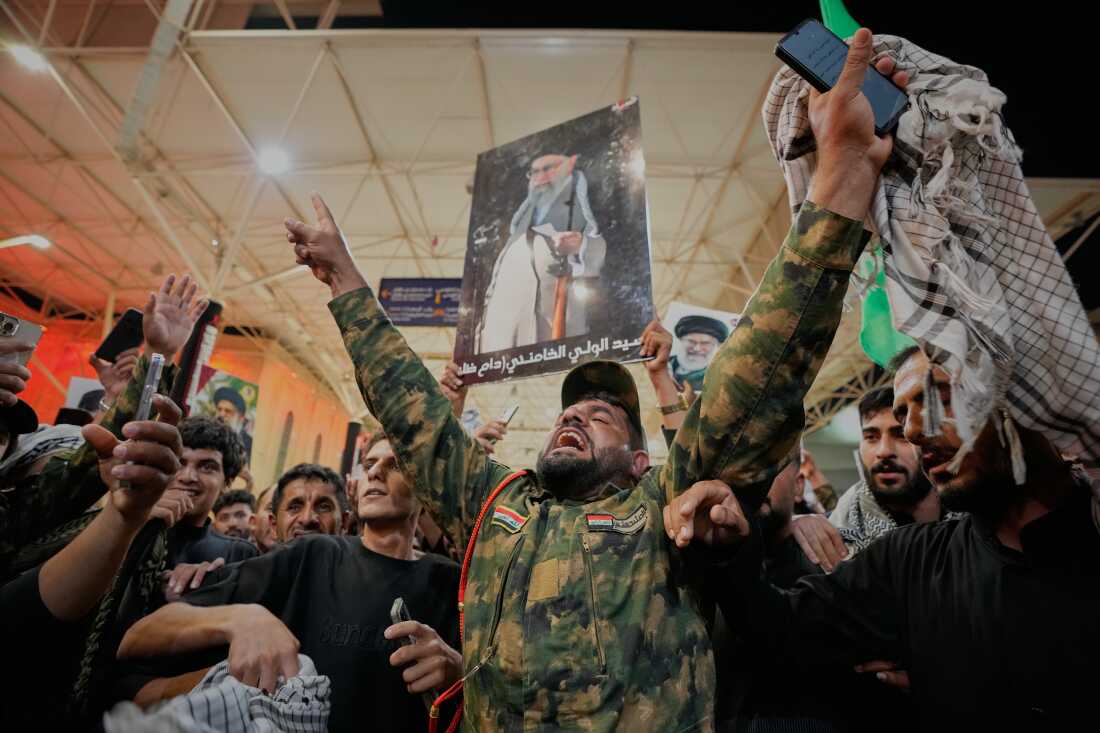
Najaf, Iraq — On Tuesday, a Shiite soldier expressed sorrow during the funeral ceremonies for Iran’s Supreme Leader Ayatollah Ali Khamenei outside Imam Ali Shrine. Khamenei passed away on February 28, at the age of 86, during the first moments of an ongoing conflict.
Military Escalation
The U.S. launched strikes against Iran early Wednesday following Iran’s attack on three ships in the Strait of Hormuz. In response, Iran targeted locations in Bahrain and Kuwait. These events increased fears that a temporary ceasefire might collapse, risking wider conflict in the Middle East.
The era of bullying and extortion is over. It leads nowhere. We don’t fold. – Mohammad Bagher Qalibaf
The funeral ceremonies for Khamenei were deemed a potential peaceful period, yet mourners called for the deaths of U.S. President Donald Trump and Israeli Prime Minister Benjamin Netanyahu. Final negotiations were expected to begin after Khamenei’s internment, focusing on reopening the strait and addressing Iran’s nuclear program. However, the recent attacks have disrupted these plans.
U.S. Response
The U.S. Central Command reported that American forces targeted Iranian air defense systems, radars, and over 60 boats used by the Revolutionary Guard. These forces were involved in harassing ships in the strait. The military stated their readiness to hold Iran accountable for any agreement violations. Iran acknowledged the strikes but did not report any losses.
Both Bahrain, hosting the U.S. Navy’s 5th Fleet, and Kuwait, with U.S. Army presence, reported missile alerts. Iran’s Revolutionary Guard confirmed attacks on U.S. military installations in both countries.
Oil License Revocation
In a related move, the U.S. revoked a license allowing Iran to sell oil on the global market. This decision followed the ship strikes in the Hormuz Strait. Iran had been suspected of selling oil at discounted rates to China, despite sanctions.
During the recent conflict, a tanker off Oman’s coast was hit and caught fire. The U.K. Maritime Trade Operations center confirmed the attack. Other damaged ships sustained minor damage without serious injuries and continued their passage through the Strait of Hormuz.
Impact on Shipping Routes
Since the war began, Iran has disrupted global energy markets by maintaining control over the Strait of Hormuz, where a significant portion of the world’s oil and gas trade occurs. Ships have adopted routes near Oman’s coast, avoiding routes favored by Tehran. Iran insists on controlling routes and later charging passage fees, which threatens the longstanding free passage through the strait. Gulf Arab states, along with the U.S., have rejected such demands.
Majed al-Ansari from Qatar’s Foreign Ministry condemned the attack on a Qatari tanker, calling it an unacceptable threat to international navigation and energy security. Qatar holds Iran legally responsible for this act.
Leave a Reply