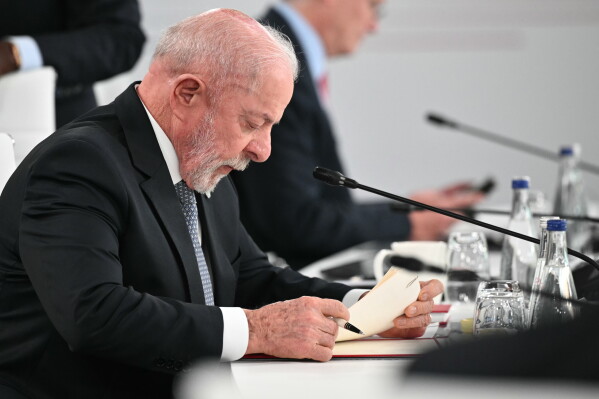
Secretary of State Marco Rubio led a meeting with leaders of over 60 countries to discuss political terrorism associated with left-wing groups. This initiative is part of the Trump administration’s effort to counter what it terms ‘left-wing political terrorism’, a key issue for Republicans as midterm elections approach.
Rubio highlighted the perceived threat of political violence from leftist groups, despite studies indicating fewer incidents in the U.S. compared to right-wing violence. He stated the urgency of confronting ‘communists and Marxists’ responsible for these acts. Rubio emphasized the need for international cooperation, pointing out the oversight in counterterrorism strategies regarding left-wing violence. He compared societal reactions to similar acts committed by right-wing and left-wing groups, illustrating perceived bias.
The Center for Strategic and International Studies reported that left-wing attacks in the U.S. increased slightly but still began from a lower baseline compared to right-wing violence. Historically, from 1994 to 2000, left-wing incidents averaged 0.6 annually versus 20.6 from right-wing groups. From 2016 to 2024, left-wing attacks averaged four per year compared to 22.7 from the right. As of July 2025, right-wing violence significantly dropped, with only one incident, while left-wing attacks tallied up to five.
The report insists on continued vigilance concerning both left and right-wing terrorism. Republicans, including President Trump, have intensified rhetoric against the far left, framing them as threats to American values. Trump and Vice President JD Vance link Democratic Party figures to communism, accusing them of wanting to dismantle American society. Speaker Mike Johnson criticizes ‘radical’ Marxist candidates.
Rubio’s stance stems from his personal history, as the son of Cuban immigrants fleeing communism. He believes the Cuban government influenced leftist ideologies in the U.S. Stephen Miller, a key Trump administration figure, emphasized the need to defend America against perceived leftist intrusions.
The administration has increased pressure on perceived leftist threats, equating democratic socialism with communism. This perspective gained traction following democratic socialist Zohran Mamdani’s mayoral win in New York City.
One approach has been financial sanctions on antifa groups abroad, classified as terrorist organizations by the State Department. Treasury Secretary Scott Bessent suggested targeting financial networks supporting these groups. Rubio announced policies allowing visa restrictions for individuals linked to these groups and supporting terrorism.
Bessent stated the application of financial counterterrorism methods developed over decades to domestic political threats, emphasizing their effectiveness.
Amiri reported from New York, Kinnard from Columbia, South Carolina, with contributions from Associated Press writer Melissa Goldin.
Leave a Reply