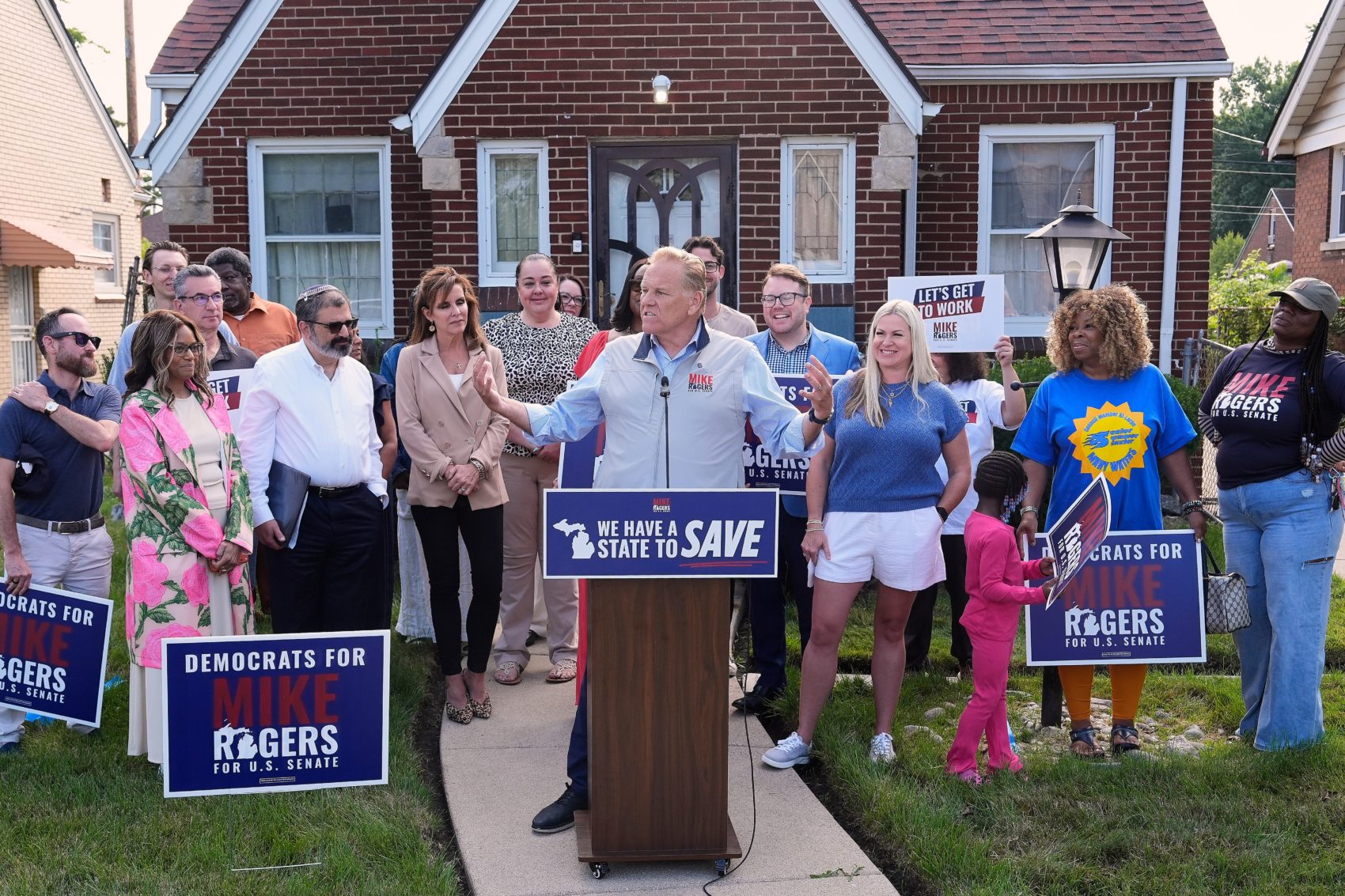
In Michigan, the U.S. Senate race transcends the usual partisan lines, particularly in Detroit’s suburbs. Jewish Democrats face personal reflections on faith and identity when considering support for their party’s nominee. Meanwhile, Arab American leaders in Dearborn, who previously backed Trump, express concern over Republican rhetoric. All of this occurs amid the repercussions of Israel’s war in Gaza following the Hamas attack on October 7, 2023.
The contest involves Republican Mike Rogers, a former congressman, and Democrat Abdul El-Sayed, a former public health official who could become the first Muslim U.S. senator if elected on November 3. Rogers has depicted El-Sayed as an extremist and a threat to Jewish voters, employing a fear-focused campaign strategy. This paints a complex picture where identity and fear intersect, dividing even close friends like Lori Goldman and Mimi Price-Miletic.
Rogers concentrates on winning Jewish voters in contrast to the Democratic primary focus on Israel, marked by U.S. Rep. Haley Stevens’ advocacy and $30 million in AIPAC-related spending. Rogers actively engages with Jewish communities, including organizing an event with Senator Ted Cruz focused on safety issues post-October 7th and the attack on Temple Israel. The incident of a truck attack on Temple Israel earlier this year has heightened tensions.
El-Sayed faced criticism over his comments on the Temple Israel attack, stating “hurt people hurt people,” which Rogers exploited to cast El-Sayed’s stance negatively. Despite Rogers’ claims of connections to terrorist organizations, there is no evidence linking El-Sayed to the Muslim Brotherhood. His sister’s past social media posts bear hearsay, according to El-Sayed.
Democrats, meanwhile, grapple with division over El-Sayed’s candidacy, highlighted by past tensions over Israel. Oakland County, pivotal for Michigan politics, shifts steadily Democratic. Yet, notable Democrats maintain distance from El-Sayed, except for endorsements from some, like Stevens. Supporters argue the portrayal of El-Sayed taps into fears rooted deep within Jewish communities.
Arab Americans in Dearborn, disillusioned by political rhetoric, show growing criticism of Trump and Republican approaches toward El-Sayed. Mayor Abdullah Hammoud and other leaders have spoken against equating faith with terrorism. Arab American voters, who played a crucial role in Trump’s success in Michigan election cycles, feel alienated by his conduct.
Bishara Bahbah, formerly leading Trump’s outreach, acknowledges the harm in attacking individuals based on religion. The shift from Arab Americans for Trump to Arab Americans for Peace reflects growing displeasure with inflammatory discourse.
The ongoing tensions surrounding religion, identity, and political rhetoric in Michigan’s Senate race encapsulate broader challenges, underscoring the intricate tapestry of American politics.
Leave a Reply