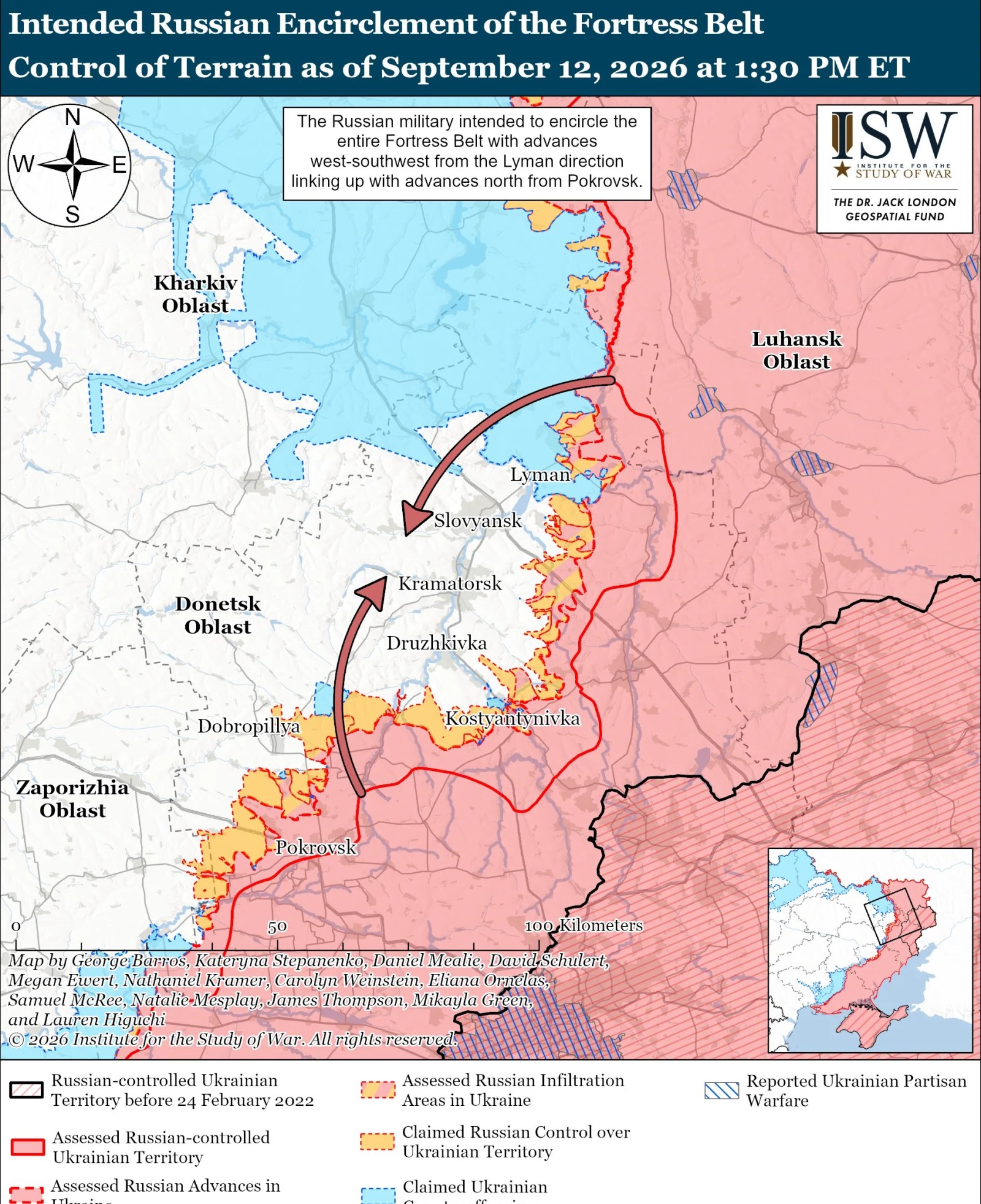
Ukraine’s forces have disrupted Russia’s plans to capture the Donetsk region, taking back strategic control for the first time in two years. This shift in momentum comes amid reports that Russian President Vladimir Putin receives exaggerated updates from his generals, misrepresenting the situation on the battlefield. Despite diplomatic talks involving Trump administration officials Steve Witkoff and Jared Kushner, Putin remains committed to his aggressive war aims.
Analysis from the Institute for the Study of War (ISW) shows Ukraine has effectively halted Russia’s advances in regions like Kupiansk, Oleksandrivka, and Lyman over the past six months. This success has reduced Russia’s territorial gains significantly. Pro-Kremlin military bloggers have confirmed Ukrainian successes, noting a strong defense in the Dnipropetrovsk region and significant counteroffensive achievements.
The ISW highlighted Ukraine’s success in disrupting Russian efforts to enter Dnipropetrovsk and regain territory near Kupiansk. Ukrainian forces have dismantled a Russian position threatening Slovyansk and the Donetsk Oblast Fortress Belt, a pivotal defense network in the eastern Donbas region—a major target for Putin’s ambitions.
Starting in late 2025 and lasting throughout 2026, Ukrainian forces have regained strategic and operational initiative, a change not seen since the August 2024 Kursk Offensive. Giorgi Revishvili, a military analyst, emphasized Ukraine’s gains in freeing territory from Russian control during the first half of 2026.
Pro-Russian military bloggers provide unfiltered insights into Moscow’s actions and have highlighted Ukraine’s military feats north of Lyman. The ISW noted Ukrainian forces pushed Russian positions back to the Zherebets River, supported by detailed open-source intelligence. Clément Molin, an analyst, reported Ukraine’s 3rd Army Corps liberated over 77 square miles.
Revishvili believes this alleviates pressure on the northeast Fortress Belt, showcasing the effectiveness of maneuver warfare aided by meticulous planning and precision. Retired Australian Army Major General Mick Ryan described Ukraine’s advancements as surprising amidst ongoing Russian missile attacks on Ukrainian cities.
“Two successful counteroffensive operations across different regions have challenged the narrative of a stalemate along the frontline,” Ryan stated.
Although the ISW acknowledged Russia’s gains near Kostyantynivka and east of Slovyansk and Kramatorsk, it highlighted the uphill battle Russia faces maintaining momentum. Revishvili noted the challenges Ukraine would face as colder weather conditions make drone operations less effective. Loss of foliage will also make Ukrainian positions more exposed to enemy observation.
Pressures will elevate around areas like Dobropillia, Kostiantynivka, and Druzhkivka as Russia seeks strongholds for further operations. Revishvili emphasized Russia’s focus on these regions to enhance its operational capacity.
Challenges persist for Ukraine in airspace protection. Russia employs cost-effective aerial strike systems like the S8000 Banderol and jet-powered drones, making interception difficult. Revishvili anticipates intensified Russian strikes targeting infrastructure and strategically vital sites.
There is speculation about Putin potentially announcing mobilization due to Russian troop losses, although Kremlin officials deny a draft. Ukrainian intelligence suggests Russian generals are pressing Putin to recruit 800,000 additional troops but highlighted limitations in training and integrating such numbers.
The ISW believes any mobilization would lean towards gradual implementation due to the previous mobilization’s unpopularity.
Leave a Reply