Washington follows a familiar pattern every two years. The party not in power anticipates a shift. Pundits often predict outcomes early based on historical trends. Yet, the reality is not as straightforward as it might seem. In 2026, the important issue is less about electoral calculations and more about what the party seeking control intends to do if they succeed.
Over the past 80 years, the president’s party has typically lost seats in the U.S. House of Representatives in 18 out of 20 midterm elections. This trend is often referred to as the “thermostat effect.” When one party controls the government, the electorate tends to look for a balance, irrespective of the party’s performance.
The challenge of voter turnout adds to the difficulty for the incumbent party. The victorious party’s supporters usually become complacent, while the opposition remains motivated and participates in elections. While presidential elections present a choice between distinct visions, midterms focus on the performance of the party currently in power.
Currently, Republicans face a challenging situation with a narrow margin to defend. Democrats need a net gain of only five seats to gain a majority. With approval ratings below 45% for much of the year, Republicans face a tough scenario that history shows often results in poor outcomes for the party of the president.
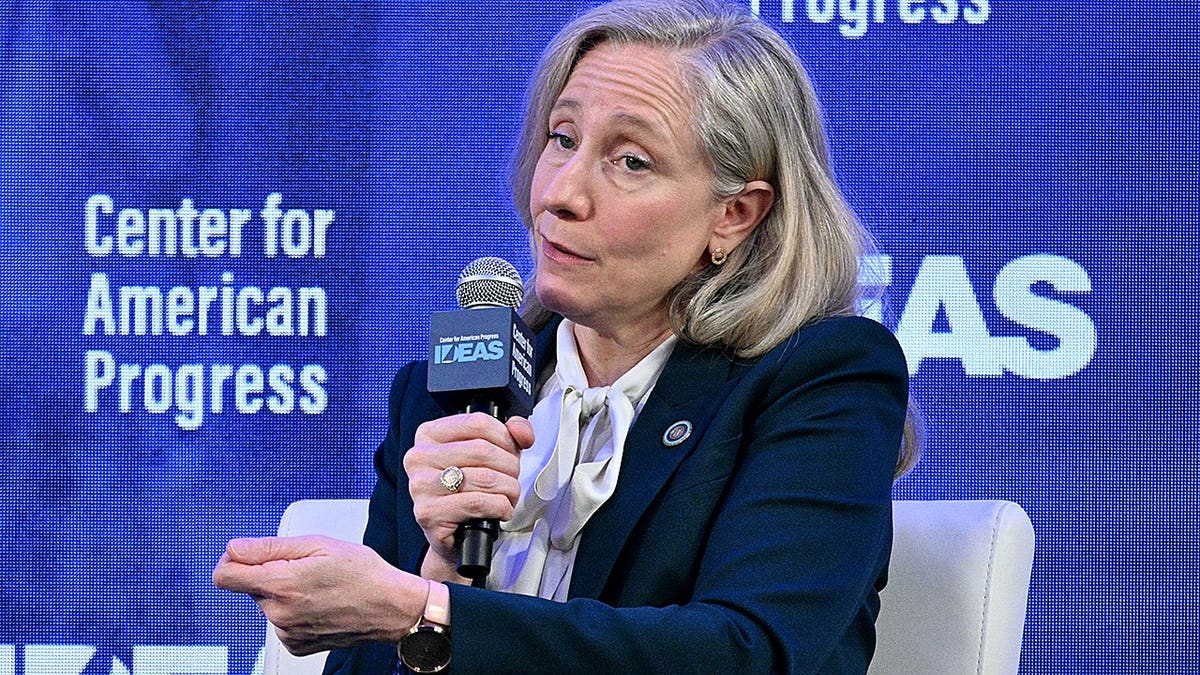
Virginia Democrat Gov. Abigail Spanberger speaks during an event in Washington, D.C., indicating the complex political landscape facing the nation.
At this moment, the political climate presents an unprecedented set of conditions. Analysts continue to apply old methodologies to new circumstances. President Donald Trump is one of only two presidents in American history to serve nonconsecutive terms. The previous instance was Grover Cleveland, who served in the late 1800s.
Grover Cleveland’s second term did not bring success for his party. By the midpoint of his term, his party suffered significant losses, losing approximately 116 seats.
Today’s outlook appears more promising for Republicans. The electoral map has seen numerous changes recently. Texas made significant adjustments, creating five new secure Republican seats, while California introduced a map that favors Democrats.
The rest of the country has seen mixed outcomes. States like Missouri, Ohio, North Carolina, and Indiana leaned right, whereas Utah’s court-established map favors Democrats. Virginia’s gerrymandering attempt was fully overturned. The Supreme Court’s decision to uphold both the Texas and California maps balanced major shifts. As a result, the map still slightly favors Republicans, though forecasts currently suggest a Democratic lead.
The defining question as voters head to the polls is what Democrats are offering. Their campaign messages focus on affordability issues such as groceries, rent, and healthcare. However, the difference between their promises and their actual governance is apparent in areas where they hold power.
Virginia’s Gov. Abigail Spanberger took office as the ‘affordability governor,’ pledging in writing not to redistrict the state, denouncing gerrymandering as harmful. Yet, she ultimately supported a gerrymander, despite it being overturned by the state Supreme Court.
Her administration then imposed a ban on various semiautomatic weapons, a law blocked by judges who deemed it possibly unconstitutional. This occurred while the Justice Department sought to permanently nullify the measure. These actions are far from focusing on issues like grocery affordability.
In Michigan, Abdul El-Sayed campaigned for the Senate with a focus on lowering healthcare costs through Medicare for All. When questioned about potential tax increases for those making under $1 million, he admitted the trade-off would be “worth making.” This speaks to the complex challenges facing Democrats as they balance electoral promises with legislative actions.
Despite a field that leans slightly Republican, current models show potential Democratic advantages. However, Democrats appear not to prioritize the issues that resonate with voters. National reports indicate that House Democrats plan to launch extensive investigations if they seize the House, targeting President Trump and his administration. Subpoenas and legal challenges are already in motion, diverting focus from economic concerns affecting voters.
Historically, these conditions favor the party out of power. However, history does not predict what a party will do after gaining control. In this context, Democrats have shown their priorities, which might influence voters’ perceptions.
Leave a Reply